Over recent years, Hung Yen has continually stood among the provinces drawing strong foreign investment nationwide, and enterprises investing and operating across diverse sectors, especially those with high-technology content, have generated—and continue to generate—abundant opportunities for the growth of supporting industries (SI)....
Over recent years, Hung Yen has continually stood among the provinces drawing strong foreign investment nationwide, and enterprises investing and operating across diverse sectors, especially those with high-technology content, have generated—and continue to generate—abundant opportunities for the growth of supporting industries (SI)....
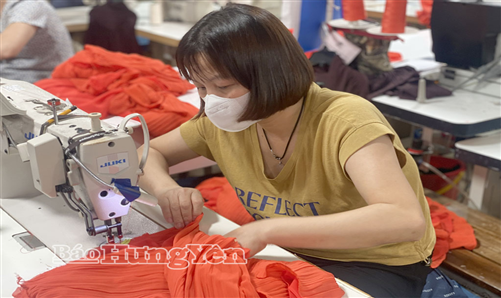
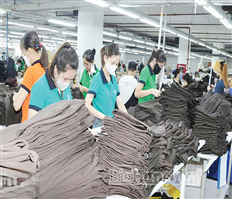
 Production at Dong Yang E&P Vietnam Co., Ltd. (My Hao town)
In a global economy marked by volatility, fostering SI development not only helps accelerate provincial economic growth but also opens avenues for domestic firms to sharpen their competitiveness on the international stage, and, in implementing Resolution No. 07-NQ/TU of 15 June 2021 issued by the 19th-term Provincial Party Committee on the Programme for Industrial and Small-Scale Industrial Development 2021–2025 with a vision toward 2030, the province has deployed its Industrial Restructuring Project for 2021–2025 with the same horizon, focusing on advancing key industrial domains that include mechanical engineering and manufacturing—with priority on automotive products, machinery and equipment that serve other economic sectors—electronics and informatics, giving precedence to electronic equipment, refrigeration appliances and other high-tech industrial outputs, together with supporting industries that buttress these pillars so as to raise production value and join global production networks and value chains.
According to provincial orientation, by 2030 supporting industries are to integrate gradually into the global supply chains of major multinationals, and, more concretely, the mechanical engineering and manufacturing segment is expected by that year to reach an output of 1,000–1,200 thousand mechanical metal components and spare parts while producing 250–300 tons of assorted finished steel, whereas the electrical and electronic equipment segment is projected to supply 19–21 million electronic components and circuits, and for electronic materials, plastic components, rubber goods and varied electro-mechanical parts, the output target is 110–125 thousand tons, with battery production for computers and mobile devices anticipated to hit 1.5–1.7 million kWh.
To realise these aims, the province intensifies investment-promotion efforts, primarily by staging promotion conferences in Japan, South Korea and European nations to invite enterprises to explore Hung Yen’s investment environment, and it remains focused on reviewing, adjusting and supplementing plans, expanding industrial zones (IZs), building IZ infrastructure in tandem with inter-regional connective works, and consolidating as well as improving the quality of services that underpin IZ activities, while committing to close companionship with investors so that companies can erect facilities swiftly, gain market access in the shortest time and at the highest efficiency, at the same time addressing obstacles relating to capital, tax and customs procedures and issues of training and labour recruitment, directing departments, agencies and vocational institutions to concentrate on cultivating a workforce skilled to enterprise requirements, and pushing administrative-procedure reform to create the most favourable conditions possible for business.
With such an enabling environment, supporting-industry enterprises have in recent years expanded in number, scale and quality, and preliminary figures from the Provincial Industrial Zone Management Board indicate that, of the 650 projects now located in industrial zones, more than 300 belong to supporting industries, while in the first two months of this year alone the zones attracted about ten new SI projects; existing SI firms operate efficiently across industry groups ranging from rubber and plastics, mechanics and mechanical manufacturing, machinery production, repair, maintenance and installation, chemicals and fertilisers, electrical and electronic equipment, and wood and paper processing to food and beverage processing, and among them several stand out as affiliates of major global corporations—for instance, Kyocera Vietnam Co., Ltd. (Yen My) specialising in electronic ceramic components, telecoms equipment and the crafting of jewellery, and LTK Vietnam Co., Ltd. (Van Lam) active in batteries and accumulators as well as parts and auxiliaries for vehicle engines, both supplying chiefly the Japanese market.
Mr Kim Jae Man, General Director of DongYang E&P Vietnam Co., Ltd. (My Hao town), a wholly Korean-invested enterprise producing components, accessories and assemblies for phone battery chargers and circuit boards for vacuum cleaners, remarked that, thanks to provincial attention and a favourable investment climate, the company plans to expand production and earnestly hopes to keep receiving assistance, especially with administrative procedures.
Mr. Vu Quoc Nghi, Director of the Provincial Industrial Zone Management Board, observed that Hung Yen, blessed with its central position in the Red River Delta and convenient transport links, has become a leading magnet for investment over time, and within that landscape the supporting-industry sector has captured strong interest from foreign-direct-investment enterprises, opening wide prospects for the province’s SI development.
Yet, functional-agency assessments reveal that the SI sector has yet to tap its full potential, as enterprises remain chiefly small and medium-sized and thus face persistent hurdles involving markets, technology, human resources and capital; moreover, the market for supporting-industry goods is still modest and low-volume, which limits partner attraction and makes boosting localisation challenging.
Mr. Vu Quang Thang, Director of the Department of Industry and Trade, stated that to spur SI growth the department continues to advise on specific mechanisms and policies encouraging localities to dedicate resources to SI-support programmes under legal provisions suited to actual conditions, maintaining preferential interest-rate policies, fostering human-resource development through skills-enhancement schemes and partnerships between training institutions and firms, and promoting international cooperation in training and workforce formation.
Pham Dang
Nguồn trích dẫn: baohungyen.vn
.jpg)
.jpg)
.jpg)