Inside the Ancient Pagoda in Hung Yen That Houses a Sacred Buddha Relic: What Makes It Unique?
Located in Hien Nam Ward, Hung Yen City, Chuong Pagoda is a distinctive architectural and artistic monument—the "Premier Sacred Site" within the Pho Hien National Special Heritage Complex, a renowned spiritual destination in Hung Yen province. During the United Nations Vesak Day 2025 celebration held in Vietnam, Chuong Pagoda was honored to be selected as the venue for enshrining the Buddha's relics from May 28th through May 29th, 2025....
Located in Hien Nam Ward, Hung Yen City, Chuong Pagoda is a distinctive architectural and artistic monument—the "Premier Sacred Site" within the Pho Hien National Special Heritage Complex, a renowned spiritual destination in Hung Yen province. During the United Nations Vesak Day 2025 celebration held in Vietnam, Chuong Pagoda was honored to be selected as the venue for enshrining the Buddha's relics from May 28th through May 29th, 2025....
According to Most Venerable Thich Thanh Khue, Abbot of Chuong Pagoda, the pagoda was first constructed in the 15th century during the Later Le Dynasty. However, according to tradition: "Chuong Pagoda is one of Vietnam's earliest pagodas with centuries of history. The name Kim Chung Tu, meaning Golden Bell Pagoda, originates from a very sacred legend that during a great flood, a golden bell drifted to Nhan Duc village. Many places wanted to receive it, but none could succeed. When it arrived here, the monks and nuns residing at the small village pagoda, together with village elders and residents, performed ceremonies and successfully received the bell. The sound of the bell resonated throughout heaven and earth, considered a treasure bestowed by heaven, hence the pagoda was named Kim Chung Tu."
 The legend of the name Kim Chung Tu is associated with a golden bell. Knowing the ambitions of northern rulers who wanted to steal the golden bell, the monks and nuns hid the bell in a well. Gradually, all those who hid the bell passed away, and later generations wanted to find the bell again but could not. To commemorate that sacred bell, people renamed the pagoda Kim Chung Tu.
Through historical upheavals and the erosion of time, Chuong Pagoda has undergone numerous renovations and restorations. While the ancient architecture has been lost, the current architecture of Chuong Pagoda differs significantly from other pagodas built or renovated during the same period.

The ancient, moss-covered Tam Quan gate of Chuong Pagoda
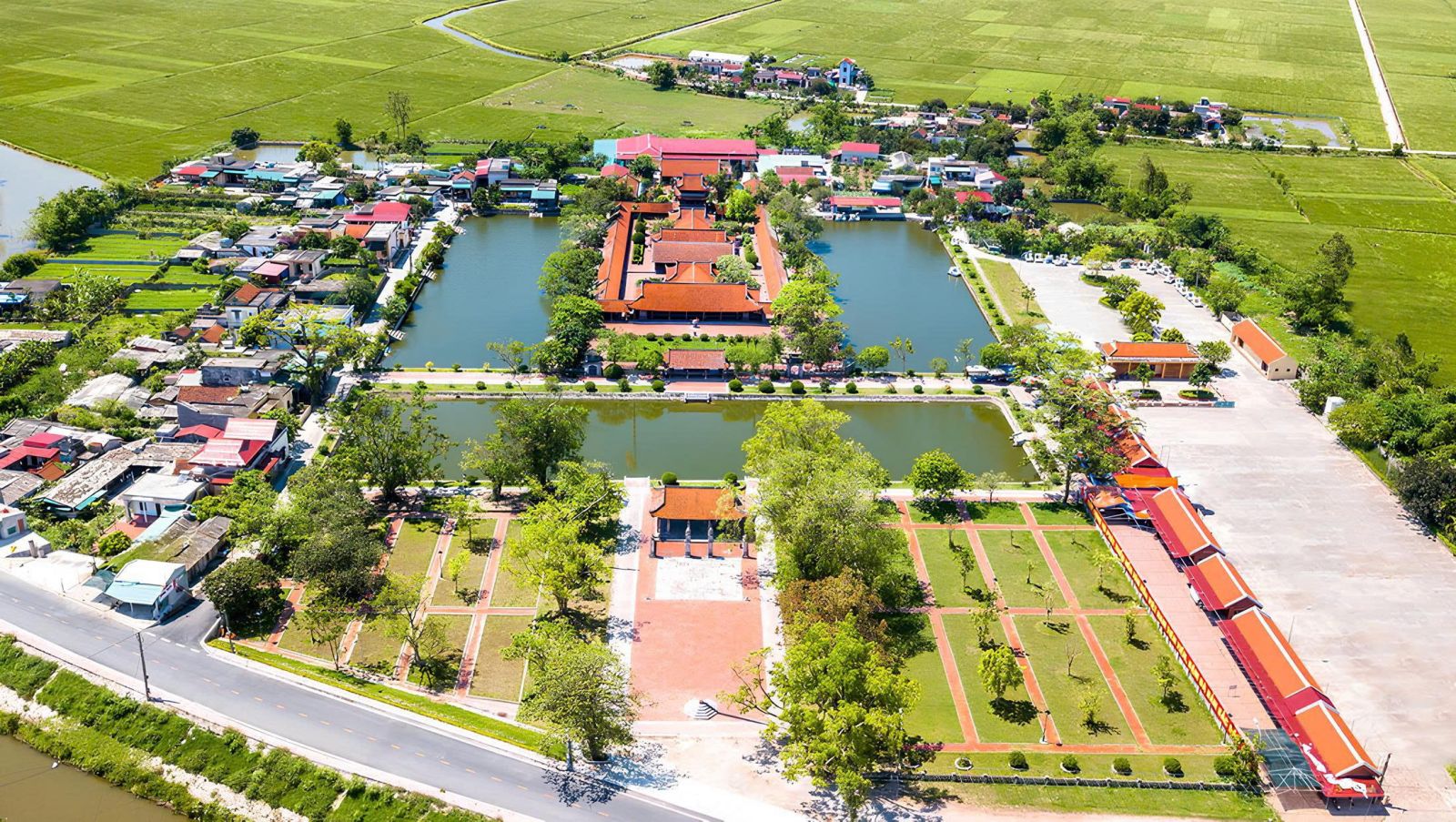
Typically, pagodas are built according to traditional architectural styles such as the Tam (like Chinese character: 三-shaped) style, Dinh (like Chinese character 丁-shaped) style, Cong (like Chinese character:工-shaped) style, or Noi cong ngoai quoc (inner like Chinese character:工 outer like Chinese character:国) style. These architectural styles can be said to be common templates for communal house and pagoda architecture since ancient times. However, with only a small similar element, Kim Chung Tu has created its own unique appearance, a strange trait full of wisdom. Knowing how to absorb and then adapt, Chuong Pagoda broke the traditional architectural mold by constructing in the "Noi Cong ngoai Quoc lien hoan" (interconnected inner 工 outer 国) style, along with "Tu thuy quy duong" (four waters returning to the hall), comprising numerous construction items bearing strong architectural and artistic imprints of the Later Le period interspersed with the Nguyen period, including: Tam Quan gate, Front House, Front Hall, Upper Palace, two corridors, Duc Vua Than Nong Temple, Ancestral House, and Mother House. The architectural elements are arranged symmetrically and harmoniously on the axis of symmetry from Tam Quan to the Mother House. This has created the magnificence and distinctive, unique architectural character of the pagoda.
 The main sacred path consists of three ancient stone bridge spans crossing Dragon Eye pond
Currently, Chuong Pagoda preserves many antiques and artifacts of great artistic as well as historical-cultural value, including large inscriptions, couplets, bronze bells, stone chimes, and others. Notable relics include the blue stone bridge and stone incense burner (Thach Thien Dai) made in the 23rd year of Chinh Hoa (1702). Even more precious is the stone stele erected in the 7th year of Vinh Thinh (1711). The stele inscription praises the pagoda as a place of scenic beauty with heroic spiritual essence and records the names of those who meritoriously contributed to the pagoda's construction during Pho Hien's prosperous period.
Particularly, Chuong Pagoda is famous for its rich and distinctive system of Buddha statues, including: the Eighteen Arhats, Ten Kings of Hell, along with the Four Guardians and Eight Vajra Protectors. Each statue bears different expressions and appearances, created by contemporary artisans with great skill, vivid liveliness, and graceful elegance. These are invaluable cultural heritages and precious historical sources for researchers studying relics, place names, and the history of ancient Pho Hien.
Chuong Pagoda was classified as a national-level "Architecture-Art" monument by the Ministry of Culture-Information and Sports on January 21, 1992, and is a representative monument within the Pho Hien Heritage Complex, which was classified as a special national level by the Prime Minister in 2014. On full moon days, new moon days, or Buddha's Birthday celebrations, visitors from everywhere come here to worship Buddha, admire the scenery, and find inner peace. The selection of Chuong Pagoda as the venue for enshrining the Buddha's relics - India's National Treasure - is a religiously significant event that contributes to integrating Vietnamese Buddhism with international Buddhism, while simultaneously affirming our Party and State's policies and principles in respecting and ensuring freedom of belief and religion.
Mai Hoan
Nguồn trích dẫn: baohungyen.vn
.jpg)
.jpg)
.jpg)