Because to geographical characteristics, Hung Yen does not have many majestic landscapes like other places. But in return, this place possesses a number of religious architectural works, beliefs and unique traditional customs....
Because to geographical characteristics, Hung Yen does not have many majestic landscapes like other places. But in return, this place possesses a number of religious architectural works, beliefs and unique traditional customs....
In the flow of modern tourism, the land of Hung Yen still holds its own place in the ancient rhythm of ups and downs, not noisy or ostentatious but still crowded with people coming to visit and sightsee. That characteristic has helped Hung Yen become one of the attractive traditional cultural tourist destinations, rich in identity in the Northern Delta region.
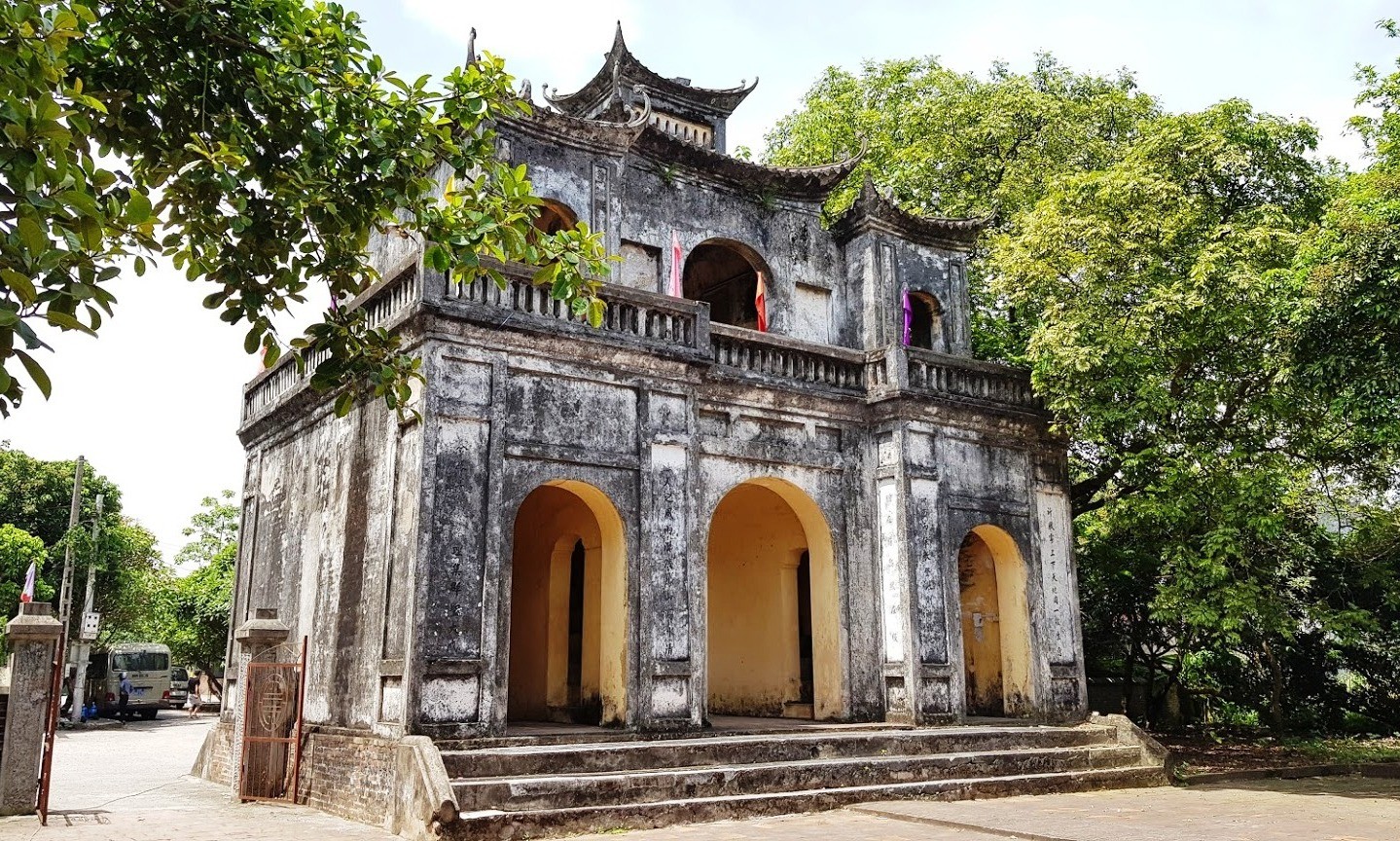 |
Xich Dang Temple of Literature (Hung Yen city).
|
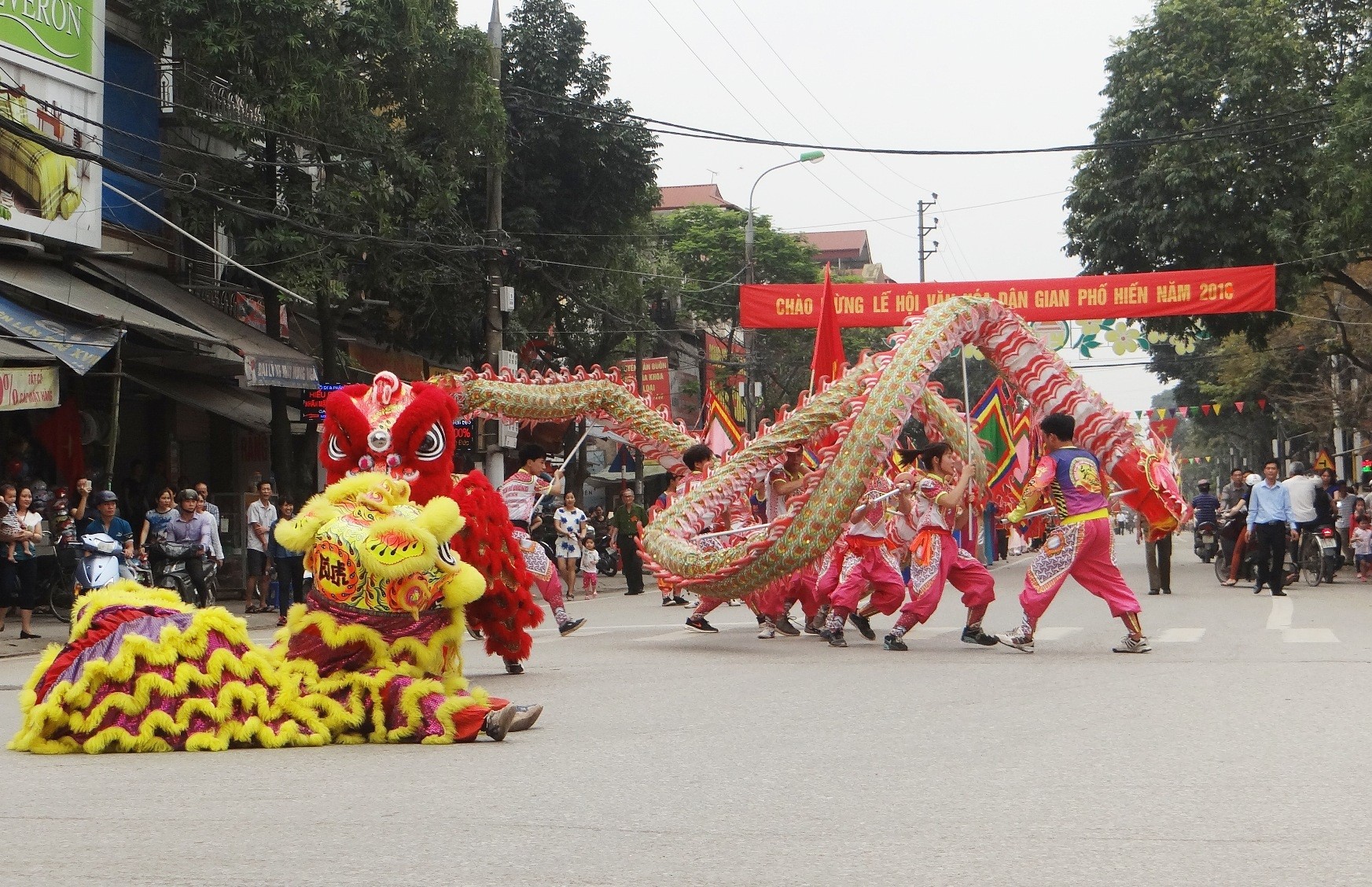
Coming to Hung Yen at any time of the year, we can encounter the joyful and warm atmosphere of traditional festivals associated with the relics. That is the unique feature in the cultural life of the people of the land known as "little Trang An".
In Hung Yen, each ancient religious and belief structure contains its own thrilling and philosophical story. Each festival has its own color and meaning, creating a cultural space that is both diverse in form and extremely rich in identity.
 |
|
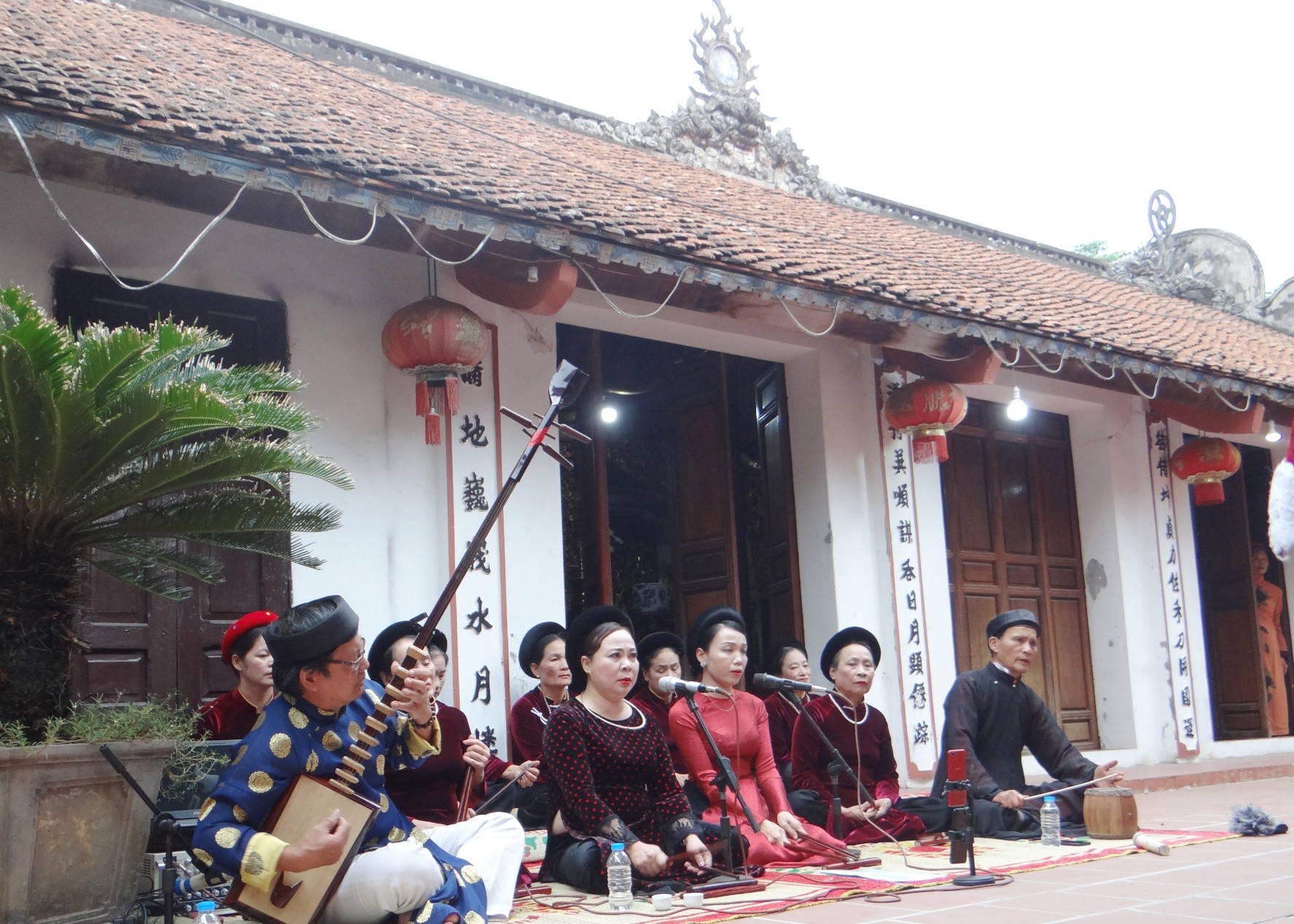
A Dao singing performance at Dao Nuong temple (Hung Yen city). Photo: Phung Nguyen
|
Because of its geographical characteristics - Hung Yen does not have mountains, seas and many majestic landscapes like other places, but possesses a number of religious and belief architectural works and traditional customs that are both outstanding. in terms of historical value, but also unique in cultural value.
 |
|
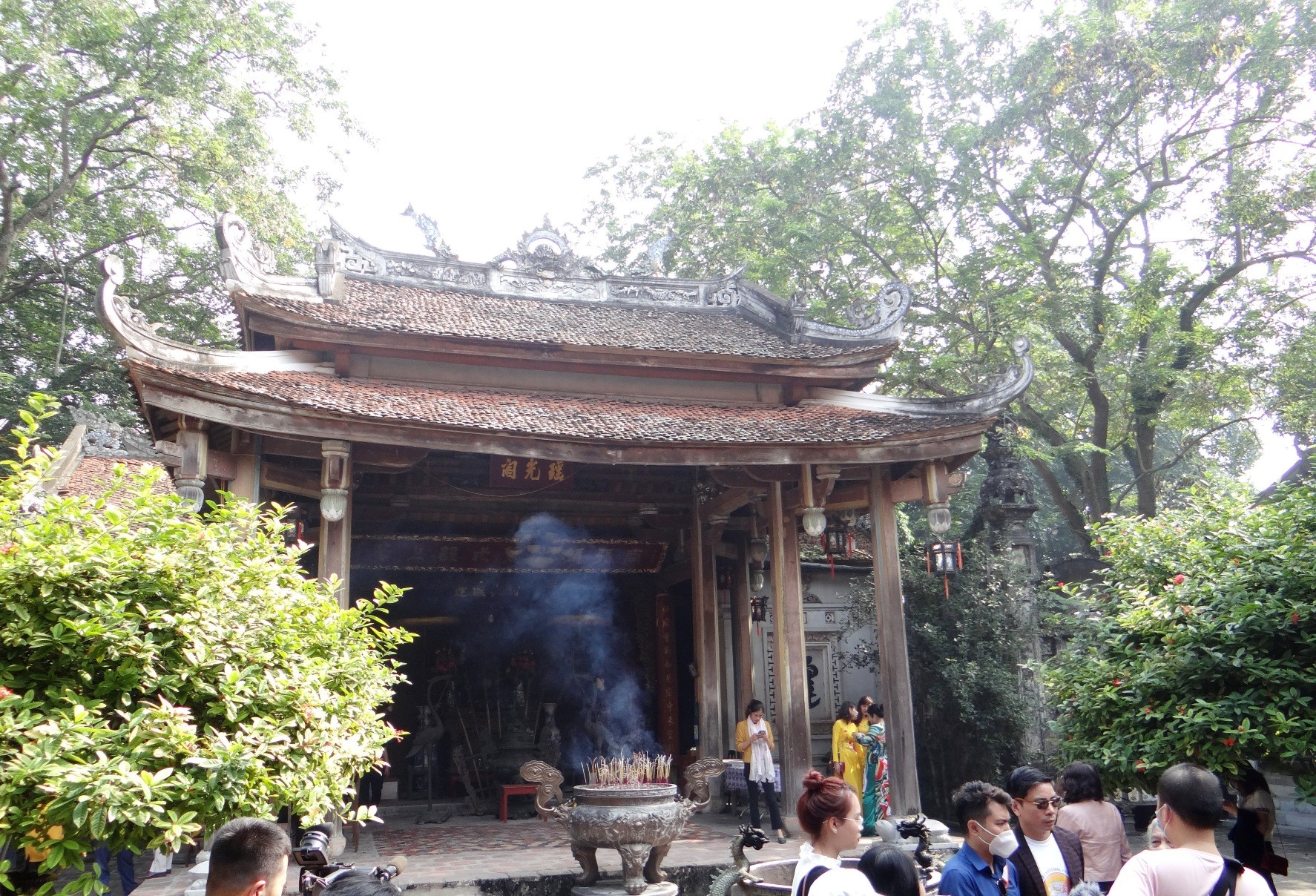
Da Hoa Temple (Binh Minh commune, Khoai Chau district). Photo: Phung Nguyen
|
Typical destinations of Hung Yen include Pho Hien Relics Area with 16 religious and belief works classified as historical relics; Da Hoa - Da Trach relic complex worships Saint Chu Dong Tu and Princess Tien Dung; National Historic Site Banyan Tree Site and La Tien Temple; Dau An Temple; Huong Lang Pagoda
Next to it is the Hai Thuong Lan Ong Le Huu Trac relic site; Temple of the Two Kingdoms Poinsettia Tong Tran; Nom village relic complex with many attractive destinations such as Nom pagoda, ancient Nom village and a series of other community tourist attractions and traditional craft villages...
 |
|
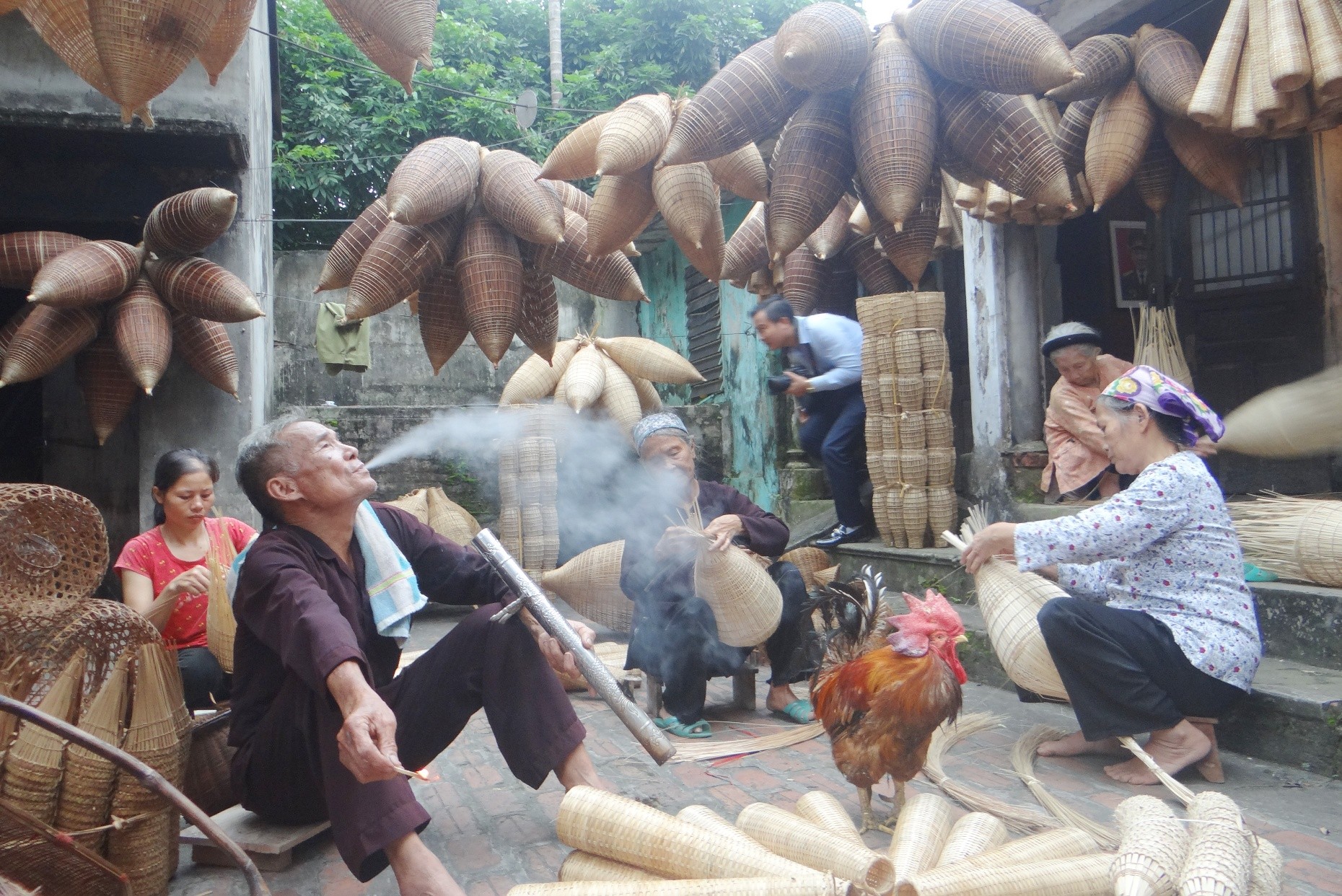
Gabion weaving profession (Thu Sy commune, Tien Lu district). Photo: Phung Nguyen
|
In recent years, many tourists have chosen the waterway with the Red River channel to experience traveling to Hung Yen in a more relaxing way. From Chuong Duong wharf - Hanoi, down the red water heavy with silt, the cruise ship will take tourists to visit the countryside along the river.
The quiet space and simple, familiar images easily make us feel like we have escaped from the hustle and bustle of life, and our souls feel light and pure. With those special experiences, Red River tourism is gradually becoming a new trend for many tourists' trips.
 |
|
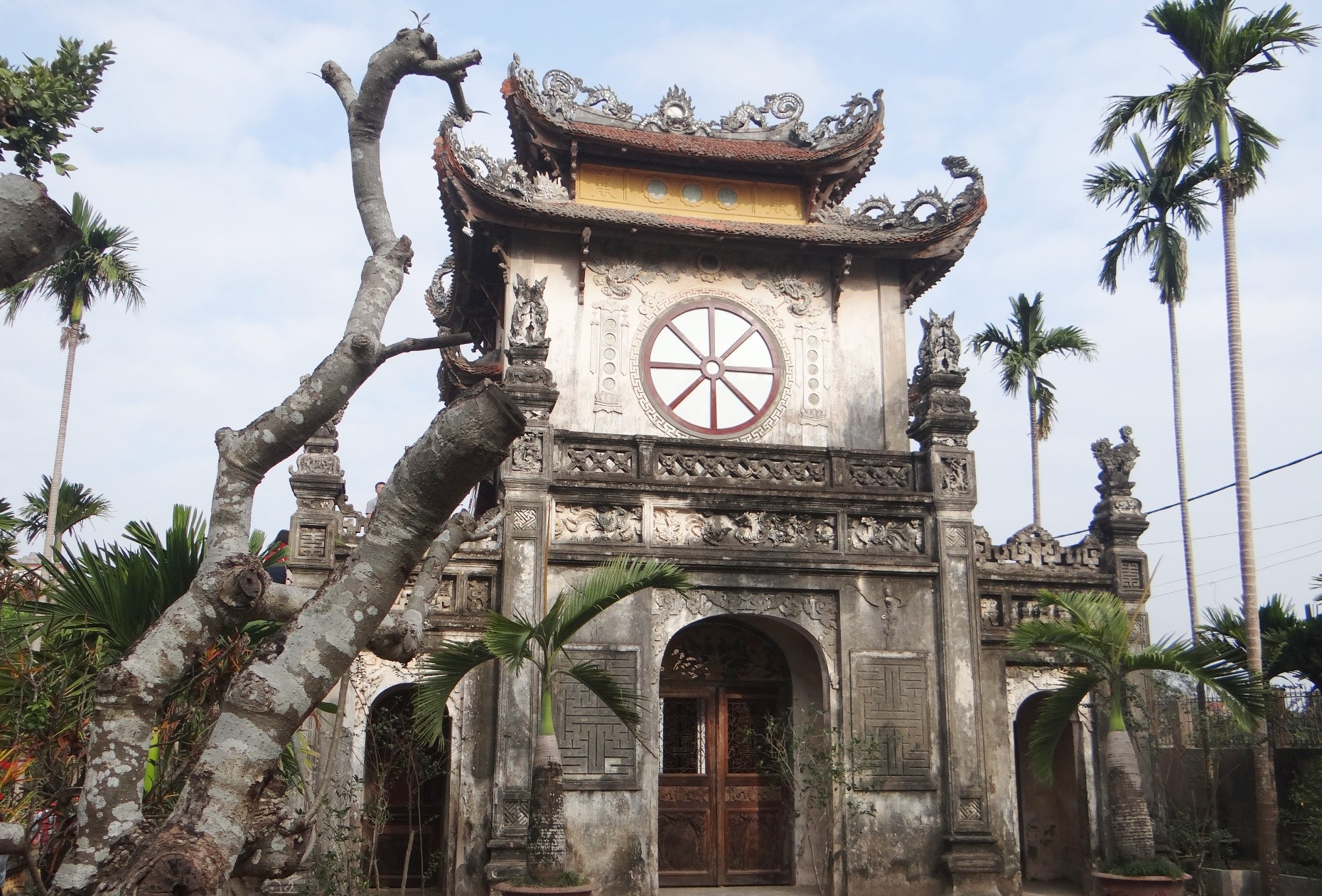
Three entrances to Me So pagoda (Me So commune, Van Giang district). Photo: Phung Nguyen
|
From Hanoi, traveling down the Red River to the East for about more than 2 hours, visitors will visit the relics of Da Hoa - Da Trach temple (Khái Chau district). This is a place associated with the legend of Chu Dong Tu and Princess Tien Dung that every Vietnamese has heard.
 |
|
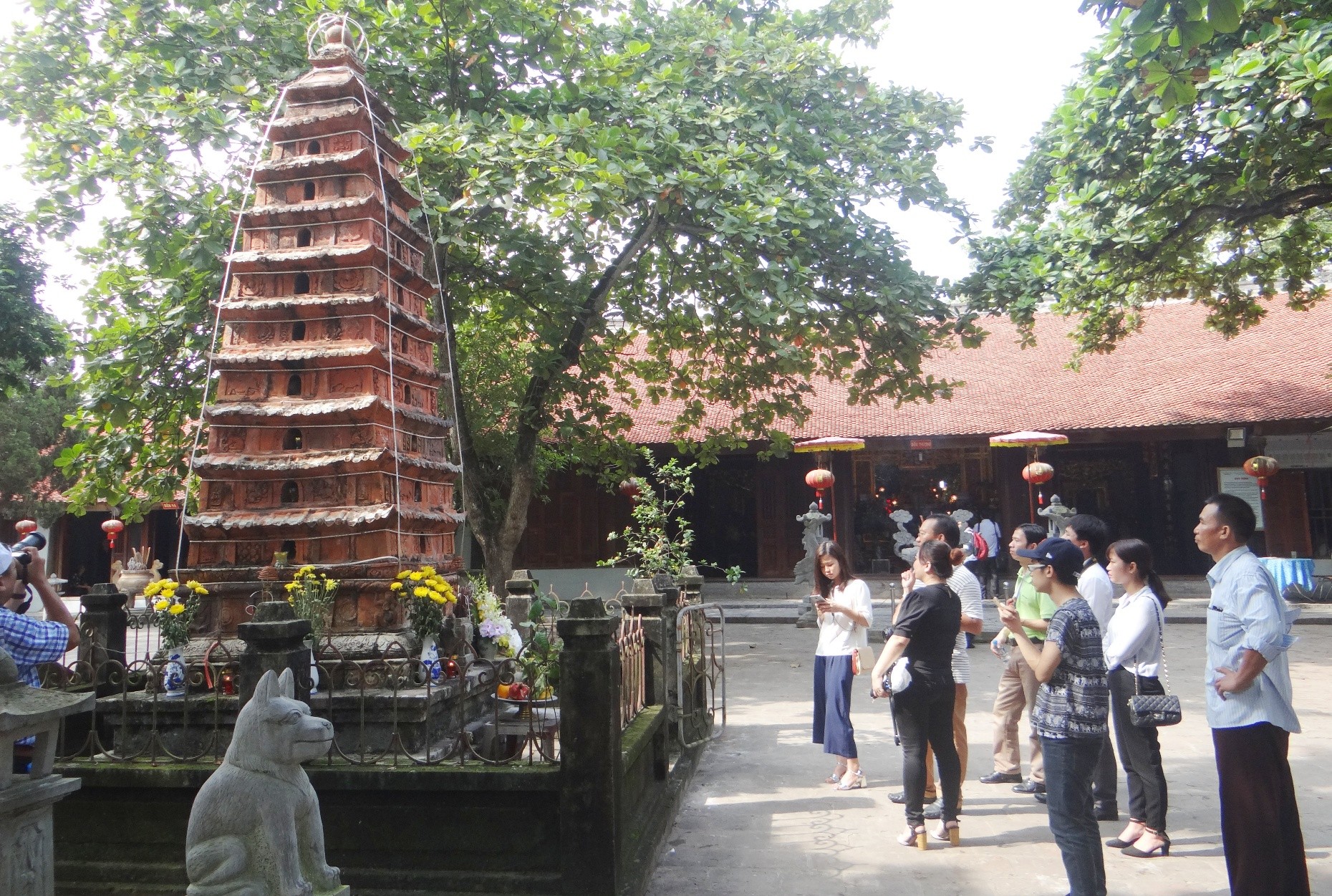
Terracotta tower at An Xa temple (An Vien commune, Tien Lu district). Photo: Phung Nguyen
|
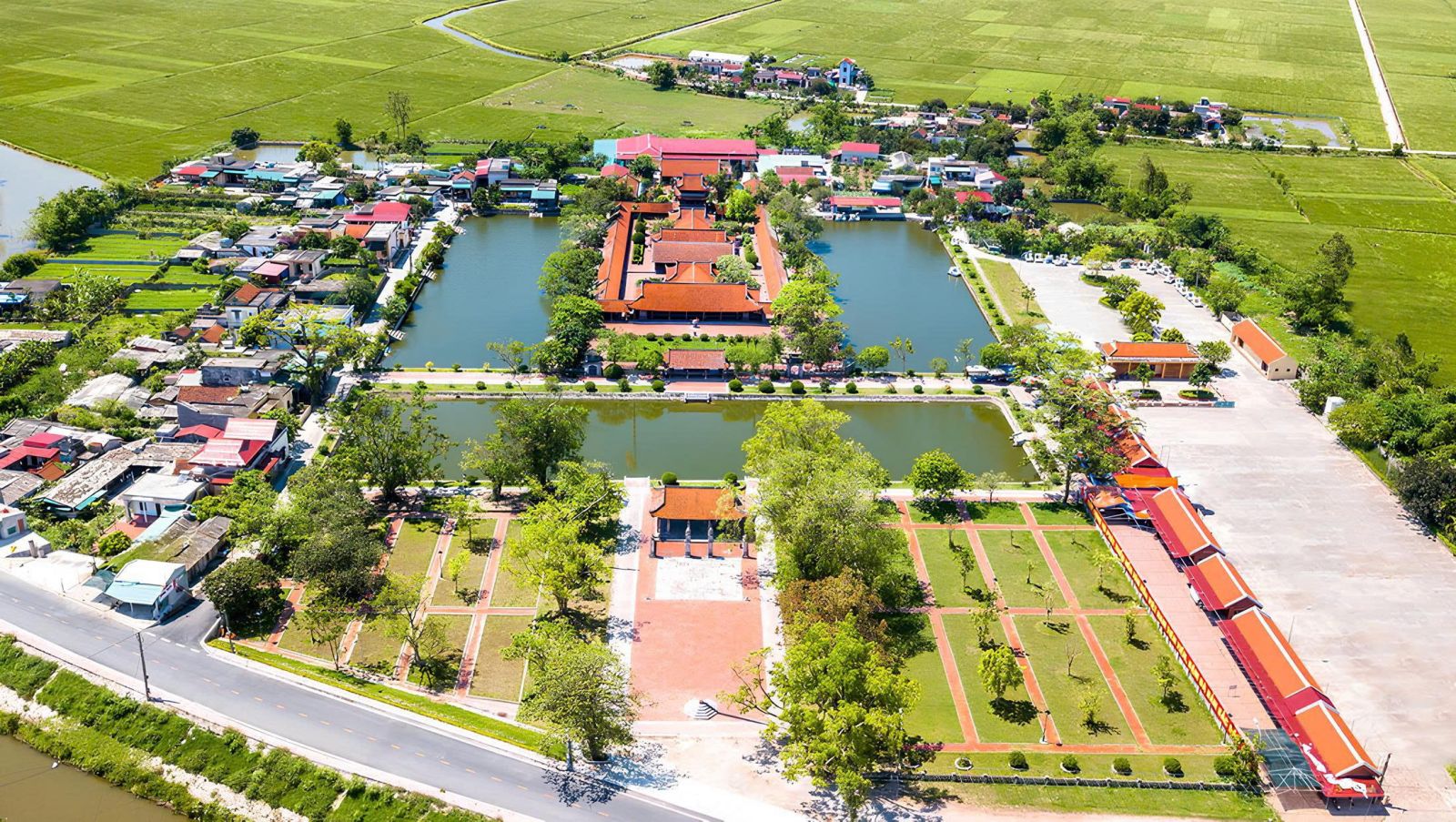
Da Hoa Temple was built on a high, flat, rectangular area of land. The temple's face faces west, looking straight at Tu Nhien beach - where it is said that Princess Tien Dung met Chu Dong Tu and the two became husband and wife. The temple is divided into 3 areas with unique architecture, harmoniously combining Buddhism, Confucianism, and Taoism.
In addition to its unique architecture, Da Hoa Temple also preserves many rare relics, typically 3 wooden altar thrones dating from the late 17th and 18th centuries. These are considered the oldest thrones still found in our country today; A pair of ceramic Bach Tho jars (one hundred words of Tho, no two similar to each other, are engraved on the side of the jar)... Da Hoa Temple has been ranked as a national cultural relic by the State since 1962.
 |
|
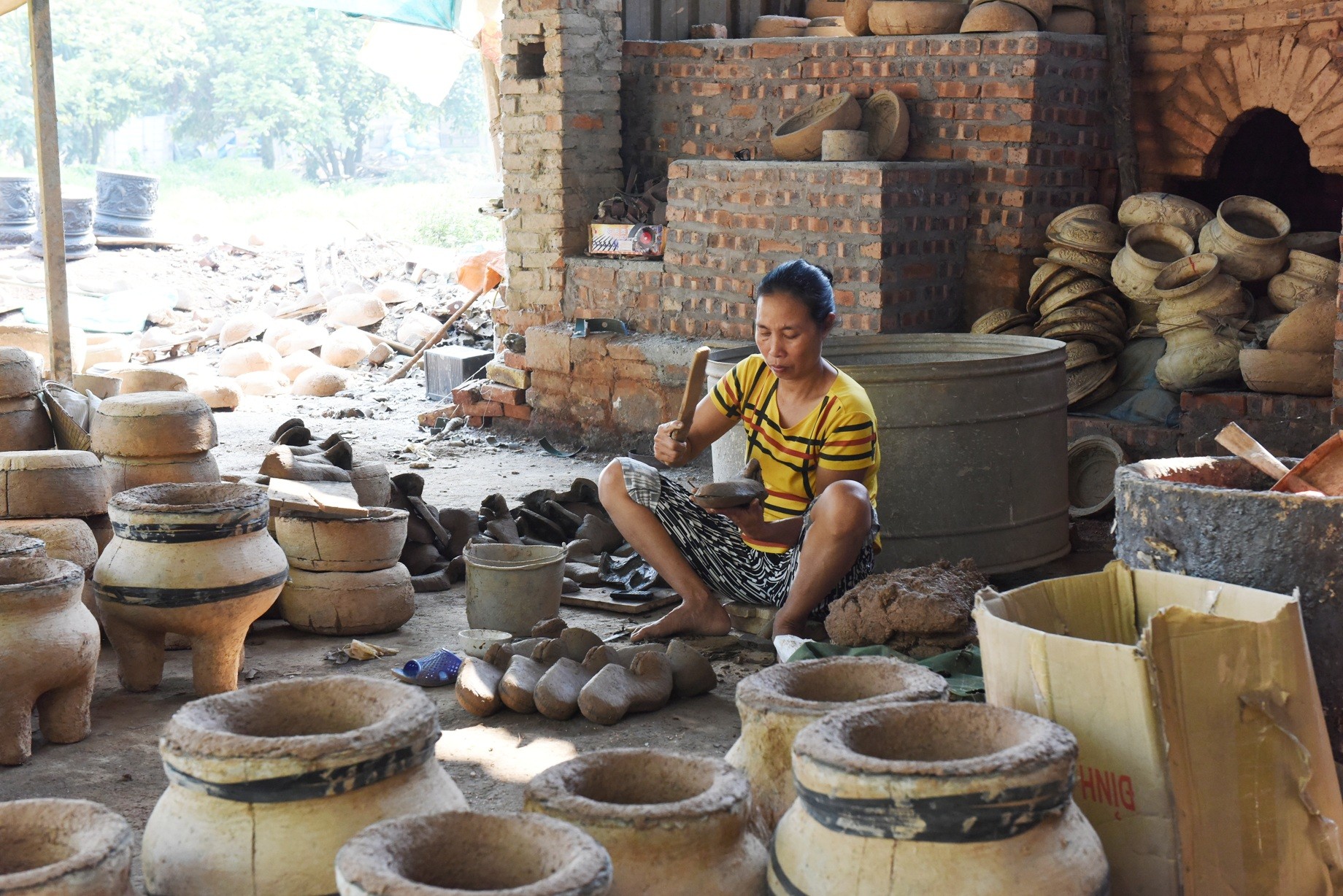
Bronze casters of Long Thuong village mold casting molds (Dai Dong commune, Van Lam district). Photo: Phung Nguyen
|
Next, visitors will go to Da Trach temple (Yen Vinh village, Da Trach commune), a place associated with the legend of Da Trach lagoon. Legend has it that at the location of Chu Dong Tu and his two wives, princesses Tien Dung and Hong Van, "transformed" into the sky on the night of the 17th day of the 11th lunar month, they collapsed into a large lagoon, Da Trach lagoon (the lagoon was formed). after just one night). Thinking that they were divinely inspired, local people built a temple to worship the three gods in the Da Trach lagoon area and named it Da Trach temple, also known as Hoa temple.
 |
|
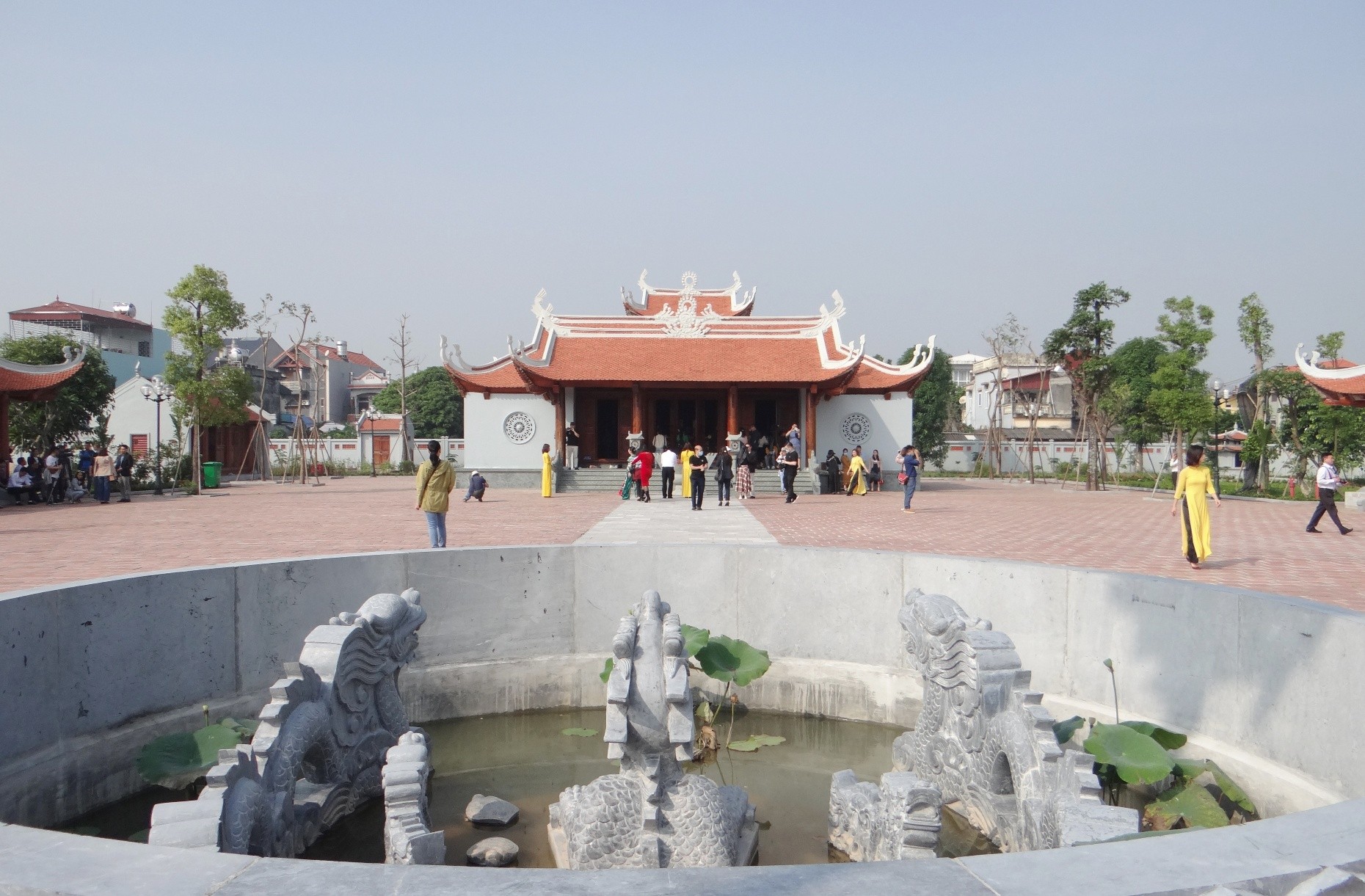
Trieu Viet Vuong Temple (Da Trach commune, Khoai Chau district). Photo: Phung Nguyen
|
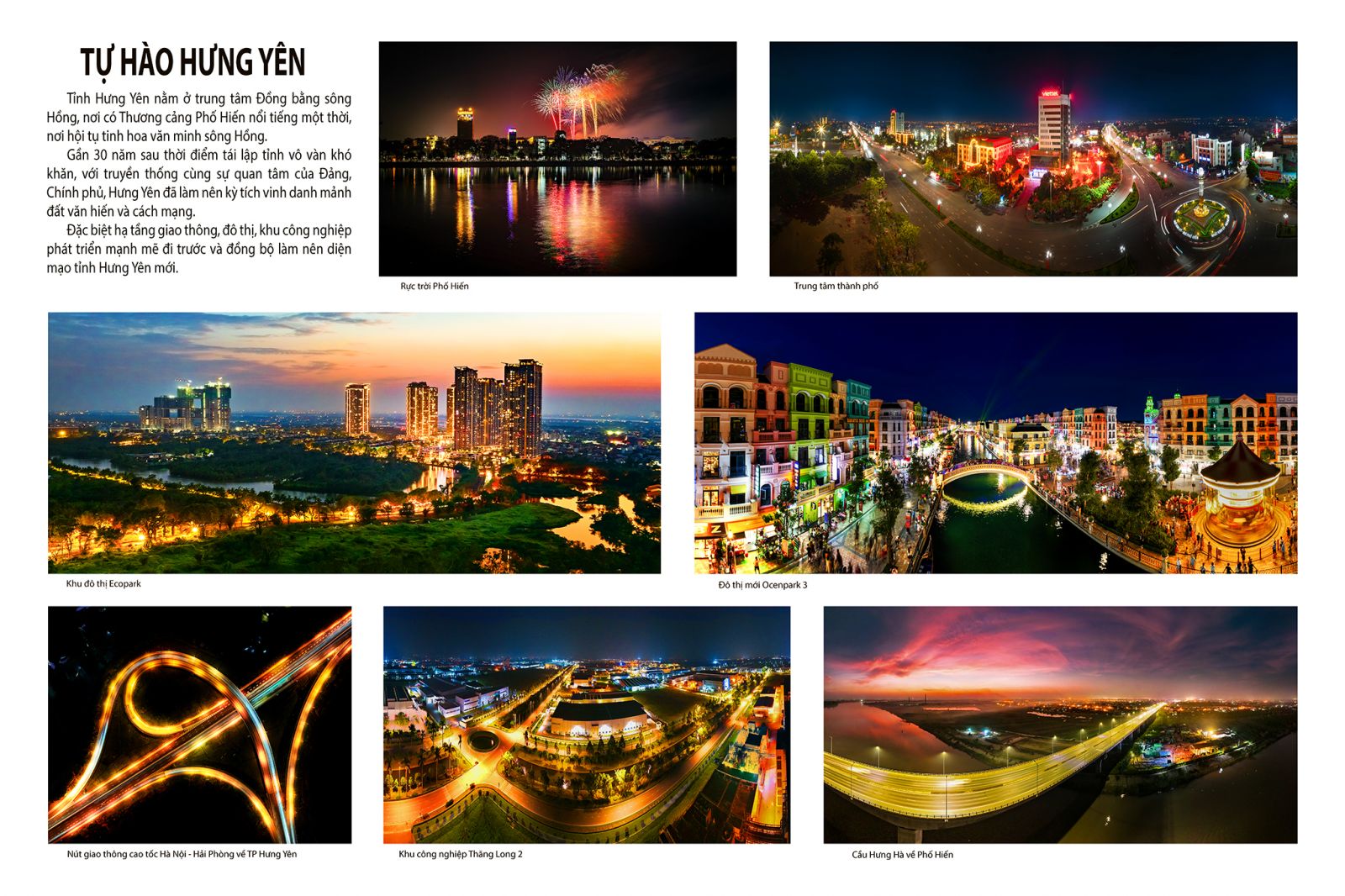
Leaving Da Hoa - Da Trach temple, continuing to sail east for more than 1 hour, visitors will reach Hung Yen city, where there is the Pho Hien relic complex with many ancient architectural works. rich in historical value.
In the 17th century, Pho Hien was famous as a prosperous urban area, second only to Thang Long - Ke Cho. People still say: "First is Kinh Ky, second is Pho Hien", also because of that prosperity.
Today's Pho Hien relic area is the crystallized result of the urbanization process of ancient Pho Hien. There are still many unique architectural works of belief and religion, the crystallization of pure Vietnamese architecture with Chinese architecture and Western architecture of the 16th and 17th centuries.
 |
|
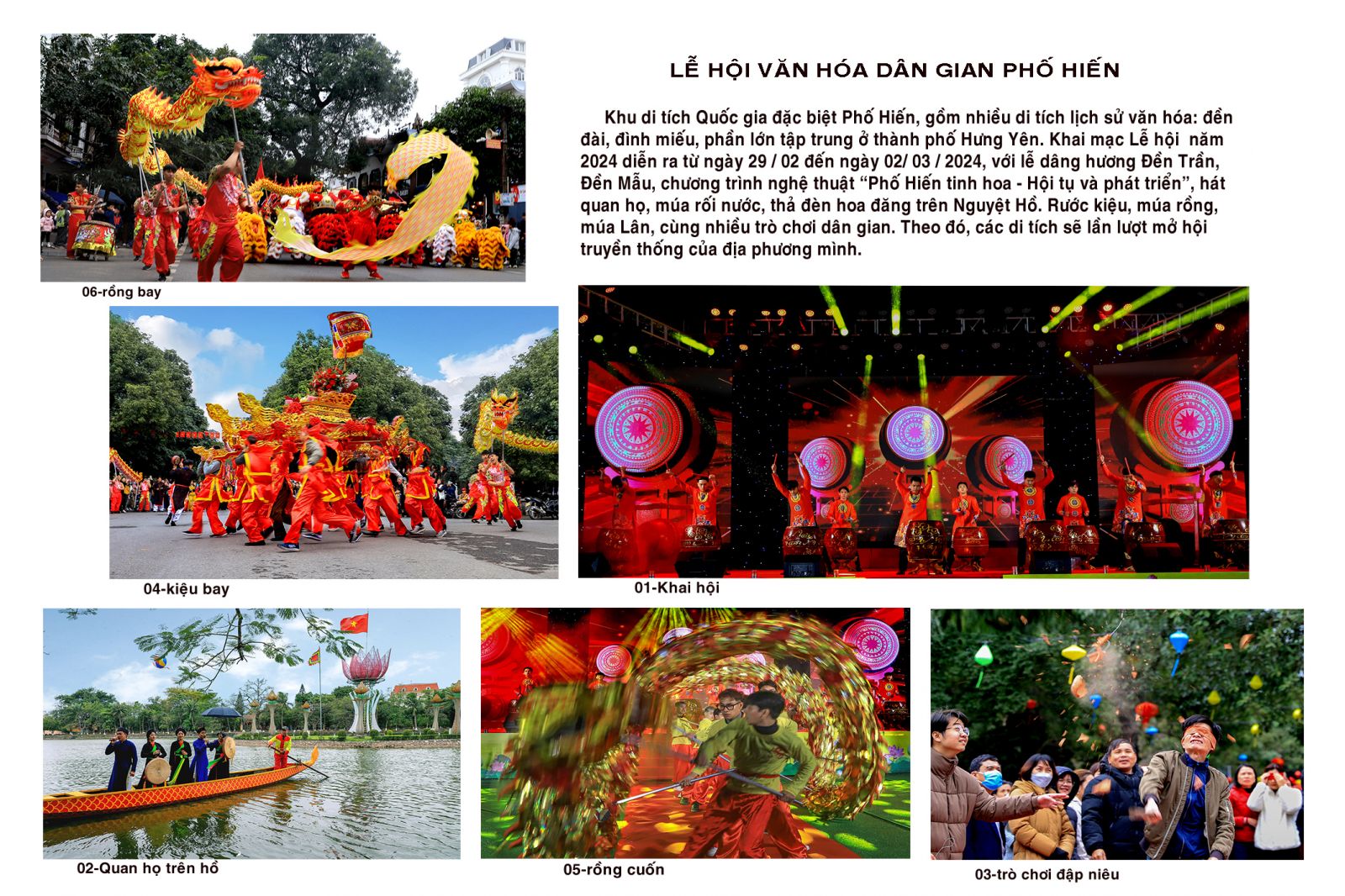
Pho Hien Folk Culture Festival (Hung Yen city). Photo: Phung Nguyen
|
Pho Hien relic area includes a complex of communal houses, temples, pagodas, shrines... with 16 works that have been ranked as historical relics, including special national historical relics. Minor symbols of both culture and architecture can be mentioned as the Temple of Literature, Mother Temple, Bell Pagoda, Tran Temple, Dong Do Quang Hoi, Thien Hau Upper - Lower Pho...
 |
|
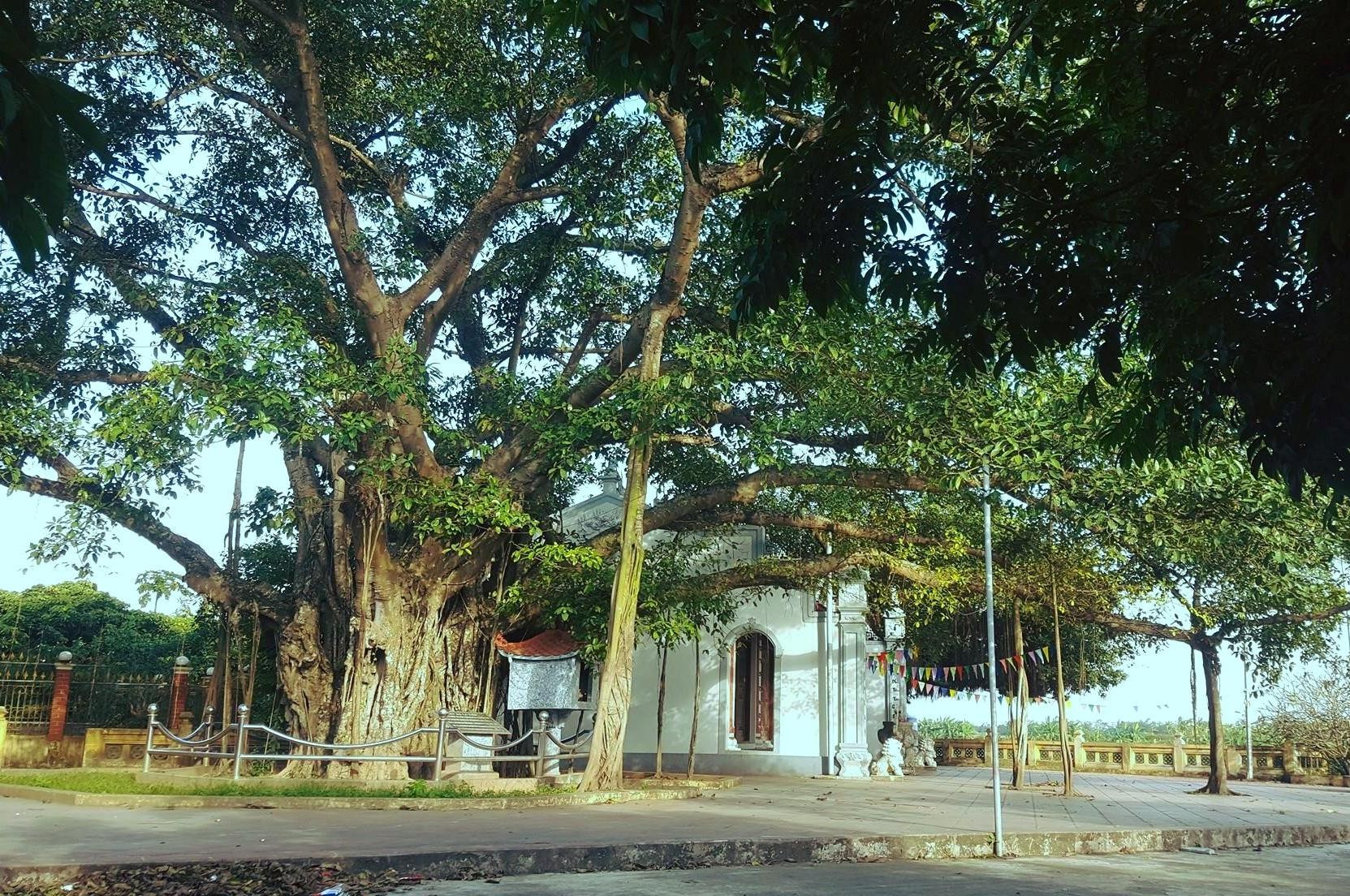
Banyan Tree Relics and La Tien Temple (Nguyen Hoa commune, Phu Cu district)
|
From Hung Yen city, travel by road to the Banyan Tree and La Tien Temple relic cluster (Nguyen Hoa commune, Phu Cu district). The La Tien banyan tree is located on the banks of the Luoc River, next to the towering memorial stele against the blue sky.
This is the place marking the victories of our army and people in the resistance war against the French colonialists. Today, this place is both a red address to educate the young generation about revolutionary traditions and a spiritual tourist destination.
 |
|
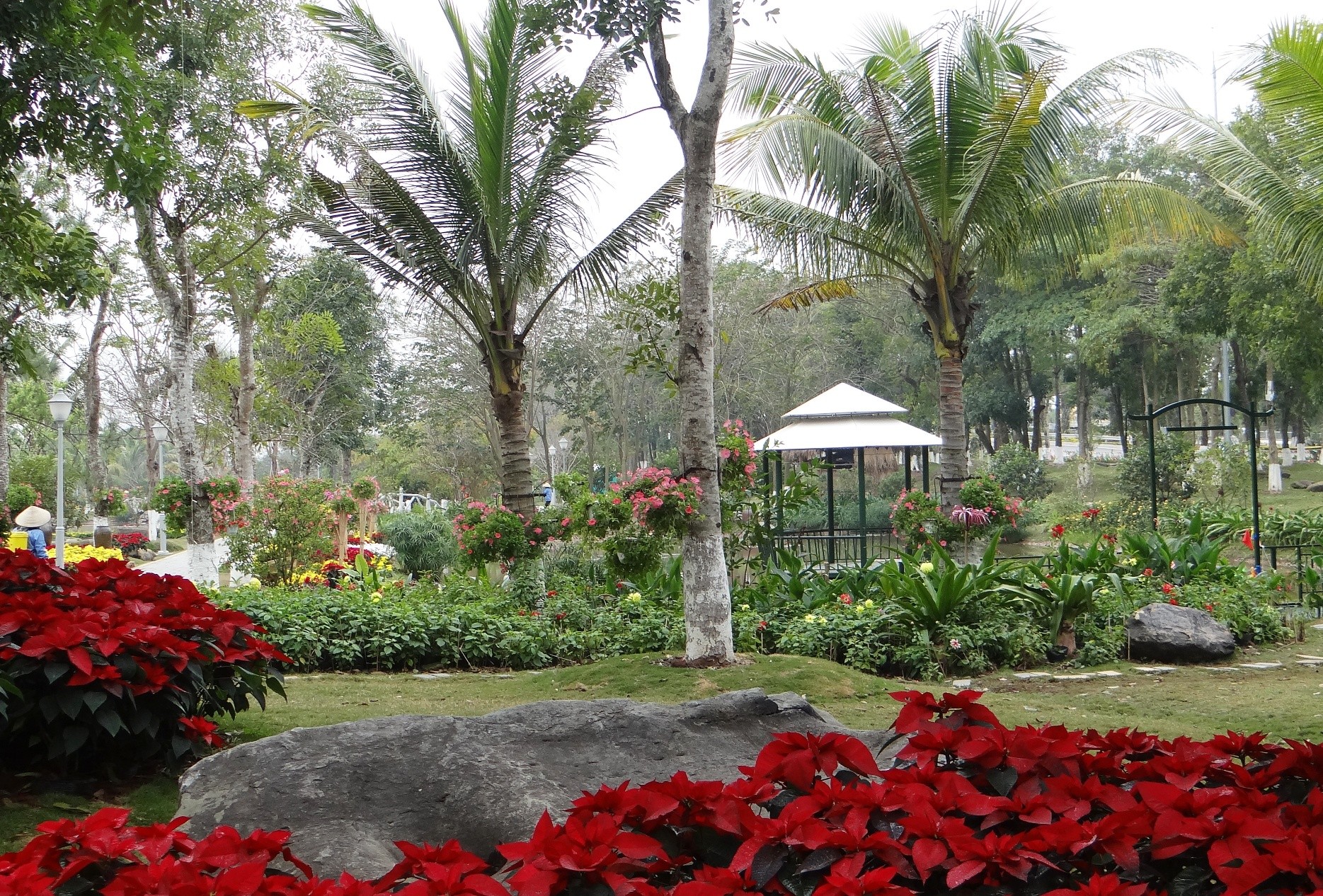
Ornamental flower and plant craft village in Van Giang district. Photo: Phung Nguyen
|
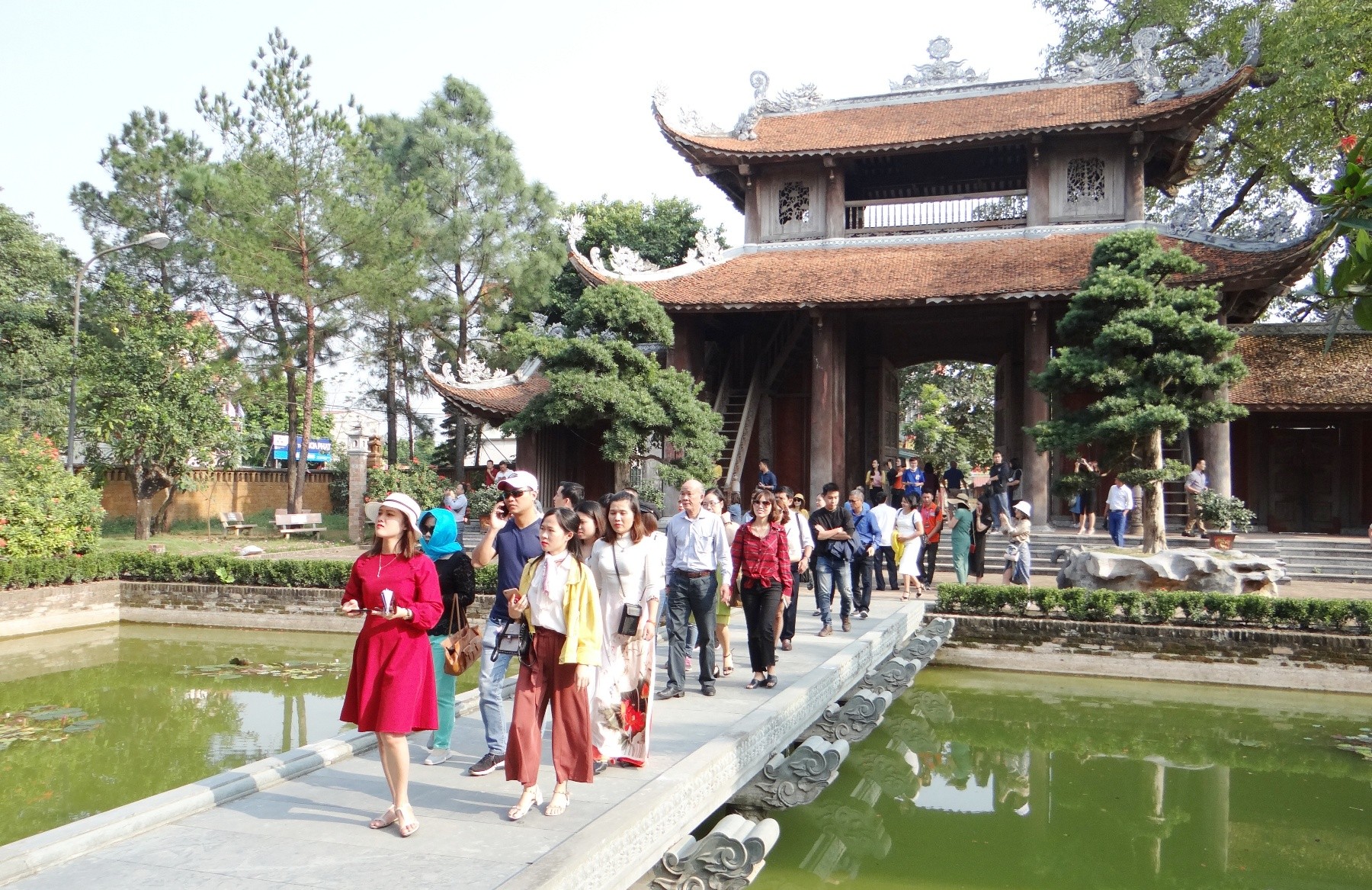
Continuing the journey, from Phu Cu towards the center of Van Lam district about 40km, visitors can stop at the Nom village relic complex - one of the oldest villages in the Northern Delta. This place still retains the ancient architectural features of Vietnamese villages with the image of "Banyan tree, water wharf, communal house yard/Pagoda quiet, tinged with time"...
 |
|
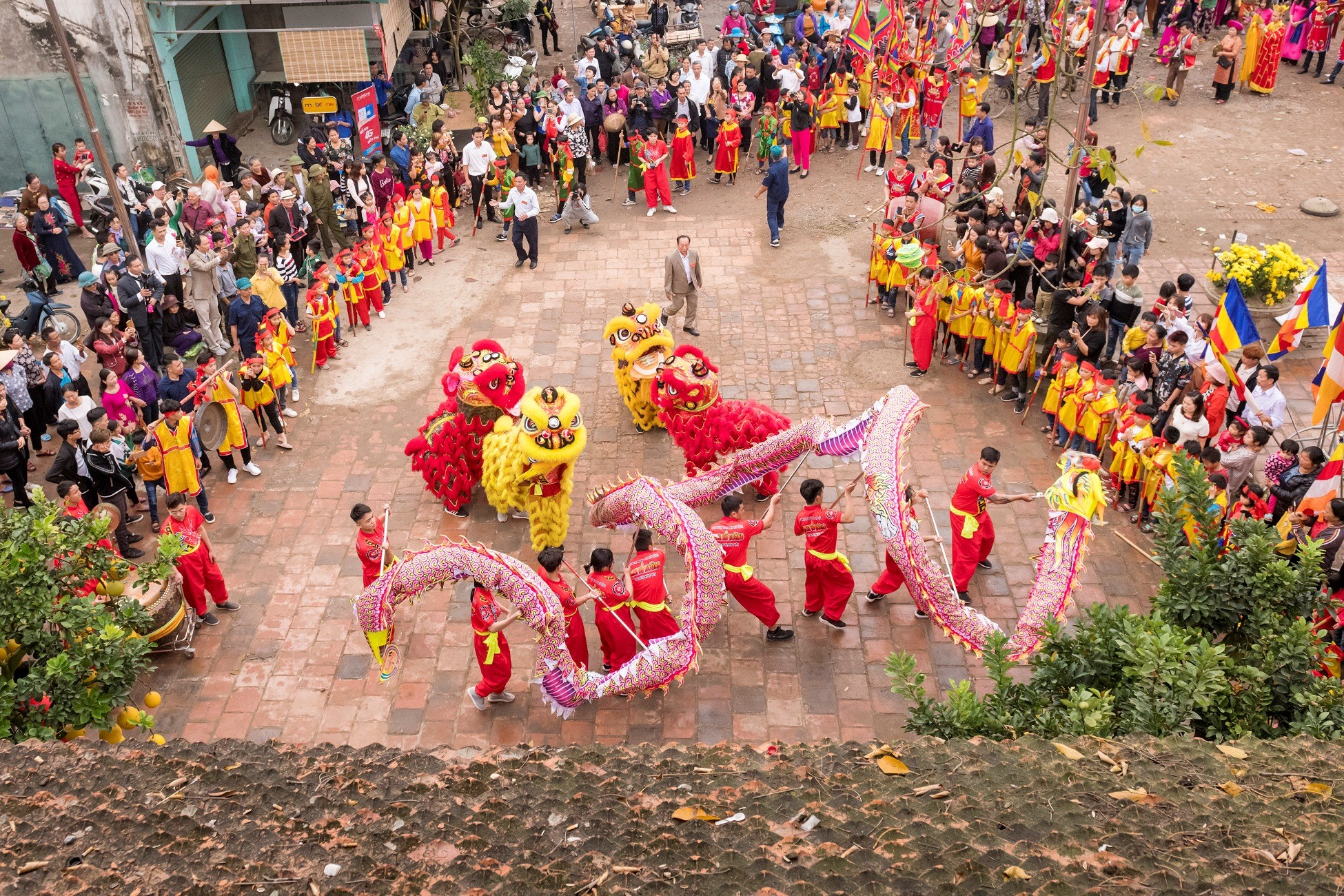
Nom village festival (Dai Dong commune, Van Lam district). Photo: Phung Nguyen
|
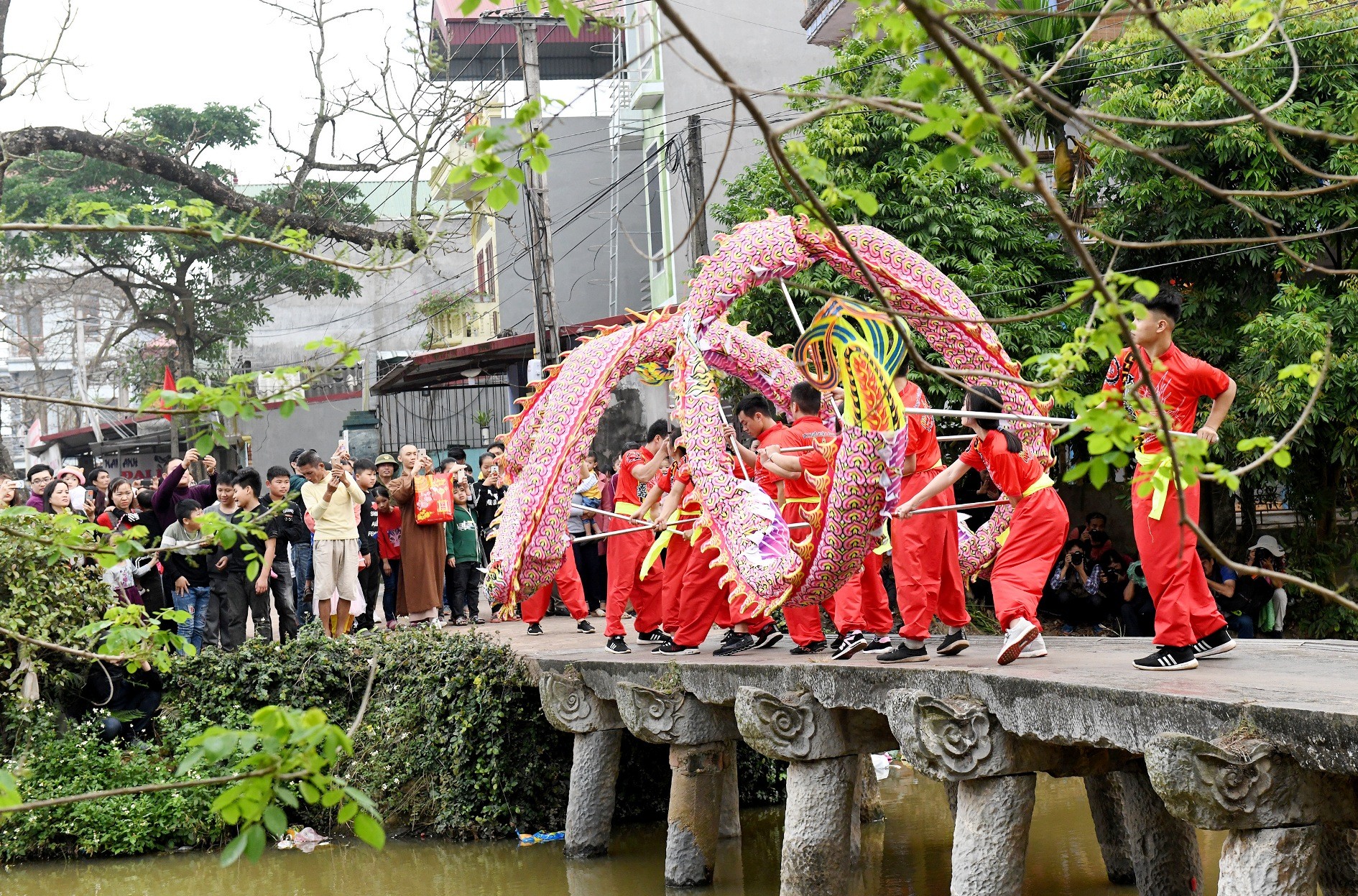
As soon as you set foot through the Nom village gate, visitors will feel like they have returned to an ancient village. The system of village roads and alleys built with red bricks, old houses, communal roofs, ancient moss-covered pagodas, systems of houses from the family lines (Phung, Do, Ta, Dan, Le,...) or wooden houses. The 9-span dragon head stone bridge, the village market... whether you've been back once or many times, it still feels very close and familiar.

 |
|
|
If you are lucky when visiting Nom village on the 1st, 4th, 6th and 9th days of the lunar calendar, you may encounter the Nom market - a traditional market space typical of Northern villages...
 |
|
Nom village stone bridge. Photo: Phung Nguyen
|
Hung Yen does not have many strengths in terms of landscapes and landscapes, but the people here, through many generations of recording and preserving history, have left behind many beautiful human values for posterity. Therefore, Hung Yen tourism is not only a place to stop to visit, sightsee or participate in festivals, but also a place to find traditional cultural values, deepen historical education, and inspire more. national pride in every Vietnamese person.
Nguồn trích dẫn: csdl.hungyentourism.com.vn
.jpg)

.jpg)
.jpg)