The relic complex is located in Khoai Chau district (Hung Yen province), over 20 kilometers from Hanoi to the West and 35 kilometers from the center of Hung Yen city to the North West. With the cultural and historical value treasured up to today, the complex becomes the famous attractions of local people and tourists....
In order to get to this place, tourists can follow two routes. Waterways from Chuong Duong Do (42 Chuong Duong Do, Hanoi) where people sail on the Red River to the East in 2 hours to get Binh Minh port (Binh Minh commune, Khoai Chau district), or by road from Hanoi along the embankment that is 20 kilometers long to get Binh Minh commune. The first place tourists will visit is Da Hoa temple which is located in Da Hoa village, Binh Minh commune.
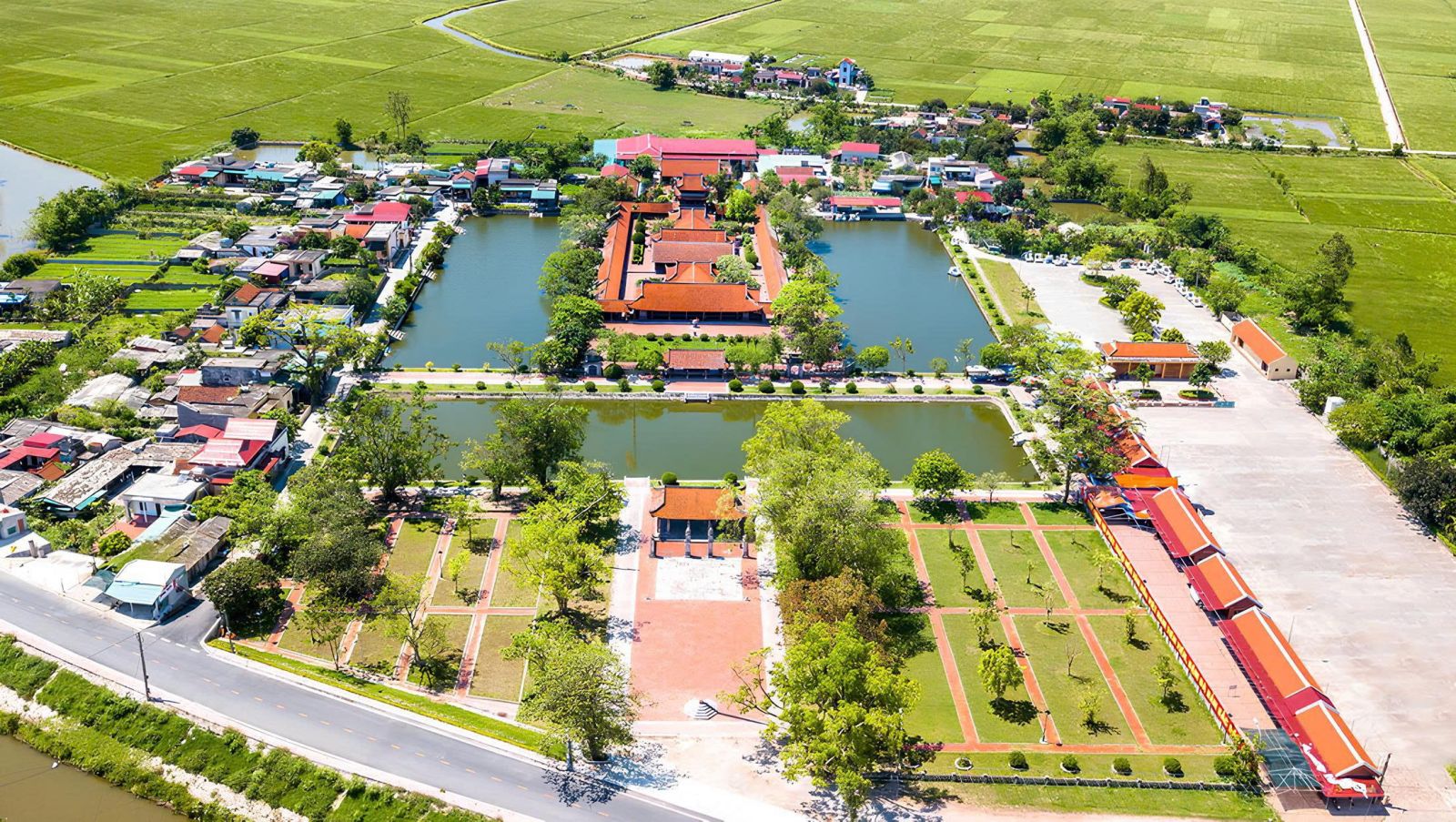
The temple is built on a high flat rectangular ground which is 18,720 square meters. This temple faces Tu Nhien ground where love between Chu Dong Tu and Tien Dung who was the daughter of 18th Hung King started.
The temple is divided into 3 zones. The outer zone is 7,200 square kilometers without barriers. The unique structure is a 2 floor stone stele house with 8 curved roofs and windows facing 4 directions. In the stone stele house, there is a stone stele recording the renovation time of Da Hoa temple and the meeting between Chu Dong Tu and Tien Dung. Following the brick paved walkway that is 6 meters wide with 2 rows of shady trees in two sides, tourists will find the main gate. Passing the main gate will lead to the middle zone. This zone is 3,400 square meters with low surrounding walls and green trees. It is divided into 2 zones. The right hand side is the steeple with the 1.5 meters bronze bell and the left hand side is the chime house with the stone chime which is 1.2 meters wide. The brick paved walkway running from the main gate to Ngo mon with 3 doors hanging the gilding sentence of ‘Bong lai cung khuyet’. Passing Ngo mon, tourists get to the inner zone. The inner zone is the harmony between Buddhism, Confucianism, Taoism with the area of 11,520 square meters building under Nguyen dynasty’s architecture including yard, worship house, incense burning building, the second palace, the third palace, Hau cung, etc. The connectors among palaces are the horse house, the cannon house, etc. In Hau cung, there are 3 altars namely Chu Dong Tu in the middle, Tien Dung Queen on the left and Hong Van – Tay Sa on the right.
The general architecture in this zone includes 18 houses with curved tile roofs that look like 18 dragon boats. This is the special architecture giving the resurgence of Tien Dung’s boats sailing on the river.
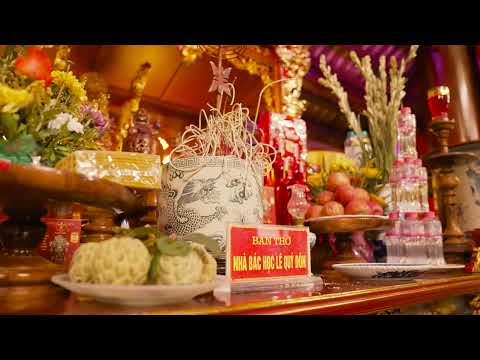
Apart from unique architecture, Da Hoa temple also keeps precious antiques such as 3 wooden thrones dated back to the 17th century and 18th century. They are the most antique thrones found in our country. Two Bach tho vases made of ceramics were carved distinctive one hundred words of Tho on the mouth of the vase.
Da Hoa was recognized as the National cultural relic in 1962.
Leaving Da Hoa temple, tourists visit Da Trach temple (Yen Vinh village, Da Trach commune) where the legend of Da Trach pond originated. Legend has it that, the position where Chu Dong Tu and Tien Dung flew to the sky on November 17 on the lunar Calendar subsided to create a large pon called Da Trach pond (which means the pond that was formed after 1 night). It was said that magic happened so the locals established a temple to worship 3 legends in the area of Da Trach pond and named it Da Trach temple or Hoa temple.
Da Trach temple was renovated many times; however, the current architecture was complete after the overhaul in 1890 with the structure of Cong letter. The front faces the East and Ban Nguyet lake; the roof was carved with beautiful dragon patterns including 3 rooms. Hau cung is the most beautiful design with the three-level arch bringing tourists the imagination of sitting in a deck. From outside in, the first on the right is the temple of God of the Earth, the martial art statue and the statues of Chu Dong Tu’s parents. The altar of Be ngu thuyen quan is on the left (the statue of a gilding carp); the next one is the altar of Trieu Viet Vuong (548-571). In the middle of Hau cung comes 3 altars Chu Dong Tu in the middle, Tien Dung Queen on the left and Hong Van – Tay Sa on the right. There are two statues of horses; one is black and one is white. According to the legend, they are two horses Chu Dong Tu and Tien Dung used to ride to cure patients.
The temple has the steple keeping a bell of 'Da Trach Tu Chung’ Da Trach temple’s bell) which was made in the year of 14th Thanh Thai (1902), 1.5 meters long and 0.8 meters wide. There are two 9-room houses used to keep 9 palanquins. Two parallel rows of steles (one is broken) built in the year of 17th Gia Long (1819) are 1.6 meters high, 0.8 meters wide, 0.17 meters thick. Ban Nguyet lake, parallel sentences especially the image of the conical hat and a stick which were used to cure patients reflect the legend of Chu Dong Tu-Tien Dung-Tay Sa;.
Da Trach temple was recognized as the National Art Architecture in 1989.
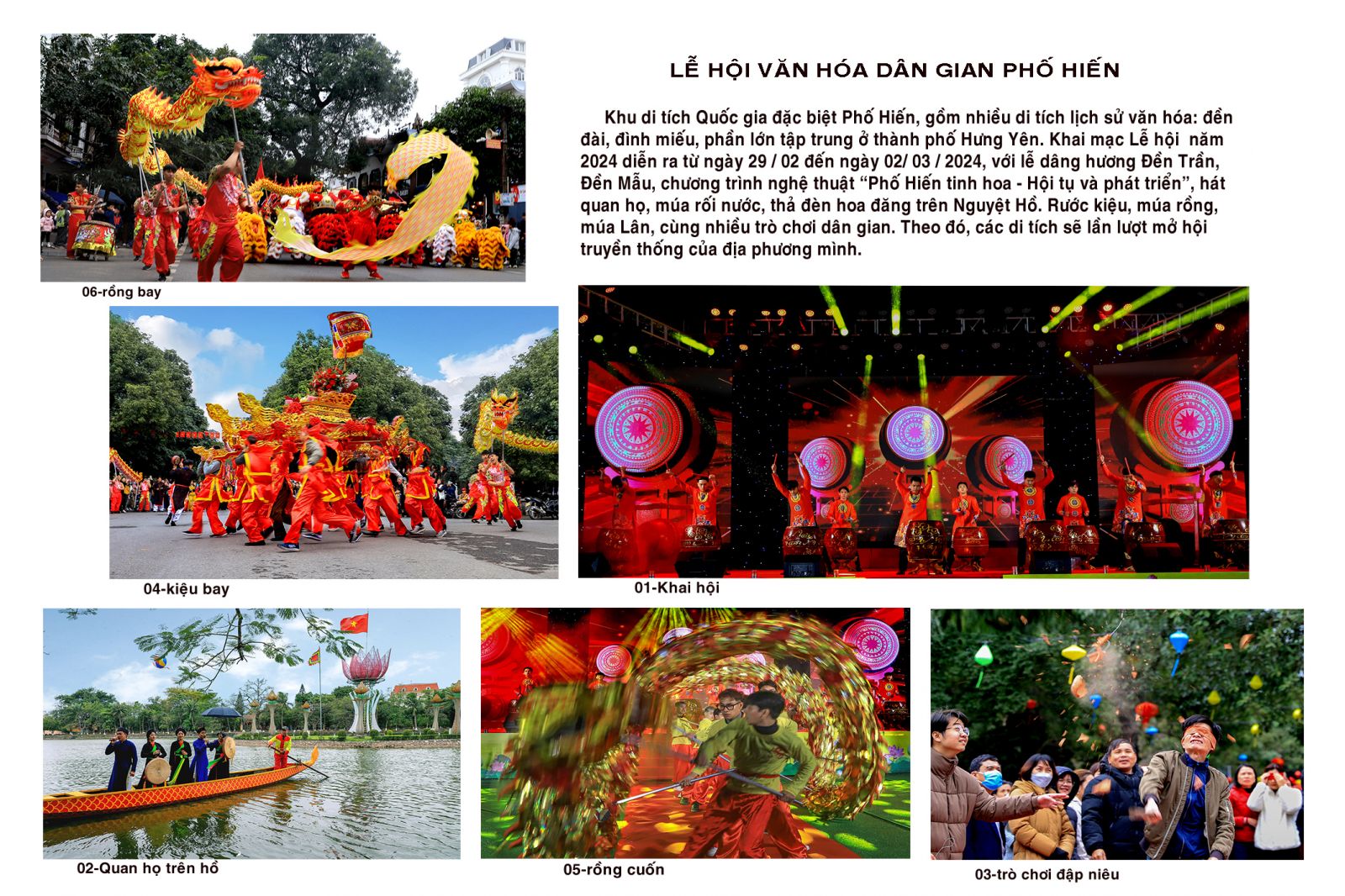
In order to commemorate Chu Dong Tu and Tien Dung princess's contribution, locals hold the festival every year. This is one of 16 biggest festivals in the country with various cultural activities and sports. The significant festival is water procession with the participation of 10 boats running to Red River to take water to offer the Lord in Da Hoa and Da Trach temple. This activity is held as the ancient ritual that lasts in 2 hours. During the excursion, dragon performance takes place on the boat.
It is 2 kilometers to the West to reach Ham Tu door (Ham Tu commune). This is the famous historical relic imprinting the glory of Dai Viet residents under Tran dynasty in the resistance war against Nguyen Mong in 1285. The last stop in this journey is Bai Say (Tan Dan commune) - a famous historical relic attached with Bai Say revolution led by Nguyen Thien Thuat from 1885 to 1892. This was one of the revolutions of Can Vuong at the end of 19th century against dominance of French colonials.
.jpg)

.jpg)
.jpg)