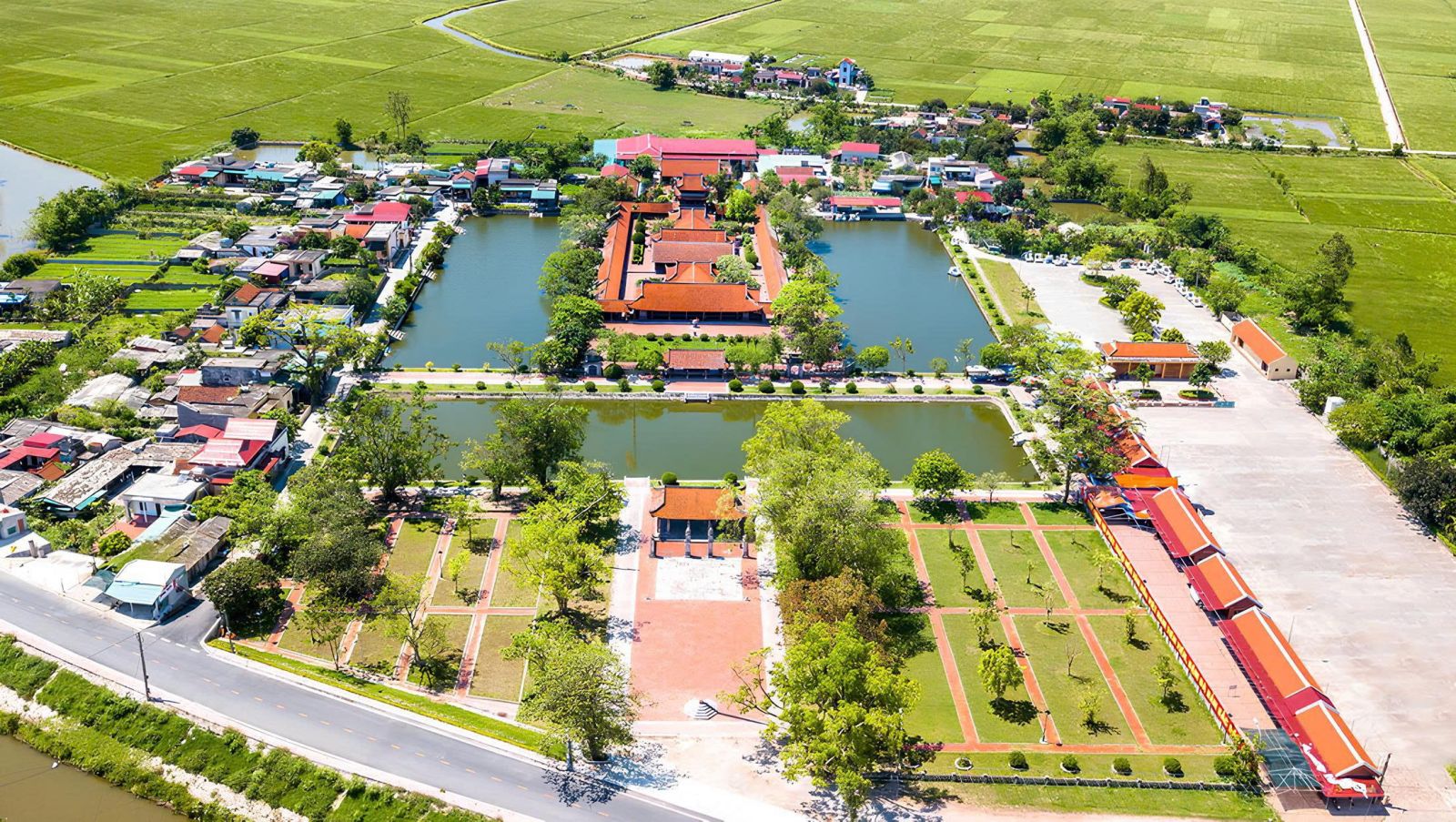
Driving along National road 5 on the direction from Ha Noi to Hai Phong and turning right at km 18+500, there comes a small stone way leading to Nghia Trai village (Tan Quang, Van Lam, Hung Yen). It is famous for not only competent doctors saving lives but it is also one of the biggest herbal medicine villages in North Vietnam. The village provides thousands of tons of herbal medicine of all kinds each year....
As legend has it, in 1572, there were 3 Generals in Ly Thanh Tong dynasty helping villagers with cultivating, growing herbs and saving people’s lives after beating Chiem enemies. Thanks to their great contribution to the country, they were knighted and deified by villagers in a temple called Dinh Mieu.
Since then, regardless of time, dynasties, the impact of ever-changing economy as well as ups and downs, locals still commit to herbs and medicine even when goods are stagnant. Almost 100% of households engages in cropping, processing and sale of herbal medicine. There have been over 137 villagers doing the job of "saving people’s lives”. Many families have 4 to 5 generations engaging in the medical career.
Some call Nghia Trai village “the perfume village”. In fact, fragrance fills the air all day and night. Villagers here grow herbs like others growing rice and corns. They grow ordinary herbs such as perilla, marjoram, plantains, pennywort, wormwood and other precious ones such as patchouli, chrysanthemum flowers, desmodium styracifolium. They make use of large rice field, small gardens or empty land along the roads to grow herbs. All villagers from elderly to children can distinguish smells of herbs. They are as great as doctors.
Apart from the fragrance, tourists may be startled by the hitting sound coming from herb processing and mince. Every family member, regardless of gender and age, is busy doing their own work, namely slicing, mincing, pounding or kneading herbs. Nghia Trai looks like a huge site of herbs.
Nghia Trai residents take this job to many regions throughout the country, especially big cities such as Ha Noi, Hai Phong, Ho Chi Minh city. With the humanity vision, the store not only promotes traditional herbal science but also preserves village culture. That land is renowned for 2 professions of “physician and teacher”. Herbs are dear to villagers here. Income from herbs feeds people and funds children’s study. Thus, Nghia Trai locals expand their cropping, processing and sale to other regions in order to improve capacity of herbal medicine supply and boost demand of inland and outbound markets.
According to preliminary estimation: Each year, there are 4,500 to 5,000 tons of traditional Vietnamese medicine and 2,000 to 3,000 tons of Chinese herbs that are processed and sold here. Along the brick roads leading to the village with shadowy longan trees, tourists can see the large fields planted precious medicinal plants. Rich soil grows expensive plants. Poor soil is planted with other ordinary herbs. People make use of every inch of soil to grow herbs. People can sell herbs in productive season, otherwise, they are used as the tonic or medicine for family purposes and additives in daily meals. The medicinal plants are not sprayed with pesticides during their growing period because the smell of these kinds of plants make them immune from any pests. Some contaminated with fungi are treated by spraying pesticides 2 to 3 times.
Picking herbs requires techniques, experiences and carefulness. Leaves must be crisply dried but not crushed or contaminated. Tubers and stems must be smooth, shining and properly dry but still keep the typical fragrance of each herb. Once herbs are dried, many types seem to be similar. Only experienced people can distinguish different kinds of herbs.
Each family specializes from 2 to 3 herbs on average. Some have tens or hundreds of them. People here are busy all day working with herbs. There are 180 elderly (70 years old and over) out of 1,600 people here doing this job, in which there are 112 people living at 80 years of age. Almost all of them and their families are living on processing herbs. Especially, no one here get respiratory diseases. It is true to say that herbal manufacturers and traditional Chinese medicine physicians who always get exposure to herbs or residents who take care of themselves with traditional Chinese medicine always stay healthy and less vulnerable to terminal diseases.
.jpg)

.jpg)
.jpg)