Maritime Economy: Breakthroughs from a Strategic Vision - Part 1: Linking Maritime Economic Development with a Green Energy Strategy
In May 2025, during a previous working visit to Thai Binh province, Prime Minister Pham Minh Chinh emphasized: "The province needs to reclaim land from the sea to create new space for economic zones, infrastructure, and industries to achieve breakthrough development." This is a strategic direction for this coastal locality with great potential. Based on Resolution No. 36-NQ/TW of the 12th Central Committee of the Communist Party of Vietnam on the Strategy for Sustainable Development of Vietnam's Marine Economy to 2030, with a vision to 2045, the province has concretized this policy into action, ...
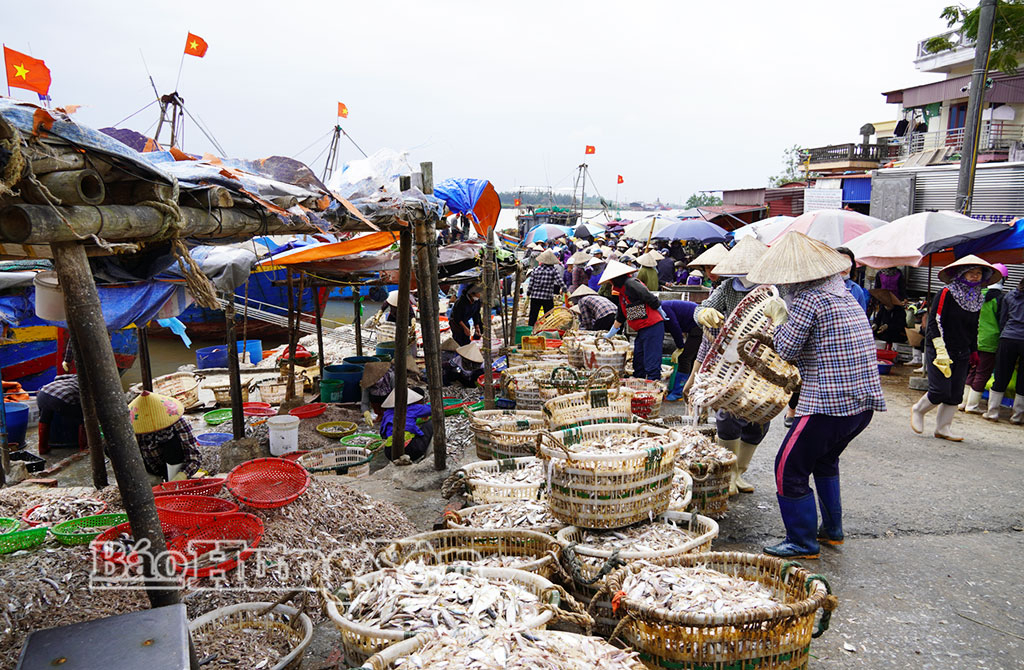
The Tan Son fishing port in Thai Thuy commune is bustling with activity.
Leveraging its advantages of being surrounded by rivers on three sides and the sea on one side, with a 54km long coastline, 5 major river mouths flowing into the sea, and over 16,000 hectares of tidal flats, the province will effectively exploit its potential during the 2020-2025 period, making the marine economy a key focus and contributing to an average annual growth rate of 9.17% in gross regional domestic product (GRDP).
Aspiration to reach out to sea
During the period 2021-2025, the agricultural, forestry, and fisheries sector of the province maintained stable growth, with an average GRDP of 2.22% per year and a production value increase of 3.96% per year. Implementing the Resolution of the previous Thai Binh Provincial Party Congress, coastal communes proactively restructured production towards a modern and sustainable direction, linking aquaculture with exploitation and processing, forming a linked value chain. A prime example is the high-tech shrimp farming model of Mr. Nguyen Xuan Su in Thai Ninh commune. On his 5-hectare plot, he maintains a whiteleg shrimp farming operation with three harvests per year, achieving a yield of 10-15 tons/hectare/harvest and generating revenue of over 1 billion VND/hectare/year. Thanks to the orientation towards developing the marine economy and linking production with the market, the total production value of Thai Ninh commune in the 2020-2025 period reached 1,704 billion VND, increasing by an average of 4.58% per year, with the marine economy accounting for a large proportion, contributing to improving the lives of the people.
Not only strong in aquaculture, the province currently has 738 fishing vessels with a total capacity of over 104,000 KW, 100% of which have been updated in the national Vnfishbase database. The linkage between aquaculture, fishing, and seafood processing has opened up a sustainable path. A prime example is Rich Beauty Vietnam Food Co., Ltd., located in Thai Thuy commune, specializing in processing and exporting sushi shrimp, breaded shrimp, salmon, and caviar to the Japanese and Taiwanese (China) markets. In the first eight months of 2025, the company exported 530 tons of products, aiming for an additional 300 tons in the last four months of the year, with projected revenue of nearly 10 billion VND per year.
During the 2021-2025 period, coastal communes will focus their efforts on implementing three key development breakthroughs: concentrating on the comprehensive construction and development of the Thai Binh Economic Zone; prioritizing the construction of a main road system connecting with external transportation routes and industrial-urban-service zones within the Economic Zone; and implementing high-tech aquaculture investment projects, as well as high-value-added trade, tourism, service, and marine economic sectors, while simultaneously protecting coastal protection forests and safeguarding maritime sovereignty and border security. Comrade Do Quy Phuong, Deputy Director of the Department of Agriculture and Environment, said: Leveraging the province's strengths and potential in marine economic development, the total fisheries production of the province is estimated to reach 305.8 thousand tons in 2025, an increase of 17.5% compared to 2020. The goal is to achieve a growth rate of 2.1% in the agriculture and fisheries sector by 2030.
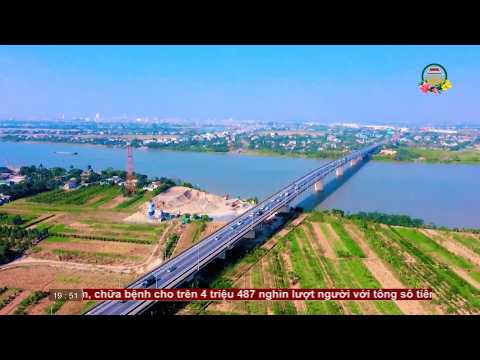
To promote the development of the marine economy, the province focuses on investing in synchronous infrastructure to create a foundation for attracting investment. Currently, inter-regional connectivity has been established with important national highways such as National Highways 5, 10, 37, 38, and 39; the Hanoi-Hai Phong expressway, the road connecting the Hanoi-Hai Phong and Cau Gie-Ninh Binh expressways, the Ninh Binh-Hai Phong expressway (CT.08), and the coastal road. In particular, the CT.08 expressway project, the 33.3km section through Hung Yen, passing through 10 newly merged communes, has achieved 98.6% land clearance.
Along with road transport, port infrastructure opens new doors to attract investment. At the end of June 2025, the Ba Lat Liquid Cargo Port project officially commenced construction with an area of nearly 7 hectares and an investment of 278 billion VND, capable of receiving 3,000-ton vessels. The Ba Lat port project is being implemented when the inter-regional transport system is synchronized, connecting with the CT.08 expressway, the Thai Binh - Ha Nam expressway (CT.16), Hanoi Ring Road 5 (CT.39), and the national and provincial road network. This is not just an infrastructure project, but a crucial link in the energy logistics chain, connected to industrial parks and factories within the Thai Binh Economic Zone.
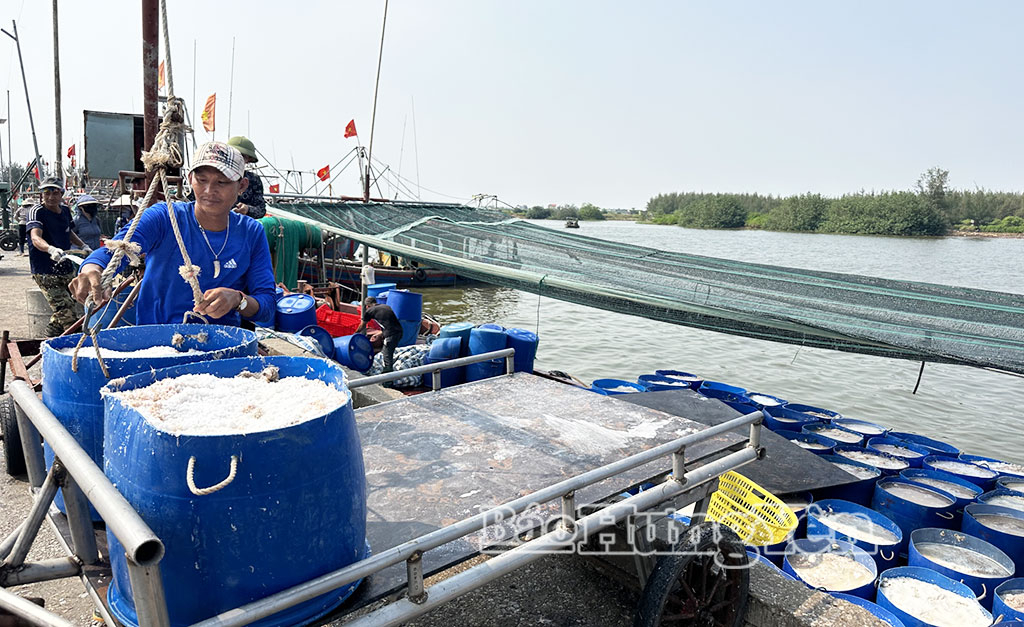
The people of Nam Cuong commune received a windfall of small shrimp after their fishing trip.
According to Decision No. 140/QD-TTg dated January 16, 2025, Thai Binh seaport belongs to seaport group No. 1, planned to handle 6.8 to 7.9 million tons of cargo by 2030; with over 10 berths. Seaport infrastructure and inter-regional transportation are the foundation for the formation of a coastal urban-industrial-service chain. By 2030, in addition to ensuring that the three main berth areas – Diem Dien, Tra Ly, and Ba Lat – are operated according to the planned scale, the province will study the possibility of forming an offshore port area capable of receiving vessels up to 50,000 tons.
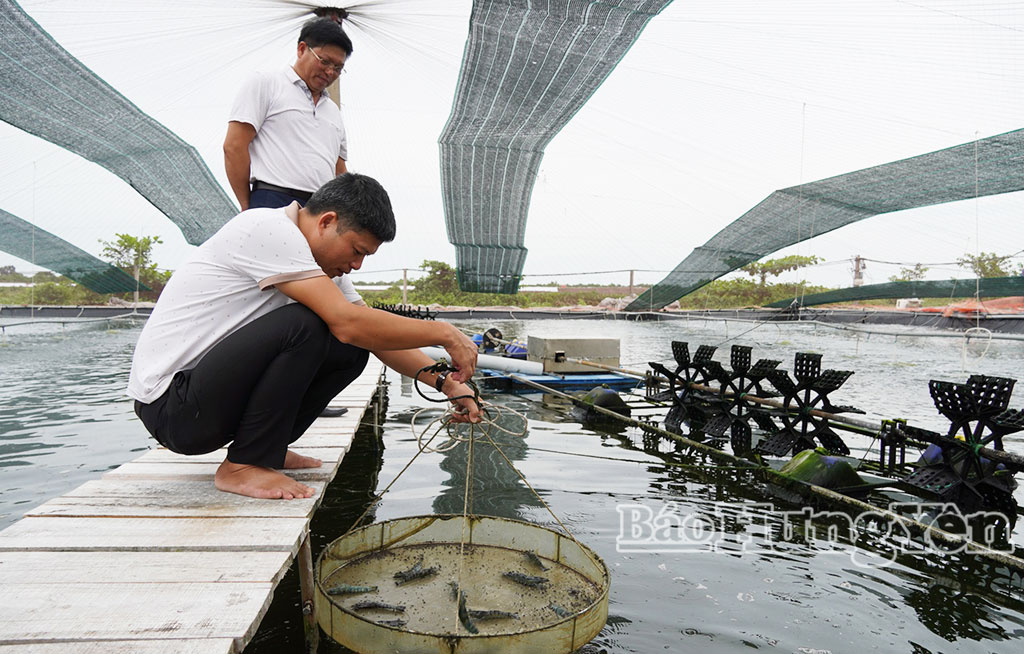
High-tech shrimp farming model in Thai Ninh commune.
Green energy strategy
With many key projects already planned, such as LNG thermal power plants, onshore wind power, offshore wind power, and solar power, this is the direction for green energy transition, realizing the goal of net zero emissions by 2050. Notably, the Thai Binh LNG thermal power plant project with a capacity of 1,500MW, invested by a consortium of Tokyo Gas, Kyuden, and Truong Thanh Vietnam, will commence construction in October 2025, begin operation in 2028, and is expected to contribute 4,000 billion VND/year to the state budget when operational.
Furthermore, the coastal region also has the potential of over 10 billion cubic meters of offshore gas reserves, opening up significant opportunities for the development of the energy industry. Comrade Vu Kim Cu, Member of the Standing Committee of the Provincial Party Committee and Head of the Provincial Economic Zone Management Board, stated: "We are closely coordinating to implement the Thai Binh LNG Thermal Power Plant project, considering it a highlight of our clean energy strategy. At the same time, the province is orienting the development of a comprehensive infrastructure including seaports, inland ports, coastal roads, and in the future, a dedicated coastal airport, forming a large-scale multi-sector economic cluster closely connected with leading industrial and service centers such as Hai Phong and Quang Ninh. The goal is not only to increase local economic growth but also to transform Hung Yen into a regional energy industry center.
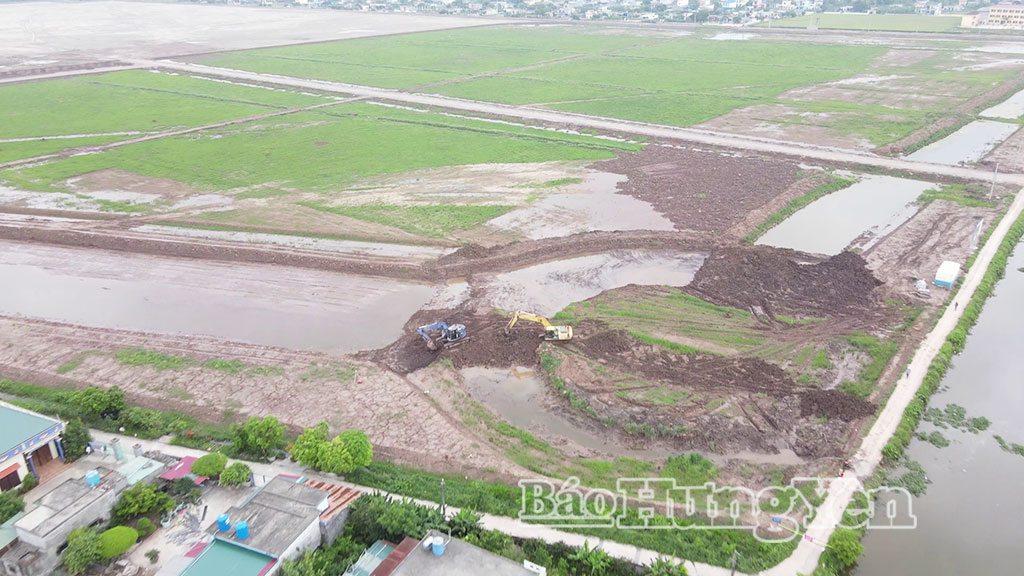
Expedite the construction of infrastructure for Hung Phu Industrial Park.
Developing green energy in conjunction with the marine economy will be the "key" for the province to achieve its dual goals: ensuring energy security while fulfilling international commitments on combating climate change. This is also a step consistent with the central government's strategic direction on building green and sustainable economic growth poles in the Red River Delta region.
Nguyễn Thắm - Trần Tuấn
Nguồn trích dẫn: baohungyen.vn
.jpg)
.jpg)
.jpg)