From the Bai Say uprising to the first Communist Party cell in Hung Yen was the development of the patriotic movement against the French colonialists, from spontaneous to self-conscious, from not having a political party to having the Communist Party itself. leadership property....
From the Bai Say uprising to the first Communist Party cell in Hung Yen was the development of the patriotic movement against the French colonialists, from spontaneous to self-conscious, from not having a political party to having the Communist Party itself. leadership property....
 |
|
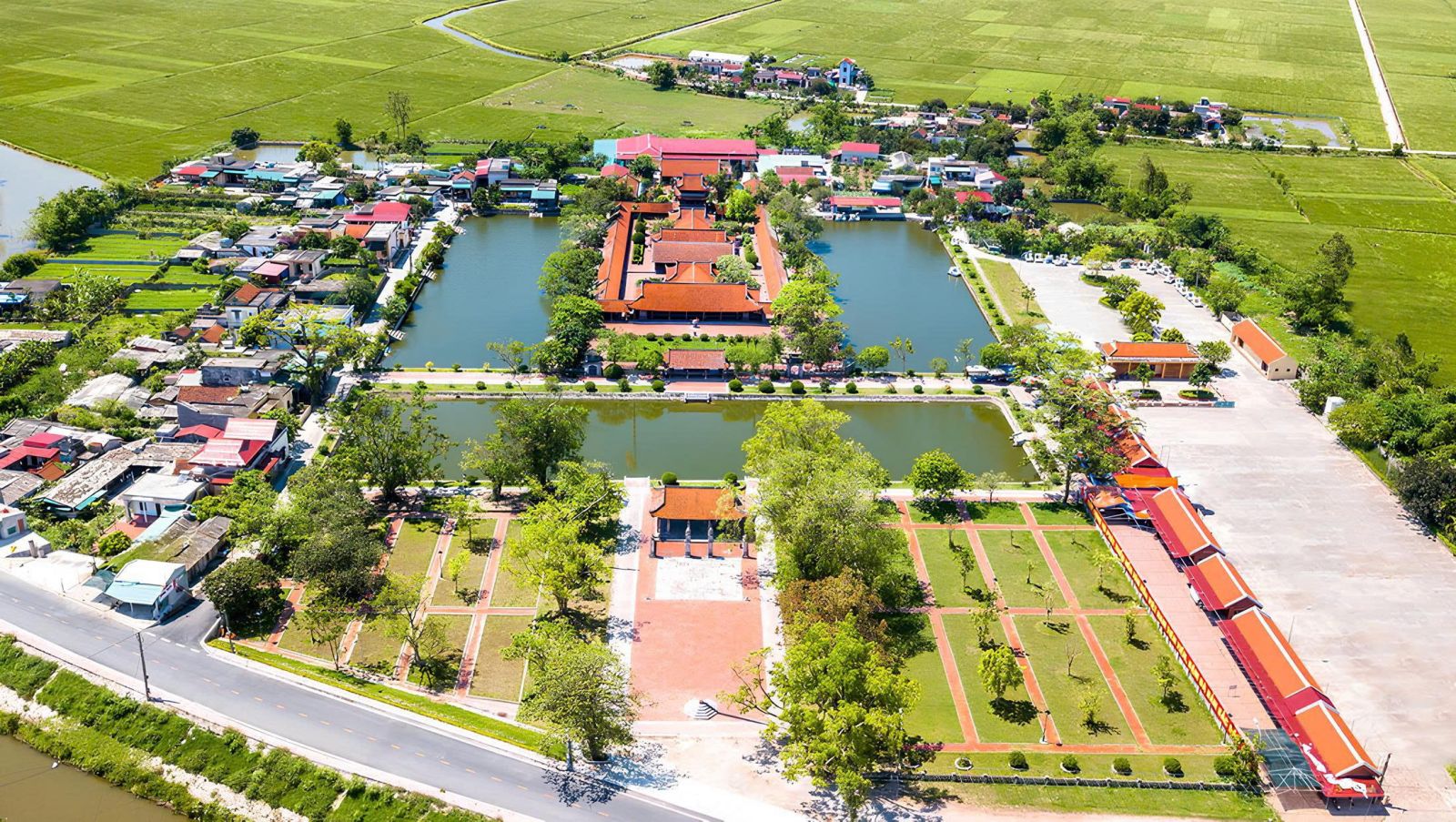
Sai Thi banyan tree historical site, Thuan Hung commune (Khoai Chau) - the place where the first Party cell of Hung Yen province was established
|
Going back to history, in 1883, Dinh Gia Que, a small martial officer of the Nguyen Dynasty, because of dissatisfaction with the cowardly court before the invading French colonialists, left his hometown to recruit insurgents against the French colonialists. He called himself Dong Quan, so he was also called Dong Que, taking Bai Say area as the main base. Insurgent groups under Dong Que's command were scattered throughout the villages in Bai Say area. Bai Say insurgent headquarters in Tho Binh (now in Tho Binh village, Tan Dan commune, Khoai Chau district).
Bai Say uprising broke out against the French colonial rule. During the early period (1883 - 1885), the uprising was directly led by Dinh Gia Que, the main operating area was only in Bai Say area, including the territory of the following districts: Khoai Chau, Yen My, Van Giang and Van Lam belong to Hung Yen province.
However, from 1885 onwards, after Dinh Gia Que's death, Nguyen Thien Thuat took the role of leader of the uprising, the scope of the Bai Say uprising was now wider, including most of the delta provinces. North. Bai Say insurgents contacted the leaders in the whole Duy Tien area (Ha Nam province); Luc Ngan region (Bac Giang province); the lands of Dong Trieu (Quang Ninh province); Dien Ha (Thai Binh province); Kim Anh, Da Phuc (Hanoi city); districts of Yen Lac, Binh Xuyen, Yen Lang, Son Tay province (now part of Vinh Phuc province and Hanoi city).
During the Bai Say uprising, in Hung Yen, there were many generals and villages that joined the insurgent army and fenced the village to fight such as: Yen Vinh, An Vi, Dai Quan, Phu Sa, Lieu Trung, Tam Trach, Tho Binh, Me Xa, Thuy Truc ... There are many districts, most of the villages in the district are insurgents such as Khoai Chau, Van Giang, Yen My, My Hao, An Thi... French ambassador Miribel once admitted: "Almost every village in In Hung Yen province there were also many people participating in the Bai Say uprising and even in many villages all healthy men became insurgents”.
After the failed Bai Say uprising (1892), patriotic and progressive movements such as Duy Tan, Dong Du, Dong Kinh Nghia Thuc were also enthusiastically responded and participated by the people of Hung Yen, such as cutting hair. short, learning Quoc Ngu script, spreading poetry, patriotic literature... however, it was not successful. The reasons for the failure of the Bai Say uprising and the patriotic movements mentioned above were: Both were in a passive situation; our forces and the enemy are disproportionate; outdated feudalism, deadlock on the way of struggle; have not yet gathered the strength of the masses of the People, have not seen the strength and leadership of the working class and have not yet united them; There is no political party led by the Communist Party.
The successful Russian October Revolution (1917) had a strong impact on revolutionary movements around the world. In July 1920, the patriotic young man Nguyen Ai Quoc studied Lenin's "First draft of theses on national and colonial issues". The right way to save the country for the Vietnamese people can only be the way of the proletarian revolution. In 1924, as a special envoy of the Communist International, he returned to Guangzhou (China), gathered patriotic Vietnamese youths, opened political training courses on Communism, on methods of new revolution. He reformed the organization Tam Tam commune, founded the Vietnam Revolutionary Youth Association. After training classes in Guangzhou, many members of the Vietnam Revolutionary Youth Association returned home, spreading Marxism-Leninism into the workers' and patriotic movements of Vietnam. Sai Thi (now in Thuan Hung commune, Khoai Chau district) located in Bai Say swamp is one of the first places in Hung Yen province to be selected for comrades in the Vietnam Revolutionary Youth Association of the North. The period on building revolutionary bases.
In 1928, comrade Nguyen Tien Trac was a member of the Vietnam Revolutionary Youth Association, from Bac Ninh, returned to his motherland in Dai Quan, and established revolutionary bases in Sai Thi, Cho Gian and Dai Quan. When comrade Nguyen Tien Trac moved to another place, in order to continue to build a revolutionary base, his superiors sent comrade Ca Lam (Le Tung Son) who is from Hung Yen to replace him with the task of propagating and enlightening a number of young people. years here.
At the end of 1928, the Vietnamese Revolutionary Youth Union of Tonkin sent officers to Sai Thi to check, found that there were conditions to set up a branch, so it decided to establish a branch of the Vietnam Revolutionary Youth Association. Sai Thi . This is the first branch of the Vietnam Revolutionary Youth Association established in Hung Yen province.
After its establishment, the branch of the Vietnam Revolutionary Youth Association Sai Thi had active activities such as: Printing documents, distributing propaganda leaflets, organizing the hanging of the Party flag in many places such as: Sai Thi (district) Khoai Chau), Truong Xa market (Kim Dong district), Dia market (An Thi district), etc. In addition, the branch also organized for members to study the book Duong Khach life by comrade Nguyen Ai Quoc and spread the books: Gunfire in the winter night, French enemy's policy; reading books on historical figures: Cai Vang's third wife, Tan Tat... The strong and frequent propaganda of the Party cell has sown in the hearts of the people of Hung Yen the belief that Communism will win food, independence, freedom for his people
Due to the development of international and domestic revolutionary movements, the Vietnamese Revolutionary Youth Union of Tonkin changed into a Communist organization named Indochina Communist Party. At the end of 1929, the branch of the Vietnam Revolutionary Youth Association, Sai Thi, was recognized by its superiors as the Indochinese Communist Party of Sai Thi. This is the first Communist Party cell of Hung Yen province.
With the consent of the Communist International, Comrade Nguyen Ai Quoc returned to Hong Kong (China) to convene a conference from February 3 to 7, 1930 to unify three Communist organizations in Vietnam into the Communist Party. Vietnam later changed to the Indochinese Communist Party . After the unification conference, the superiors returned to Sai Thi to change the Indochinese Communist Party of Sai Thi into the Sai Thi Indochinese Communist Party cell.
The birth of the Sai Thi Indochinese Communist Party cell was the first step for the revolutionary movement of Hung Yen province, marking the maturity of Hung Yen's revolutionary forces in the struggle against the French colonialists that took place from the very beginning. Bai Say's ideology, changing the direction of struggle from spontaneous and small to centralized under the leadership of the Communist Party. Sai Thi Indochinese Communist Party cell is the bridge of patriotic movements and revolutionary organizations of neighboring regions such as Hanoi, Hai Duong, Bac Ninh, Ha Nam, Thai Binh, Hai Phong... That was an important premise, the first brick laying the foundation for the birth of Hung Yen Provincial Party Committee (1941). Since then, under the leadership of the Communist Party of Vietnam, the people of Hung Yen together with the people of the whole country made many great feats, defeating all invaders such as the August Revolution of 1945, resistance fight against the French colonialists and American imperialists, build and defend the Fatherland, and carry out the national renewal process.
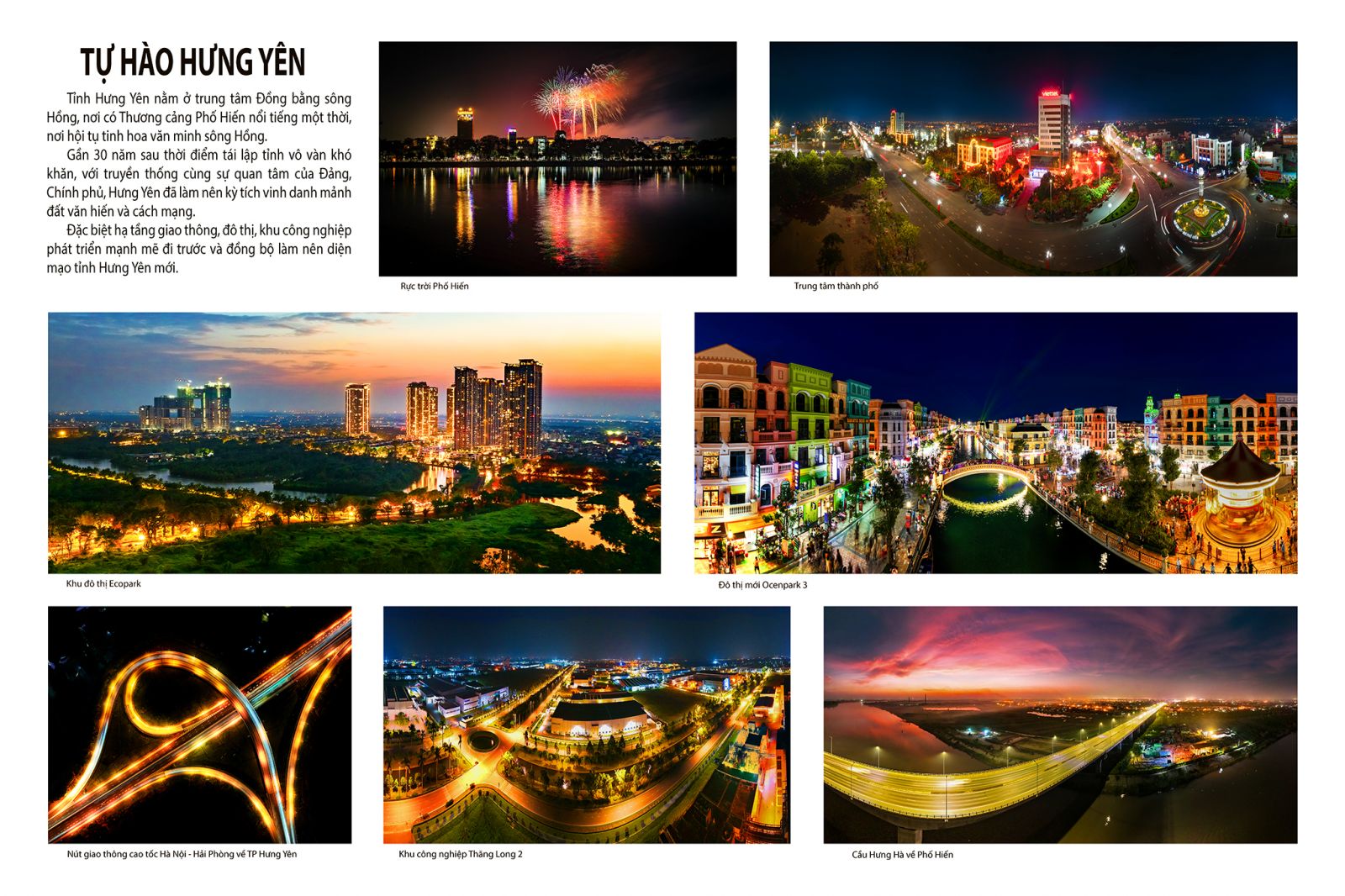
In the current period, especially since the re-establishment of Hung Yen province (1997), inherit and promote the heroic revolutionary tradition, the glorious history of the homeland and with the highest sense of responsibility, the will to Determined to overcome difficulties and rise, the Provincial Party Committee for each term has concentrated wisdom, brought into play the strength of the great unity of the whole people, the synergy of the whole political system, leadership, direction and exploitation. all potentials and advantages, correctly determining the development strategy with the appropriate roadmap and steps, creating a breakthrough, bringing Hung Yen province to development, gaining many important and comprehensive achievements in all fields:
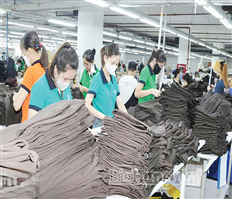
Political stability; rapid economic development; socio-economic infrastructure to develop synchronously; the people's material and spiritual life is enhanced; the rate of poor households decreased sharply (only 1.9%); the province has completed the construction of new rural areas in 2020 and is actively implementing the construction of enhanced new rural areas and model new rural areas; Defence and security is maintained; The Party committee and political system are constantly being consolidated, rectified, always clean and strong, the leadership capacity, effectiveness and combat power of party organizations and party members are constantly improved; strive to build Hung Yen into a modern industrial province, with high efficiency agriculture, fast and sustainable development.
Nguồn trích dẫn: baohungyen.vn
.jpg)
.jpg)
.jpg)