1. Location Tien Lu district is located in the south of Hung Yen province. It borders with An Thi and Kim Dong district in the north, Hung Yen city in the west, Phu Cu district in the east and Thai Binh province in the south. ...
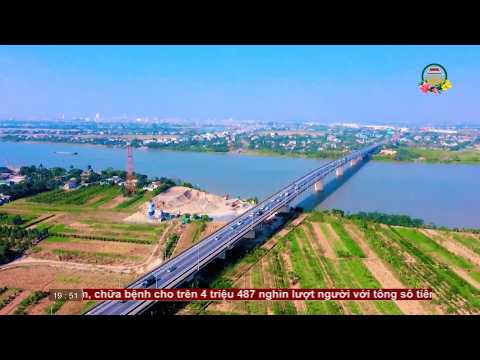
Tien Lu district has the Highway 38 and National Highway 200. Luoc river runs through the territory, which creates convenient opportunities to do trades with neighboring areas by road via waterway system.
Located in the vast Red River Delta and Red River Delta, and adjacent to the newly exploited areas of the city, the district may develop many dynamic zones which will facilitate Tien Lu to approach Ha Noi, Hai Phong and Thai Binh markets.
2. Natural conditions
Located in the low area of Hung Yen province, the district does not have high mountains; the terrain is lower from north to south, from west to east. The elevation of the land intertwines causing difficulties for irrigation and agricultural mechanization. Especially, flooding situation in many areas has affected the productivity of rice crop and expanded the winter crop areas.
The agricultural land, especially rice and fruit trees, is an important factor for the economic development of a district.
Tien Lu's soil mainly contains alluvial soil.
Alluvial soil is distributed mainly outside the dykes along Luoc River, which is annually raised with deposits and suitable for short-term industrial crops, food crops and vegetable
Low land is classified as sour soil and heavy soil with poor phosphorus, PH from 4.1 to 5.0; PH2 from 4.6 -5.5 (from sour to medium sour) and P2O5 <0.05% (poor). If there are enough irrigation systems in combination with technical measures to improve the soil, this land can also be adapted to many food crops, vegetables and industrial crops.
Located in the tropical monsoon, there are four distinct seasons. Spring is from February to April. Summer is from May to July. Autumn is from August to October. Winter is from November to April. The average temperature in autumn is around 24 - 27 degree Celsius. This is the season with many storms, causing great impacts on production development, especially agriculture. The winter lasts from November to April next year; the average temperature is from 18C to 24C degree Celsius.
The annual average rainfall is from 1680 to 1730 mm, sometimes over 2000 mm. Due to geographic location, the rainfall is usually 100 to 200 mm higher than the northern districts and concentrated in August and September.
The district is adjacent to the Red River and Luoc River, thus ensuring water supply for agricultural production, industrialization and quick drainage in case of floods.
In general, Tien Lu has favorable soil and climate conditions to diversify agricultural development such as food crops and fruit trees.
Constraints of climate and hydrography are dry and cold winter, often with water shortage, storms and rainy season, and floods affecting crop yields. Thus, it is necessary to find effective solutions to the structural shift in agricultural production in order to make an appropriate use of the land fund, avoiding disadvantages in drought and floods. Industrial production and other socio-economic activities are also affected by climate and hydrography conditions, which need to be prevented and taken effective solutions so as to limit damages.
3. History and development
According to ancient sources, Tien Lu area was found very early. During the construction of Hung King dynasty, this area was under Giao Chi district, then under Giao Chau at the beginning of the last millennium. In the 10th century, Ngo Quyen defeated Nam Han army; the area was known as Mac Lien and later changed to Cu Lien belonging to Dang Chau. It was located in Khoai Lo in former Le dynasty. Ly dynasty divided the country into 24 districts it belonged to Khoai Chau. The district was called Tien Hoa district in Khoai Chau district in Tran Thai Tong dynasty (year Nam Nham 1252). In Le Post called Tien Lu district, Khoai Chau district. In Quang Thuan year, (1469) Tien Lu district belonged to Son Nam. In the second year of Canh Hung (1741), Tien Lu district belonged to Khoai Chau district of Son Nam Thuong. In 1831 of Nguyen Dynasty, Hung Yen province was established; Tien Lu district belonged to Tien Hung. In 1890, Thai Binh province was established, Than Khe district were merged into Thai Binh province. Tien Hung had 4 districts, called Tien Lu, Phu Cu, Duyen Ha, Hung Nhan.
In the sixth year of Thanh Thai (1894), Tien Lu and Phu Cu were moved to Khoai Chau district; Tien Hung district had two districts called Duyen Ha, Hung Nhan and Thai Binh. In 1947, Van Giang district (Bac Ninh) was merged into Hung Yen while Tien Lu district was one of 9 districts of it.
On 26/01/1968, Hung Yen and Hai Duong provinces merged into Hai Hung province, Tien Lu district of Hai Hung province.
On March 11, 1977, Tien Lu and Phu Cu districts were merged into Phu Tien district.
On Nov. 06, 1996, Hai Hung was divided into 2 provinces namely Hung Yen and Hai Duong according to old administrative boundaries. Hung Yen province was re-established on January 01, 1997.
On March 24, 1997, Phu Tien district was separated into 2 districts of Tien Lu and Phu Cu, which was same as administrative boundaries 20 years ago.
The capital of the districts in French colonial period was Dao Dang. In the early 20th century, it was located in the territory of Thuy Loi area. Today it is located in Vuong town (previously called Giac street, next to Ngo Quyen and Di Che commune).
4. Administrative units
There are 15 administrative units, including 14 communes and 1 town with a total area of 78.12 sq km, specifically:
Vuong town has the administrative area of 2.28 km2
Hung Dao town has the administrative area of 6.78 km2
Ngo Quyen town has the administrative area of 6.34 km2
Nhat Tan town has the administrative area of 5.62 km2
Di Che town has the administrative area of 5.23 km2
Le Xa town has the administrative area of 6.35 km2
An Vien town has the administrative area of 5.55 km2
Duc Thang town has the administrative area of 4.20 km2
Trung Dung town has the administrative area of 4.98 km2
Hai Trieu town has the administrative area of 5.15 km2
Thu Sy town has the administrative area of 5.60 km2
Thien Phien town has the administrative area of 4.47 km2
Thuy Loi town has the administrative area of 5.38 km2
Cuong Chinh town has the administrative area of 6.39 km2
Minh Phuong town has the administrative area of 3.80 km2
5. Society and economy
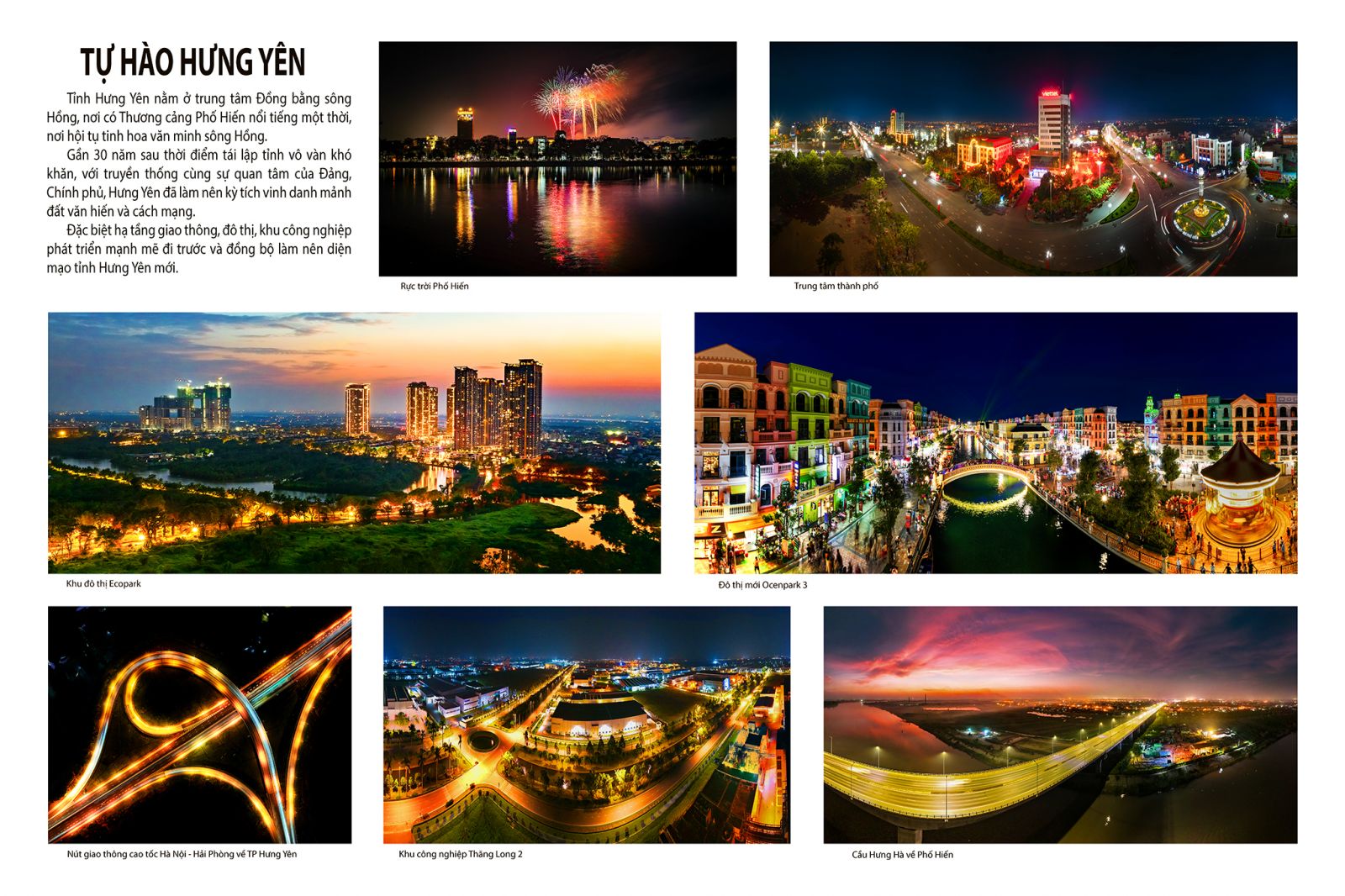
Tien Lu district has favorable conditions of land and climate for agricultural development. This is also a place where labor resources are plentiful and people's intellectual level is quite high, allowing quick and effective application of scientific and technical advances into production. Especially, located near the major urban center in the northern key economic area such as Ha Noi - Hai Phong - Hai Duong, Tien Lu can quickly catch up and integrate into the process of socio-economic development of the whole country.
Industries and handicrafts
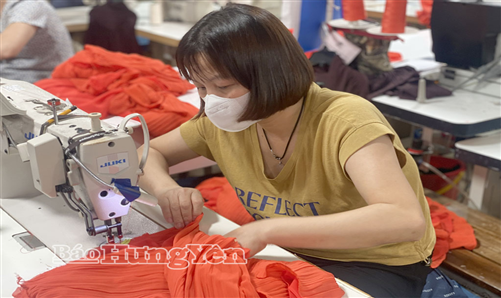
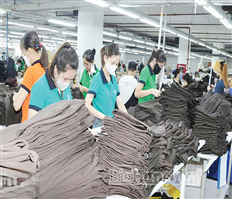
Prior to the re-establishment period, Tien Lu was a purely agricultural district. The handicraft products only serve local demand, not reach the market demand. However, in recent years, handicraft of the district has been gradually restored and developed. At the time of re-establishment of the province, the handicraft production value of the district reached only VND 32.9 billion.
The district has introduced solutions to remove difficulties for industrial production and handicraft such as ground clearance facilitation, investment incentives, human resource training. Thanks to the above solutions, in 2004, handicraft production value of the district reached VND 66.423 billion, which was twice as much as in 1997.
The traditional craft villages are maintained and developed such as bamboo and rattan processing, food processing. At present, the district has 10 traditional craft villages: apple processing dried longan, food processing, knitting, carpets making, mechanics. Some prominent products of the district are longan, lotus, lotus seeds, dried apples, honey. Some products are favored in the domestic and foreign market.
Agriculture
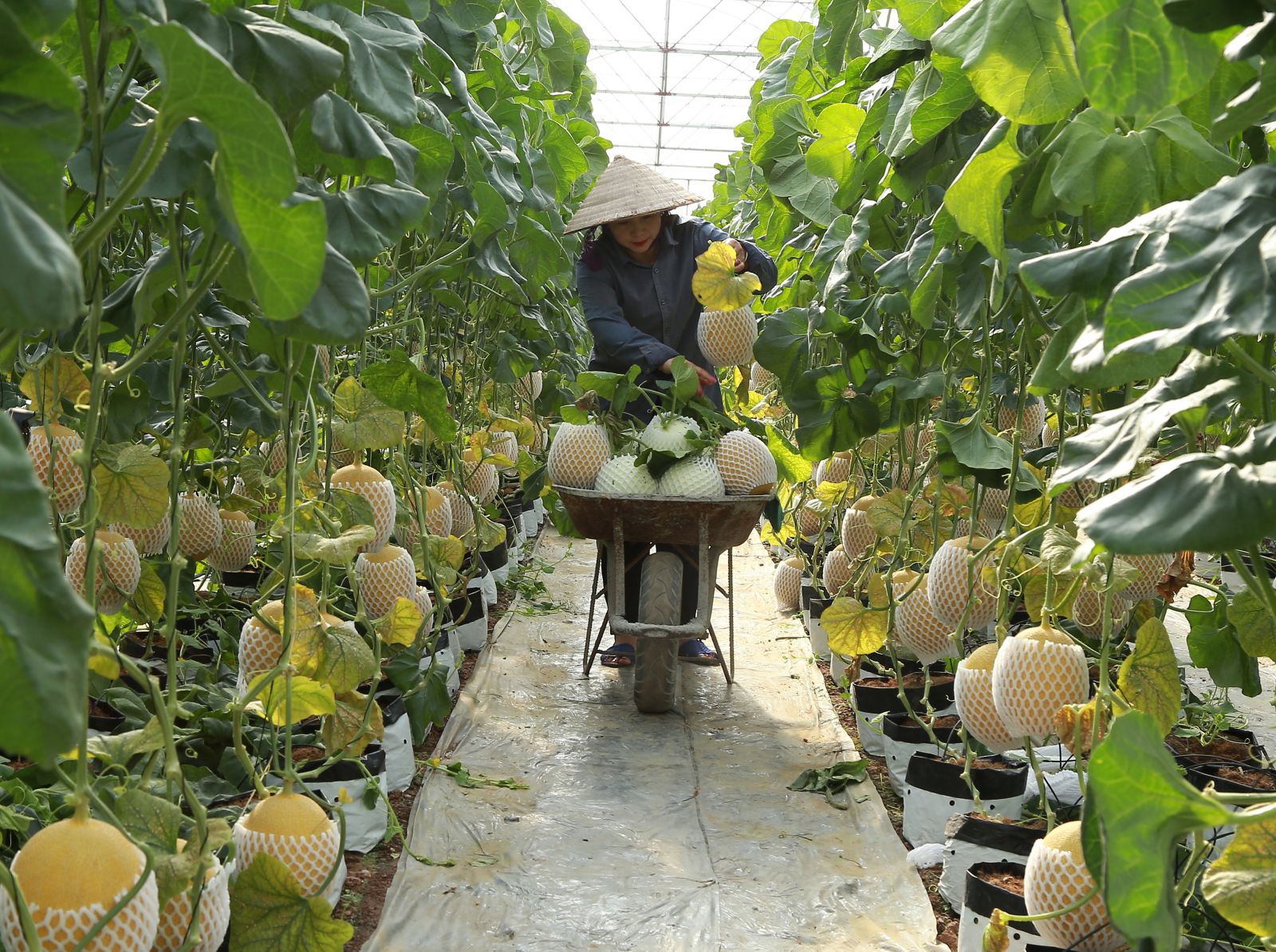
Previously, in the agricultural structure of the district, crops such as rice, corns, potatoes and traditional livestock such as pigs, buffalos and cattle accounted for more than 80% of the total agricultural output. From re-establishment of the province in 1997 to the end of 2004, the district has carried out many changes in plants and animals. Although there are certain difficulties, the sector structure has changed dramatically. In the district's development strategy, rice is identified as a traditional crop, playing an important role in food security
From that perspective, the district has accelerated the introduction of many new varieties and scientific and technical advances into production, contributing to the improvement of productivity and quality of plants. While the area of rice decreased, the output increased rapidly. In 2004, pure rice and hybrid rice accounted for 70-75% of the total area, contributing significantly to an increase in average income per hectare from VND 28 million (1997) to VND 35.8 million (2004).
Agricultural production of the district has progressed and developed comprehensively in the direction of developing agricultural commodity, and increasing the proportion of food production in agriculture sector and the value per unit of cultivation. In 2003, the value of industrial trees, vegetables and fruits was 29.73%; livestock and agricultural services were 32.43%. Meanwhile, the proportion of food production accounted for 37.84%.
Livestock and aquaculture developed strongly. Livestock have shifted to commodity production associated with the market. In 2003, there were 56,976 pigs, 6,316 cows and 886,200 poultry in the district,
Thanks to low land terrain, fisheries are a suitable solution of the locality in order to turn unfavorable conditions into advantages and overcome difficulties to achieve high economic efficiency. In 2004, the production of aqua-products in the district reached 1,852 tons, equivalent to VND 20 billion.
From the start, there is a number of difficulties right after separation of the district. People used to always worry about crop failure when the crop. Now, the problem of food is no longer a concern of farmers. Farmers spend more time to improve their lives and make money, contributing to the development of the district's agriculture in the direction of commodity production.
Trade and services
Trade and service sector also witness a rapid development. The commercial network has expanded to each village. Commodities are abundant and diversified, meeting people's demand and increasing purchasing power of people. Trade development focuses on agricultural production services such as seed distribution, fertilizers, pesticides, cement, steel, construction materials, and consumer goods.
6. Historical relics and festivals
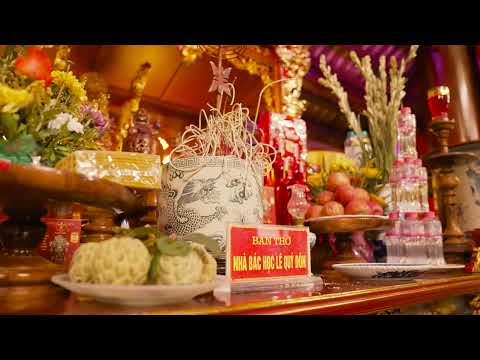
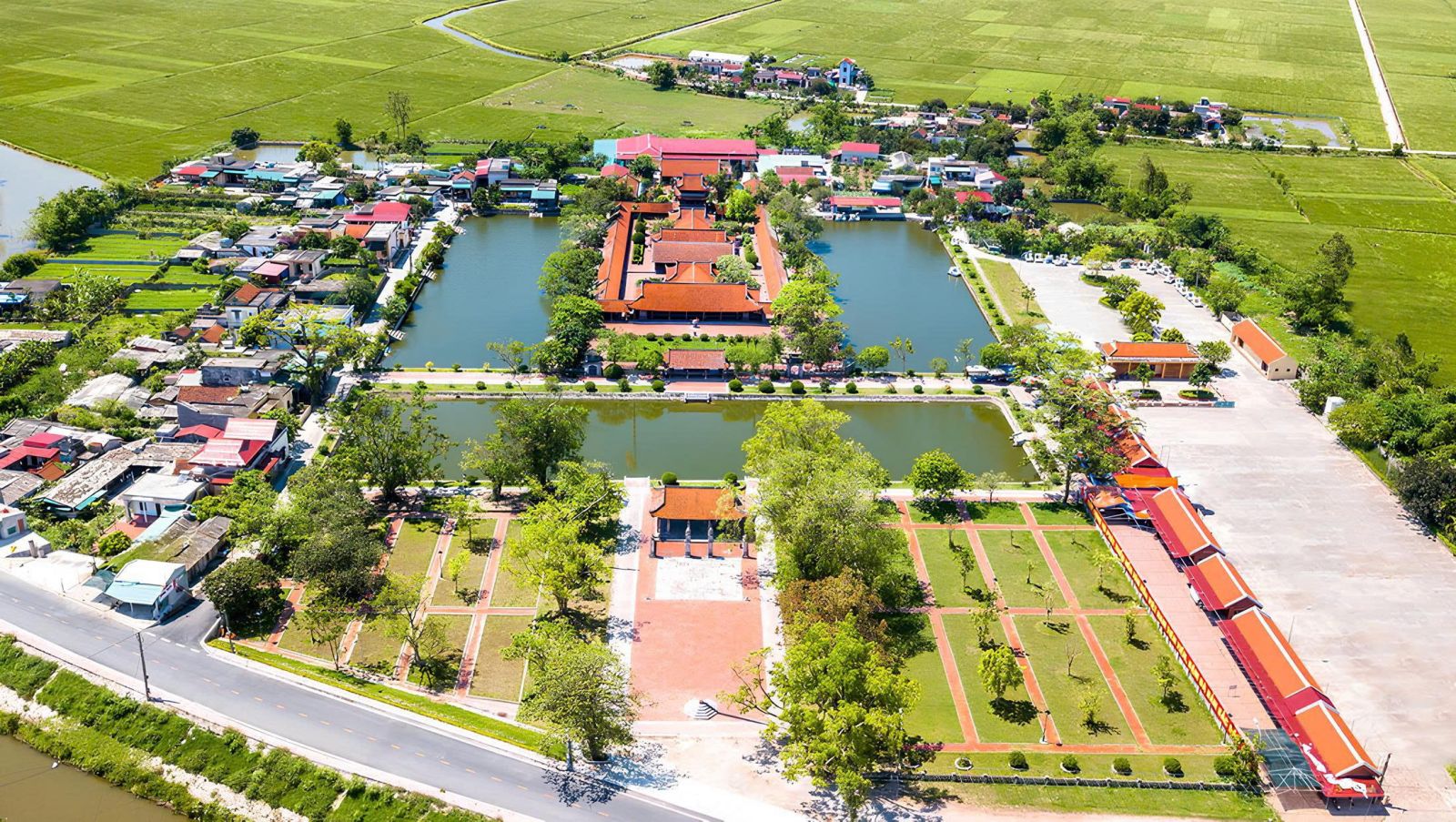
The district has 13 temples which are recognized as national historical and cultural relics
1 / An Xa Temple in An Vien Commune are often referred as Dau An Temple which is an architectural monument. The temple was built in the second biennial year (second year BC). The temple has Cuu Trung towel made of terracotta in Ly-Tran dynasty, was built in front of the temple with the dimension of 4.5m high, 2m x 2m wide. 9 floors have narrow tile roof. The stone chime is 2.5m long and weighs 1.2 tons.
The 0.8 m diameter bronze bell which is 1.7 m high and weighs 880 kg was cast in Le Hien Tong Dynasty of year Canh Hung in year Qui Ti.
2 / Noi Mai village, An Vien commune is a historical and cultural relic built from the former Le Dynasty.
3 / Noi Le communal house in An Vien commune is a historical and cultural relic built from Le dynasty
4 / Dinh Noi Thuong in An Vien commune is a historical and cultural relic
Three rooms of Noi Mai, Noi Le, Noi Thuong were restored at the end of Nguyen Dynasty, the same time as "Two royal highest" Do Cong and Quang Cong, who were successors of Lac Long Quan and helped King Le Thanh Ton battle Chiem enemies.
5 / Nghia Che temple, Di Che Commune which was built in 944, is a historical and cultural relic where recalls Ngo Vuong Quyen
6 / Di Che temple (Ancient temple) is a historical and cultural relic, worshiping the goddess of the village “Dong Hai Lord".
Ngo Quyen is a national hero who led people to beat South Vietnamese army and put an end to more than a thousand years of Chinese domination. Nghia Che and Di Che Temple recall Ngo's ancestors including:
Tien Ngo Vuong (Ngo Quyen)
Hau Ngo Vuong (Ngo Xuong Van)
Thien Sach Vuong (Ngo Xuong Ngap) and Duong Thi Nhu Ngoc (Ngo Quyen's wife)
7 / Communal houses, temples and pagodas in Hai Yen village, Hai Trieu commune is a historical and cultural relic. The temple of the goddess Nguyen Thai Bao who assisted Hoang Trieu Thuc An Duong Vuong to fight Trieu Da. Particularly, Cao Son temple was built in the reign of Le Hien Tong, in year Canh Hung (1743)
8 / Trieu Duong Temple in Hai Trieu Commune are a historical and cultural relic of Chieu Cong who helped Thuc King fights the Trieu enemy to protect the country. The temple was built and restored in Nguyen dynasty (Thanh Thai).
9 / Phu Vi temple in Phuong Chieu commune was built in the beginning of the 19th century with an area of 1582m2 to recall Nguyen Thi Ngoc Toan, a concubine in Mac Dynasty (1527-1595).
10 / Doan No Temple in Phuong Chieu commune is a historical monument worshiping General Doan No who is one of the first 51 generals of Lam Son insurrection. The temple was built in Le dynasty in the 15th century, and in 1994 the temple was restored.
11 / An Tao communal house in Cuong Chinh commune is a historical and cultural relic worshiping the god of the village built in the 16th century.
12 / Bai Khe communal house in Cuong Chinh commune is a cultural and historical relic worshiping Trung Vuong Dong Tan Hong Loan Princess and was built in the first Tu Duc year.
13 / Phu Diem is a cultural and historical relic to recall seven brothers and sisters who fight foreigners to protect the country. Phu Diem was built in later Le dynasty.
Festivals
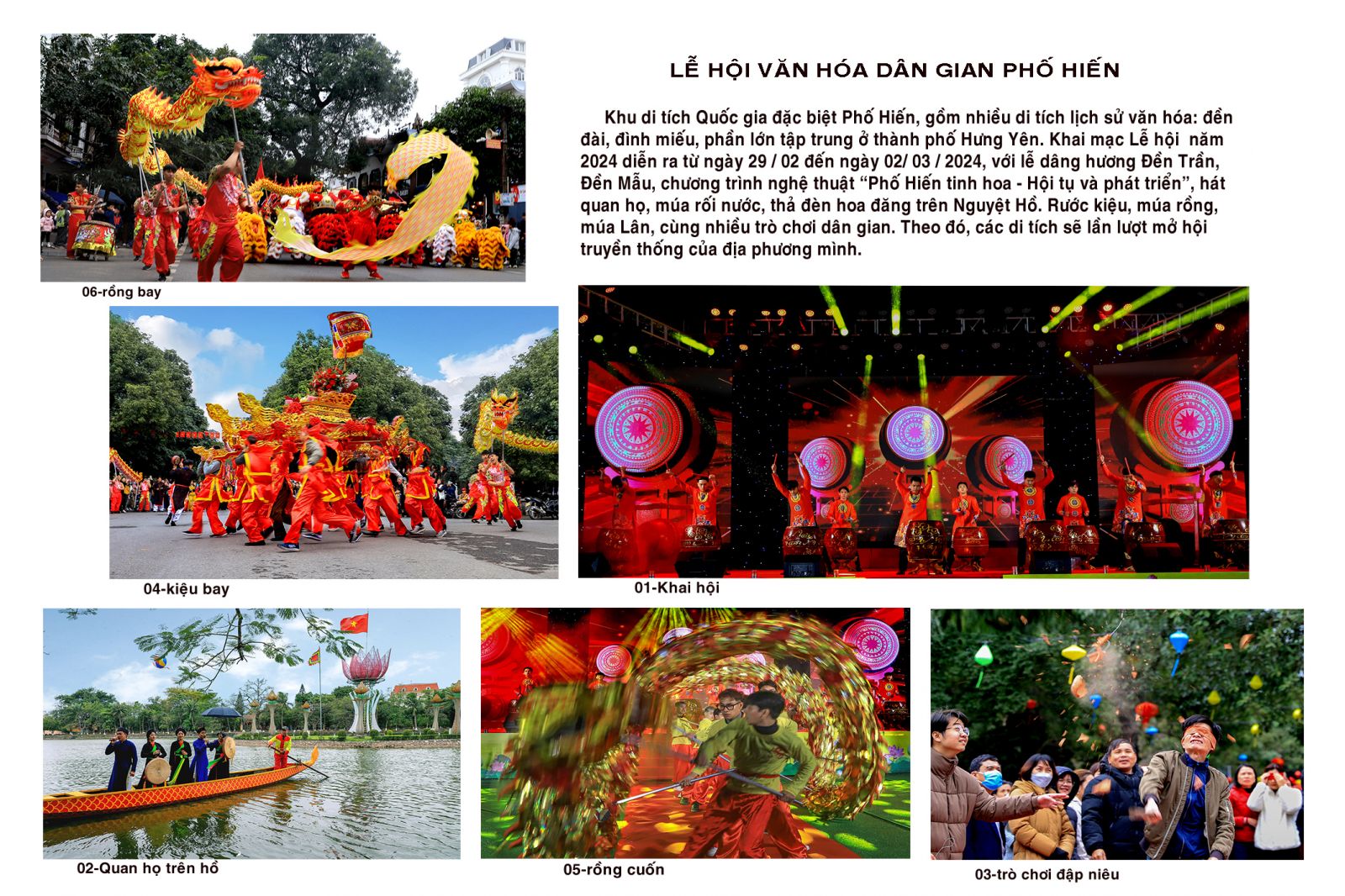
1 / Dau An festival (An Xa Temple, An Vien commune): Temple worships the gods of heaven and earth, including the story of Dung and Da and martial spirit of fighting tiger which symbolize the determination of protecting crops. The festival is held on April 6 to April 8 on the lunar calendar. The 8th is the major festival day (before harvesting spring rice).
Thien Tien, and Dia tien statue are woven by bamboo which is 5m high (2m of head and 3m of body), the hand is 2.5m long. Thien Tien statue was knitted by 7 bamboos, each tree was divided into 8 stripes, and the body has 7 n horizontal stripes, 32 vertical stripes and 7 knots. Dia Tien statue is made of 9 bamboos; the body has nine horizontal stripes, 32 vertical stripes and 9 knots.
- 8 o'clock in the morning of April 6, the incense offering ceremony is conducted
- On April 7 at 14 o'clock, the procession of Thien Tien and Dia Tien put them on two opposite sides at the door of the communal house overlooking the well to express the consensus.
- On April 8 at 14 o'clock, the procession of Thien Tien and Dia Tien from Thuong temple to Dinh Vo where Duc Ong Lo Quoc is recalled went to the rice field, stopped and performed tiger fighting and then returned to Thuong Temple.
2 / Vuong temple festival (Gia temple) in Di Che commune: Temple of the Ngo Vuong Quyen family. The festival is held from February 15th to February 16th. During the festival, there is a performance of buffalo killing and Banh giay making.
3 / Phuc Diem festival in Minh Phuong commune, worshiping 7 brothers of Ta family who fought the enemy. During the festival there is shuttle cock kicking
.jpg)

.jpg)
.jpg)