Nom village, now is also called Dai Dong village, is located in Dai Dong Commune, Van Lam district, Hung Yen province. The old village still preserves the traditional cultural space with typical characteristics of Northern delta villages....
Nom village, now is also called Dai Dong village, is located in Dai Dong Commune, Van Lam district, Hung Yen province. The old village still preserves the traditional cultural space with typical characteristics of Northern delta villages....
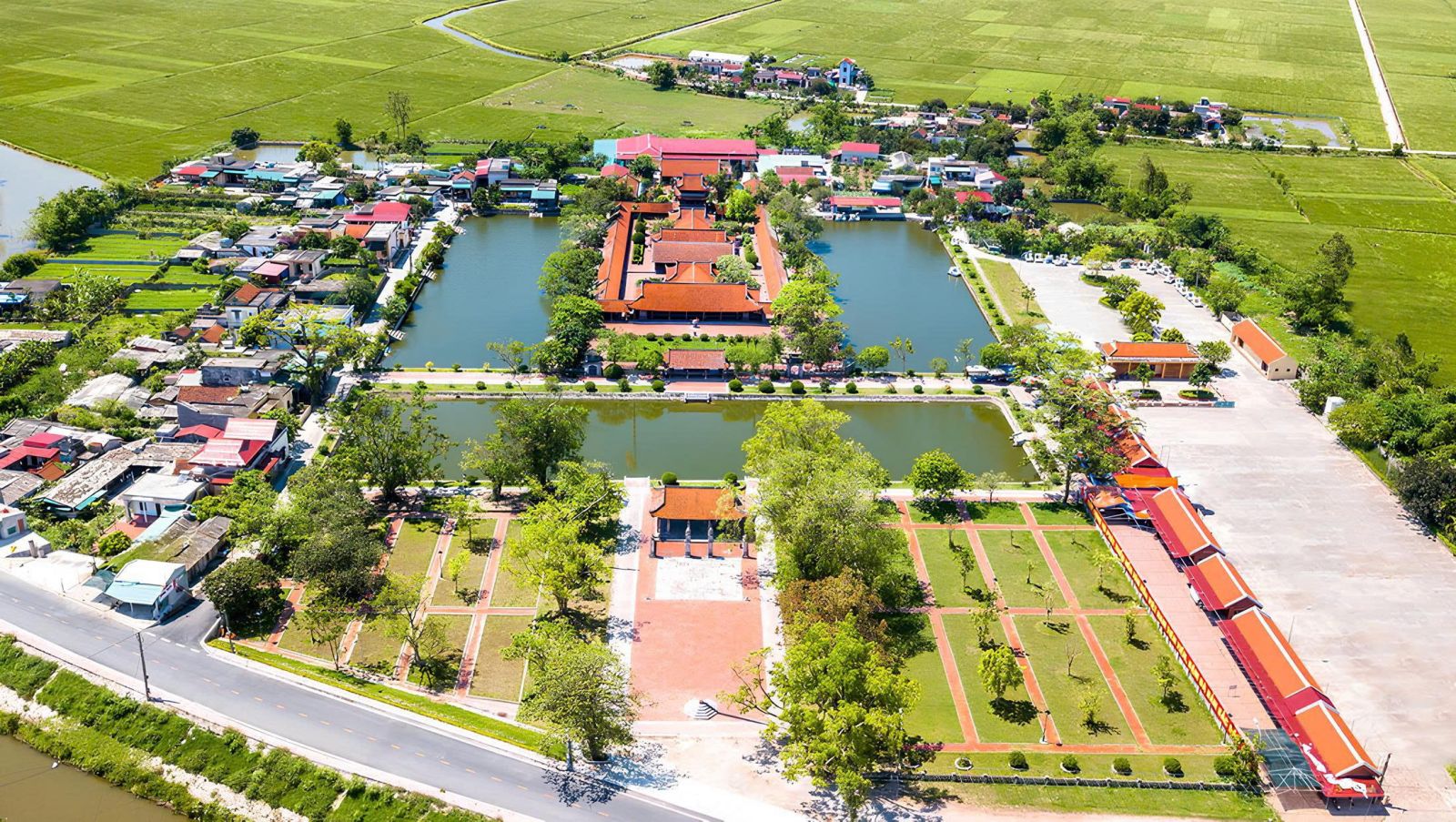
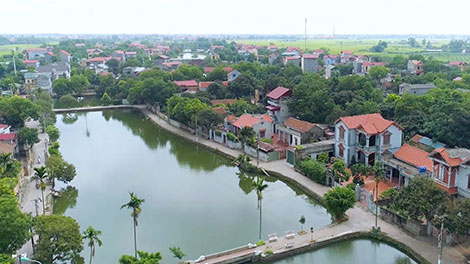
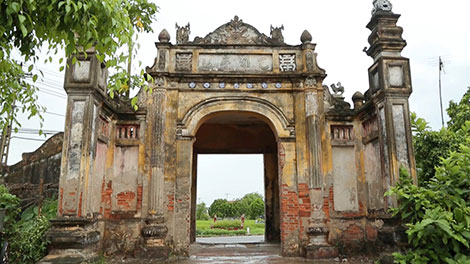
The first impression as arriving this village is the ancient gate built with 4 square pillars and curved sophisticated patterns. Passing the majestic gate, the hustle and bustle of the modern life is replaced by an old scene of thousand years ago. A serene lake in the middle of the village is like a giant mirror, reflecting the old trees and creating a peaceful scene. On the two sides of the lake, there comes worshipping houses of families, some of which has been existed for nearly a century. Around the village, there are still green bunch of bamboos which are reminiscent of peaceful time.
 |
|
Nom village from above |
Visiting Nom village, we can not ignore Nom pagoda, a famous building of Hung Yen province. No one knows when this pagoda was built. There are two boards here writing the important data: Hau Le dynasty, year Canh Than (1680). After wearing the crown, the King ordered to rebuild this pagoda. Undergoing ups and downs, and multiple repair, the pagoda has become beautiful like this.
Legend has it that Nom pagoda was built in the middle of the pine forest. Thus, it used to be called “Linh thong co tu”. The major pagoda was located under the old tree branches, creating a solemn and silent scene.
The pagoda has the bell tower and the drum tower lying symmetrically on both sides. Everyday, the bell is played, the clear sound echoes into the peaceful space of the old temple. A special attraction is the airy and spacious natural landscape with a lot of unique architectural works. Guan Yin tower is located in the middle of the lake like a magnificent lotus.
Leading to Guan Yin temple is a bow-shaped stone bridge imitating the ancient Nom bridge. In front of the bridge, there are two “Cuu pham lien hoa” towers forming an architectural cluster. Treasures of the temple are 122 ancient statues of clay, such as the statues of Four Bodhisattvas, “Thap bat La han”. Each statue is carved with impressive and varied facial expression.
 |
|
Nom pagoda’s gate |
Visiting Nom Pagoda, visitors can sightsee the laterite garden next to the ancient temple. Those are beautiful and intact laterite towers. Going through many ups and downs of history, the laterite towers still stay firm against time.
Nom temple has long been a historical witness, sticking with villagers here both in wartime as well as peacetime. The sanctity of the pagoda permeates into each tile, each grain of wood, each statue.
Banyan tree – water port – communal ground
Banyan tree – water port – communal ground are the indelible imprints in each person’s subconscious who were born in the Northern Delta. They are the symbols of the rural cultural space, which reminisces about peace and closeness.
Opposite to the village gate, on the other side of the lake, there is a gorgeous architecture complex including a communal ground, an ancient well and a banyan tree. The origin of the communal ground was just a small temple. After multiple repair, today communal ground carries the architecture style of Nguyen dynasty. No one knows exactly how old the banyan tree is; however, people guess that this tree has grown here for hundred of years due to the giant trunk and gnarled roots.
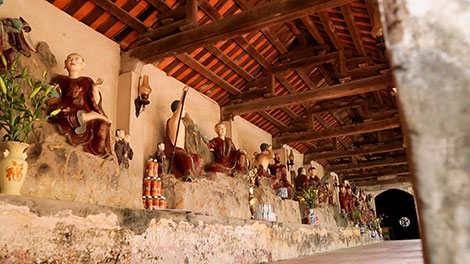 |
| Terracotta Buddha statues in Nom pagoda |
Walking around the village, we will sightsee the unique ancient stone well. The well is made of green stone, dozens of centuries old, considered the "dragon eye", where the spirit of the village has been gathered. In order to protect the sanctity, the well is placed in an octagonal area with surrounding walls. Nom village also has a very special heritage that is the Nom Bridge, a bridge spanning the Nguyet Duc River that flows around the village, which has existed for 200 years. This is the oldest stone bridge in the Red River Delta remaining to this day
The bridge consists of 9 spans, the bridge surface is made of green stones. The 18 pillars of the bridge are manually carved by folk artists. On each bridge pillar is carved with exquisite dragon head. People are also used to call it the rustic name of 9 dragon heads. This stone bridge has long been a symbol of the village and a soul of Nom village that anyone who travels away always remembers.
Peaceful life
The quiet, nostalgic characteristics preserved from generations to generations have created the beauty of the village that is hard to find in other countryside today. Hidden in the peaceful alleyways, Nom village retains ancient houses dating back hundreds of years. The 5-room wooden houses are almost intact with the old architectural features. Time marks are imprinted on each pole and doors.
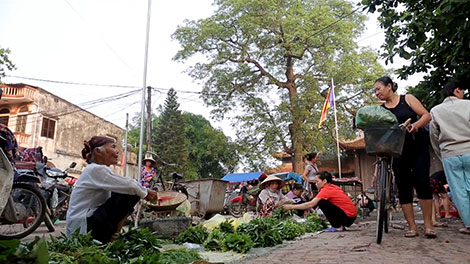
This simple and gentle way of life is clearly reflected in the Nom market. The Nom market dates back to Le Dynasty, which was restored in the Nguyen Dynasty.
In the past, Nom market was a famous market to exchange materials for copper craftsmen of the whole region. At that time, Nom village had up to 70% of households working as copper traders. Nom villagers often take casting goods in the area to sell everywhere and exchange among the casting villages.
 |
| Ancient bridge in Nom village/ Photo: Dinh Nguyen |
Formerly, this place was also one of the busiest shopping centers in Van Lam district. Nowadays, Nom market is still crowded with buyers and sellers. In the middle of the bustling space, people laugh, somewhere the flames from the sole smithy in the market glow brightly. The old woman was chewing betel nuts beside the hand made weaving baskets. People think that they are travelling back some decades ago.
The life of Nom village always reminisces a serene feeling and takes people back to old memories. Every afternoon, children in the village ask each other to play near the pond. There is no existence of digital devices. They merge into the fresh atmosphere of the countryside with folk games. This peaceful village has witnessed a number of generations growing and now preserving the tradition of their ancestors.
 |
|
|
With the ancient and harmonious architecture style, and traditional natural landscape of an ancient Northern village, Nom village is an interesting destination for those who want to learn about ancient culture and find back old memories and rustic beauty among the rhythm of daily life. Nom village makes us believe in the value of heritage among the swirl of urbanization
Nguồn trích dẫn: baohungyen.vn
.jpg)

.jpg)
.jpg)