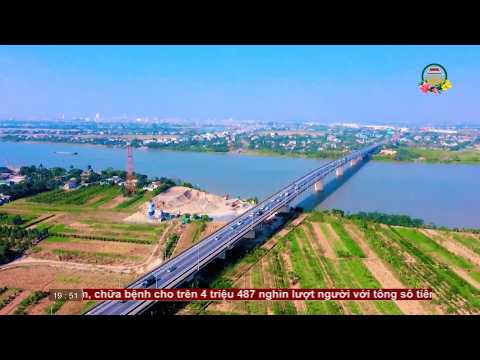
1. Location Phu Cu is located in the southeast of Hung Yen province, borders with Thanh Mien District in the east (Hai Duong Province), Thai Binh Province in the south and separated by the natural boundary of Luoc River. The North borders with An Thi. The district has 14 administrative units in communes and towns. ...
2. Natural conditions
Terrain: The terrain is quite flat, gradually decreases from the west to the east, from the north to the south.
Climate: Phu Cu climate brings the common characteristics of the Red River Delta, which is tropical monsoon climate, with cold winters. Wind level varies between the two seasons: From May to October, summer winds mainly blow to the southeast. From November to April of the following year, winter winds blow to the northeast. Heat is different between hot summer and cold winter. Rainfall also differs between two seasons, the rainfall in the summer accounted for 90% of rainfall throughout the year. Thus, there are two main seasons: summer has the southeast wind, hot with much rain. Winter has the northeast wind, cold with little rain. Between the hot and cold seasons there are two short transition periods, namely spring and fall.
River: Phu Cu district has a large river system spreading over the area. Ke Sat River is in the North (commonly known as the West Ke Sat River), flowing from Tan Tranh village of Minh Tan commune into Vien Quang hamlet of Quang Hung commune to converge into Cuu An river under the territory of Phan Sang Nam Minh Tan, Quang Hung and then running along the 10 km border of the district to Tam Da district. It is the river that forms the natural boundary with Thanh Mien district of Hai Duong province. the Luoc river runs along the south from Vong Phan village of Tong Tran commune to Nguyen Hoa commune with the length of 11 kms, forming a natural boundary with Hung Ha district of Thai Binh province. Cuu An River and Ke Sat River which run along the banks of Luoc River are bordered by the dyke systems. Local people built it for years to protect the peaceful life of the villages.
Since the restoration of peace and renovation period of socialism construction, Phu Cu people renovated a part of Nghia Tru river from Phan Sao Nam to Dinh Cao commune which is 6.8 km long. This is an important river for water draining from Cuu An River to Phu Cu and Tien Lu district. Therefore, Doan Dao commune has the Dragon bridge to regulate the flow. In the end of 1954, Hoa Binh River ran along road 39B with the length of 9.5 km on the way to Quan Do, Quang Hung and then discharged to Cuu An River to provide water for the district. Along the route 202, the river is 12.75 km long, coming from Say village to La Tien village of Nguyen Hoa commune.
All of the above rivers form the main river system of the district. In addition, there are other rivers as following:
- Hiep Hoa River from Nhat Quang to Tong Tran commune is 5.6 km long.
- Thong Nhat River is 5.6 km long, flowing from the Golden Waters to Minh Tien Commune.
- Doan Ket River is 6.5 km long running from Tam Da to Tong Tran.
Quyet Thang River runs from Vo Phan village of Tong Tran commune to Nguyen Hoa commune.
3. History and development
The administrative units and scope have changed many times have changed many times. According to historical data and some other ancient bibliography, the area of Phu Cu district today had a relatively early settlement. At the beginning, this piece of land was under Jiaozhi county. Former Le dynasty changed the names of administration units many times; however, this area was under Khoai Chau district. In the year Nham Dan (1252), the land was called Phu Dung district under Khoai Chau. In Mac dynasty, to avoid the name of Mac Thai To (Mac Dat Dung), this area was renamed Phu Hoa district. By the time of Le Trung Hung, this area was named Phu Dung again. In the second year of Canh Hung (1741), Le Hien Tong was converted it to a town, Phu Dung district was under Khoai Chau of Son Nam Thuong.
In the 12th year of Minh Menh Commune (1831), Hung Yen Province was established, consisting of Khoai Chau and Tien Hung. Since then, Phu Dung district was one of 8 districts of Hung Yen province. In the second year of Thieu Tri (1842), Phu Dung district was renamed Phu Cu district. In the 4th year of Tu Duc (1858), Phu Cu district under Khoai Chau was moved to Tien Hung.
In 1890, after Thai Binh was established, Than Khe district was moved to Thai Binh province. Tien Hung district had only 4 districts called Phu Cu, Tien Lu, Duyen Ha and Hung Nhan district. In the sixth year of Thanh Thai (1894), Phu Cu and Tien Lu district were transferred to Khoai Chau district, Tien Hung district had only 2 districts called Duyen Ha and Hung Nhan to Thai Binh province which were merged into Thai Binh
In 1947, Van Giang district of Bac Ninh was moved to Hung Yen province until before the province was merged (January 1968), Phu Cu district was one of 9 districts of Hung Yen province.
On January 26, 1968, the Standing Committee of the National Assembly issued the decision No. 504-NQ / TVQH, the two provinces of Hung Yen and Hai Duong were merged, Phu Cu district belonged to Hai Hung.
On March 11, 1977, the Government Council issued Decision No. 58-CP, Phu Cu district was merged with Tien Lu district to establish Phu Tien district and was one of 12 districts of Hai Hung province.
On June 6, 1996, the 10th session of the 9th National Assembly approved the division of Hai Hung into two provinces namely Hai Duong and Hung Yen, according to administrative boundaries before the unification. On January 1, 1997, Hung Yen province was re-established.
On implementation of the Government's Decree No.17 / CP dated February 24, 1997 on the split of Phu Tien district into two districts of Tien Lu and Phu Cu; based on the former administrative boundaries and the resolution of the Executive Committee of Phu Tien District Party Committee dated March 12, 1997 and Decision no. 70-QD / TU dated April 16, 1997 by the Standing Committee of Hung Yen Provincial Party Committee on the establishment of Party Committee of Phu Cu. On May 01, 1997, Phu Cu District was officially re-established. On February 2, 1997, Phu Cu district celebrated the re-establishment of the district after 20 years of merge. This event has a very important historical milestone for Party Commitee of Phu Cu and Phu Cu people in the stage of innovation in order to employ human resources and intellectual power to enrich the country towards the stage of industrialization and modernization.
The capital of the district is Tran Cao which is the political, economic and socio-cultural center of the district, located on the important route of road 39B and road 202, connecting locals inside and outside the district.
Given there are still difficulties, Phu Cu people are close to fields, employing their creativity, solidarity to overcome hardship and challenges. Together with agriculture, people also do other jobs for a living such as building, carpentry, knitting, and weaving and agriculture products. On the basis of that economy, the social base and cultural history of Phu Cu people carry rich traditional Vietnamese culture, in which the core is the achievements of the Red River civilization.
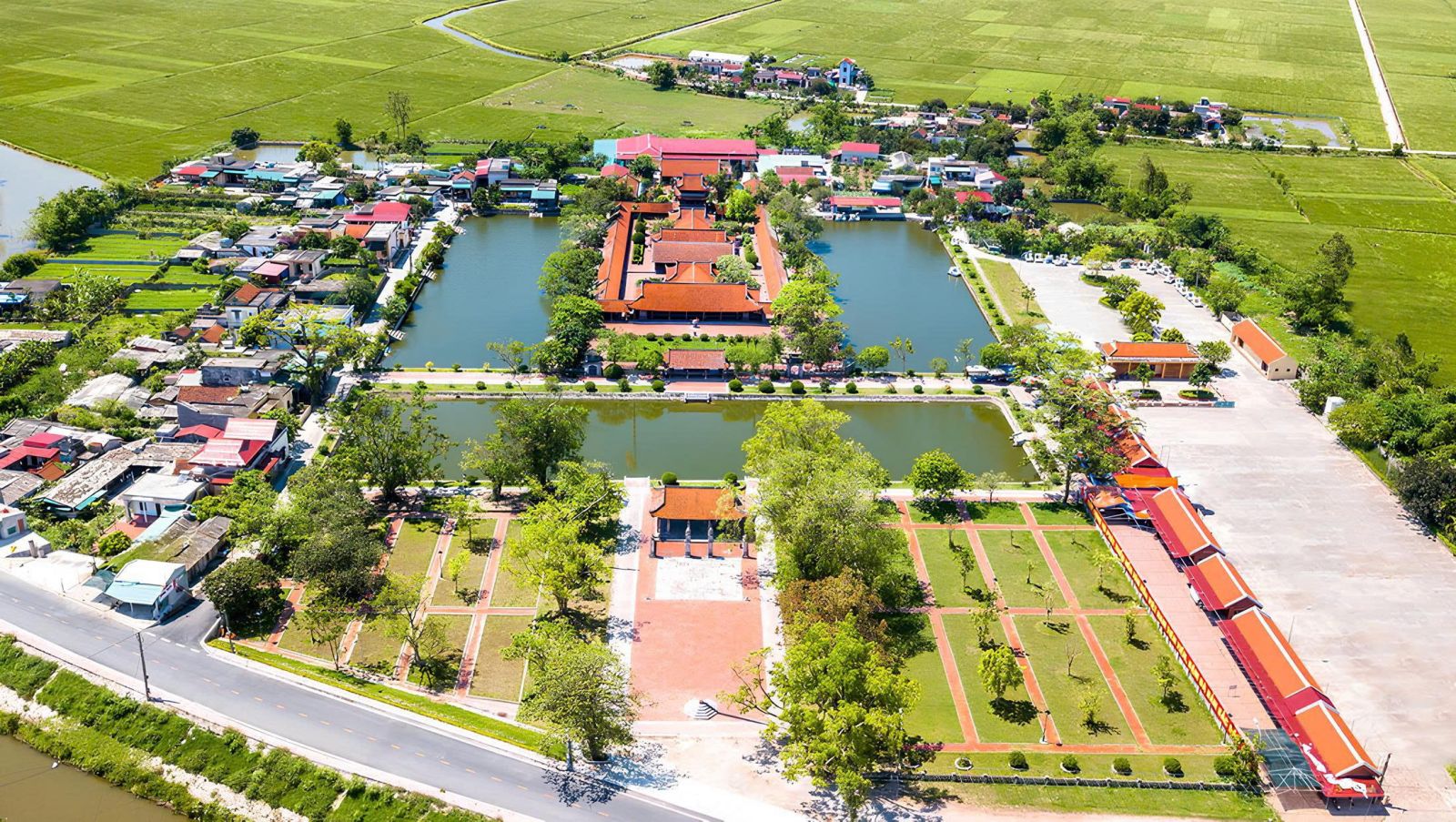
In the history of the nation, the country always went with keeping the country; Phu Cu inhabitants conquered the nature and fought against foreign invaders at the same time. From the time of An Duong Vuong to Hai Ba Trung and later feudal dynasties, Phu Cu folks always supported the army. Men voluntarily joined the army and devoted themselves to the victory of the nation in the resistance against foreign invaders. At present, these relics are recorded in at 11 temples and 25 communal houses in the village. Phu Cu district still preserves the complex of historical and cultural relics of Tong Tran.
In the war against French colonialists, the patriotic tradition of the locals was promoted, manifested through Bai Say insurrection and associated with the names of general Bui Dang Hoi, Bui Dang Hiep, Le Ngoc Sao and Ha Tien Thau. Some monuments such as Nai Khe Pagoda, Giac Tam Quan Pagoda in Dinh Cao Pagoda, and Say Pagoda in Minh Tan Commune are the great landmarks recalling heroes in the resistance war. Spiritual values are always associated with these cultural materials. The traditional festivals in villages and communes are the symbol of spiritual life of people here, which encourages the people to build and protect their homeland.
4. Administrative units
There are 14 administrative units, including 13 communes and 1 town with the total area of 93.82 km2, namely:
Tran Cao town has the administrative area of 4.80 km2
Minh Tan has the administrative area of 6.07 km2
Phan Sao Nam has the administrative area of 6.43 km2
Quang Hung has the administrative area of 6.73 km2
Minh Hoang has the administrative area of 5.70 km2
Doan Dao has the administrative area of 10.24 km2
Tong Phan has the administrative area of 7.76 km2
Dinh Cao has the administrative area of 9.97 km2
Nhat Quang has the administrative area of 5.09 km2
Tien Tien has the administrative area of 4.60 km2
Tam Da has the administrative area of 5.51 km2
Minh Tien has the administrative area of 6.05 km2
Nguyen Hoa has the administrative area of 5.94 km2
Tong Tran has the administrative area of 8.93 km2
5. Society and economy
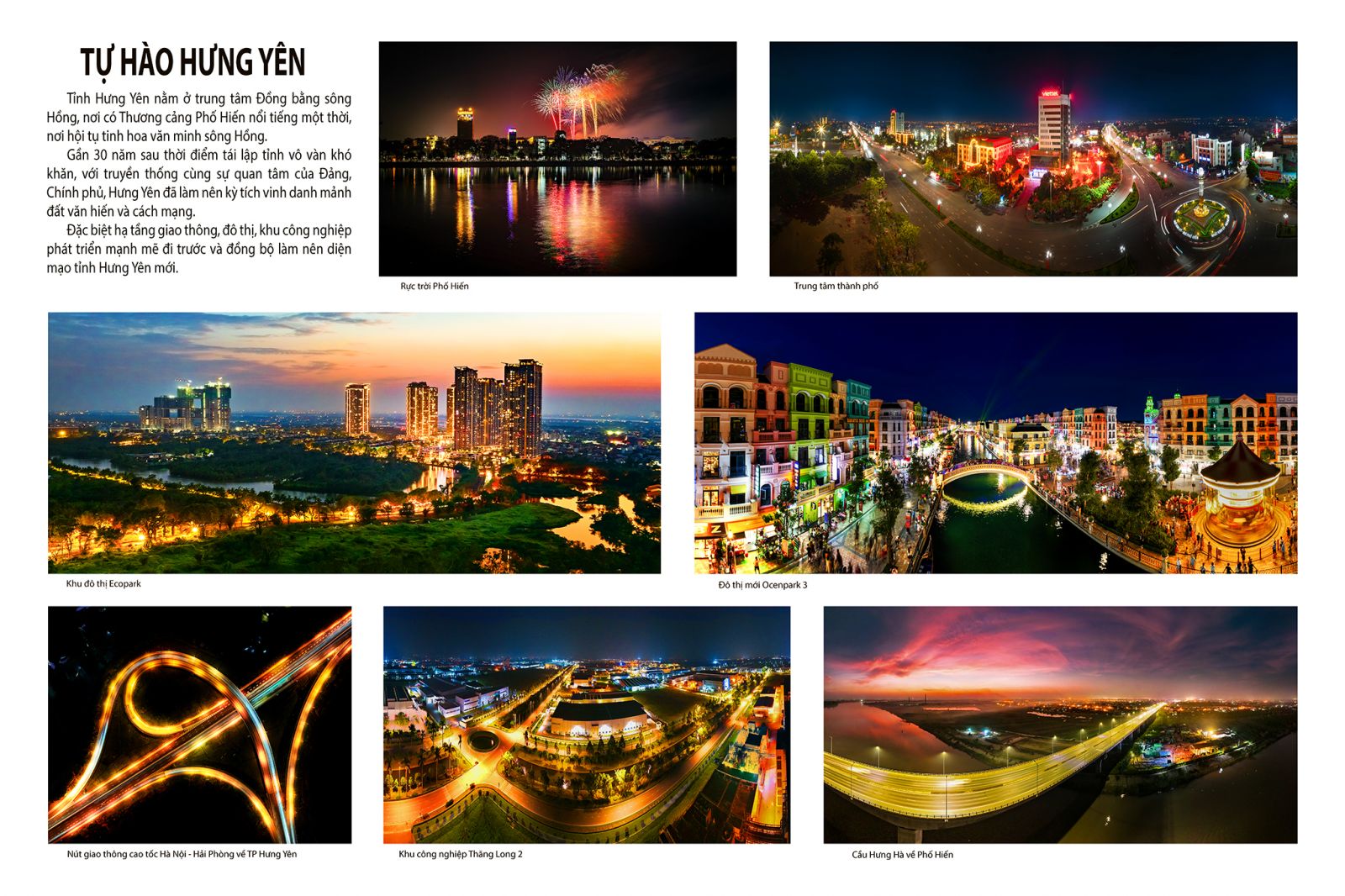
Located in the northern key economic region, where there are many dynamic economic zones such as Hanoi, Hai Phong and Quang Ninh and not far from Hung Yen town, Phu Cu has favorable conditions to boost socio-economic development and corporate with neighboring localities throughout the country. In May 1997, after 20 years of integration with Tien Lu, Phu Cu district was officially re-established. Under right leadership and solidarity of the Party committees, authorities and people, Phu Cu people quickly overcame all difficulties, accelerated the restructuring of agricultural economy, industry and handicraft, and initially obtained many important achievements.
Agriculture
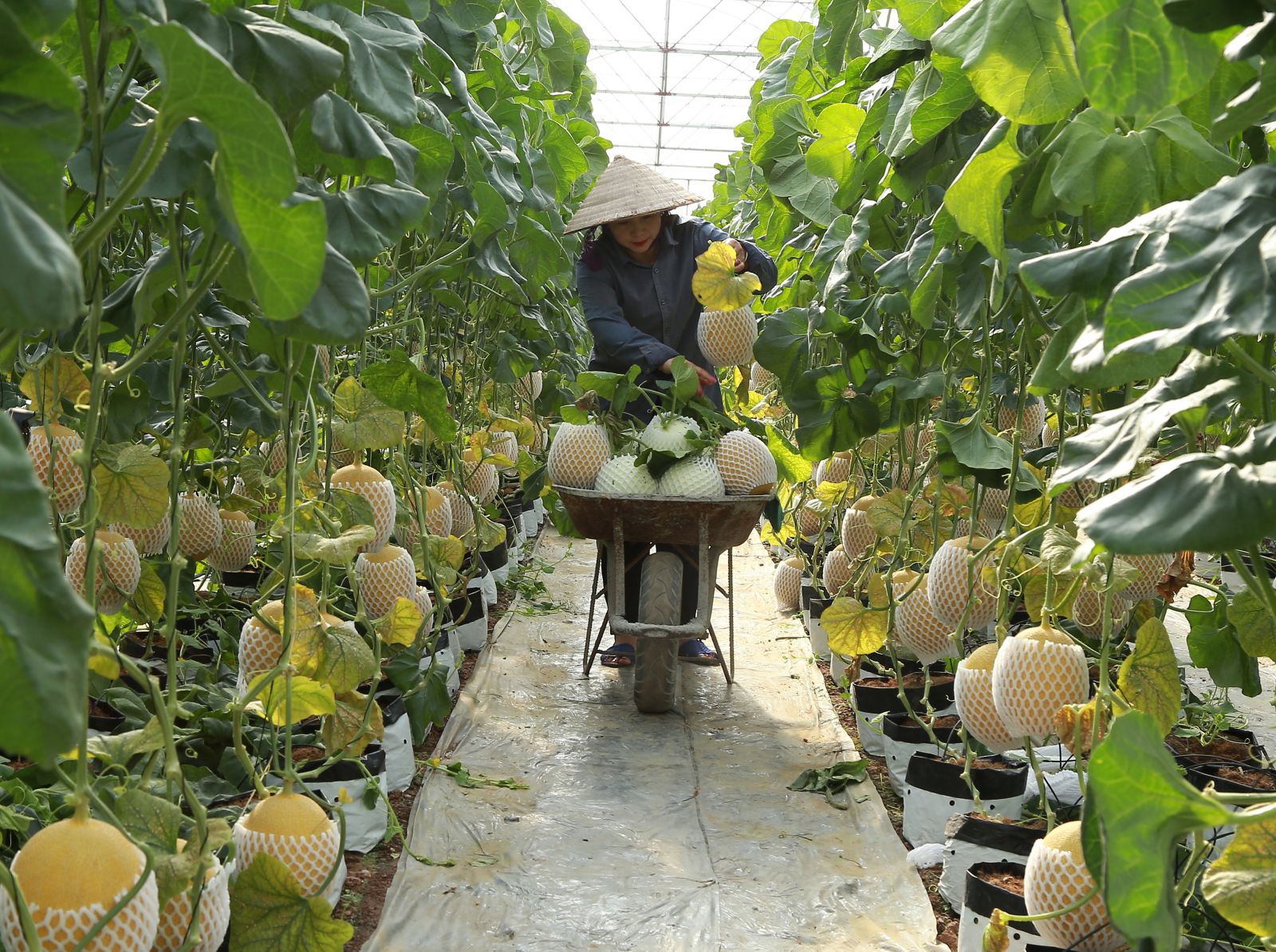
As the economy with a low starting point, promoting agricultural development towards commodity production is the basis for carrying out industrialization and modernization. The district defines clearly the role and position of agriculture in the process of building and developing local economy. The Party committees and authorities have directed to rapidly promote the restructuring of plants and animals, make improvements in people's lives, encourage farmers to make money and gradually turn the agricultural production into commodity production.
The economic structure of agriculture has shifted sharply towards increasing the proportion of the livestock sector and reducing that of agricultural sector. The rice yield is high and stable over the years. In 2003 the value of agricultural output reached VND 287 billion and 710 million.
Poultry and fisheries continue to thrive in both quantity and quality. The lionization program and crossbred cows are effective. Farmers focus on exploiting the area of ponds, lagoons and quickly bringing technical advances into breeding of high quality fish species. In 2003, the fish yield of the district was 2,978 tons.
Industry and handicraft:
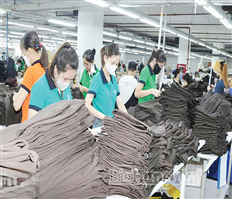
Since the re-establishment, the Party committee and authorities of Phu Cu district have always identified that industrial development must be based on the solid foundation of agricultural and handicraft development at a new height. Therefore, along with the process of forming the socialist-oriented market mechanism, industry and small industry in the district gradually adapted to the new mechanism and continued to stabilize and develop.
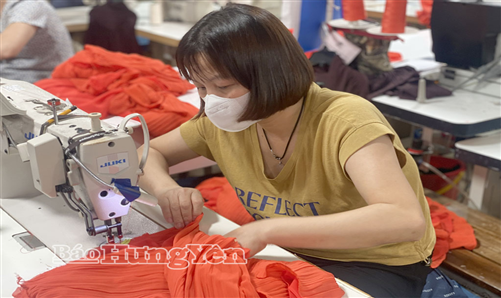
The key areas in industrial production and handicraft are food processing, foodstuff, garment, appliances, construction materials, rattan and bamboo, embroidery. In reality, the production and business activities of these sectors still face many difficulties, quickly adapt to the market mechanism. Clusters with large scale production have been gradually formed.
These sectors are conducted in the village, using raw materials and local free labor, contributing to living standard improvement and promote agricultural and rural economic restructuring. At the time of re-establishment (in 1997), the industrial production value was VND 22.67 billion, accounting for 11% of the district's GDP, reaching VND 79.335 billion in 2004, equivalent to 19% of the district's GDP, achieving an average growth rate of 21.5% per year.
The district constantly develops trade and service networks through developing cooperatives of service and trade and strengthening the rural market system. In addition, the district also built new wholesale markets to stimulate purchasing power.
6. Tourism and festivals
Together with the resistance history of foreign invasions, cultural values are shown in 45 Buddhist pagodas and temples in the area. Of which there are 5 biggest temples called Tua temple (in Tran Cao commune), Tra Bo temple (Phan Sao Nam commune), Tam Da temple (Tam Da commune), Quang Xa temple (Quang Hung commune) and Ha Linh temple (Dinh Cao commune) which all recall the Jade Emperor, and God as the embodiment of ancient philosophical perspective about universe in the relations with rice cultivation.
In addition, there are a number of district and provincial documents which worship Confucius and other Confucians who discuss poets and promote intellectual tradition of locals. Among the temples in Phu Cu, some pagodas have made great contributions to revolution and resistance war such as: Na Khe Pagoda where military and political studies and document were printed to Viet Minh.
Tam Quan stair in Dinh Cao pagoda is where the People's Revolutionary Committee of the district was established in 1945. Say pagoda in Minh Tan commune protected workers of the Military Workshop III during evacuation in the early years of the resistance. Ancient people have left various valuable cultural history values, but due to the devastating war and time, those architectural works are very few. People renovate them to create sceneries which arouse the historical and cultural tradition of predecessors.
Up to 1999, the district had 6 points classified by the Ministry of Culture and Information as the historical and cultural relic. They are 3 relics in Tong Tran commune including
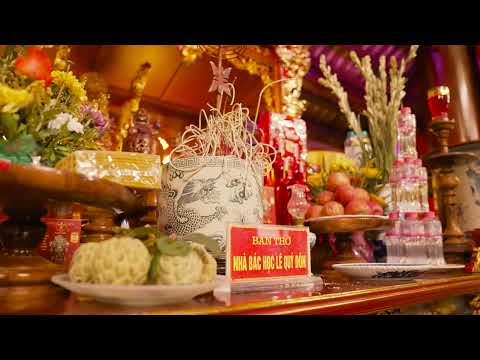
+ Temple of Zhuangyuan in An Cau village.
+ Le Xa temple in An Cau village recalls Mrs. Duong Thi Ngoc Thu, the empress of Ngo Quyen who fought Southern Han army.
Tra Duong pagoda worships Buddha and carries rich human values, with the ancient stone which are carved lotus flowers, water waves and clouds and dated from Dinh Dynasty
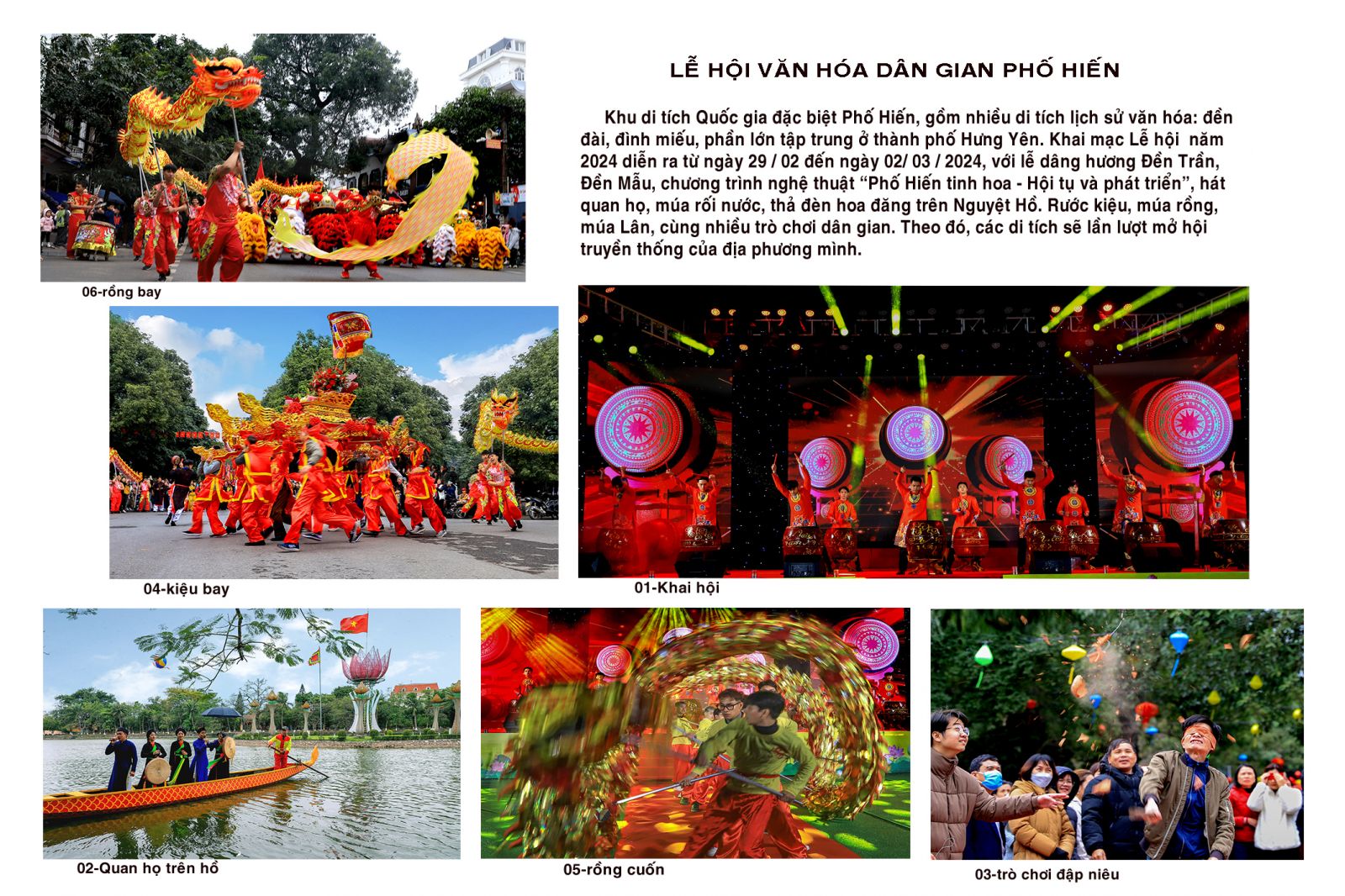
Other attractions are Tra Bo temple in Phan Sao Nam commune, Nghia Vu communal house in Minh Tan commune and Cuc Hoa temple who was the wife of Tong Tran Zhuangyuan. Today, some historical and cultural clusters are protected by the people. Associated with the cultural materials, the spiritual values are also reflected through the traditional festivals of the villages in the district. According to annual regulations of the communal houses, temples, spring and autumn are the occasions for holidays. The festivals focus in the spring. Normally from the 4th day of lunar Tet holiday, the villages start their festival activities, which bring new atmosphere to the peaceful village. First part is the worshipping and the festivals come later to praise the beautiful life of residents. The festivals normally attract the elderly and beautiful boys and girls to join cultural activities with rich humanity such as singing, chess, and poetry. Many familiar folk songs, pieces of Cheo singing, Trong Quan singing all arouse the warm climate among villagers as spring comes.
Today, traditional festivals have been gradually restored, as of 1999; the whole district has four festivals held at the commune level. They are the temple festival Tong Tran in An Cau village of Tong Tran commune, Tra Bo festival in Phan Sao Nam Commune, Dau Tua Festival in Tran Cao commune and Chua Ba Pagoda festival in Nhat Quang commune. Festivals exploit the positive aspects of spiritual values in people's life with an aim at building and protecting the homeland.
.jpg)

.jpg)
.jpg)