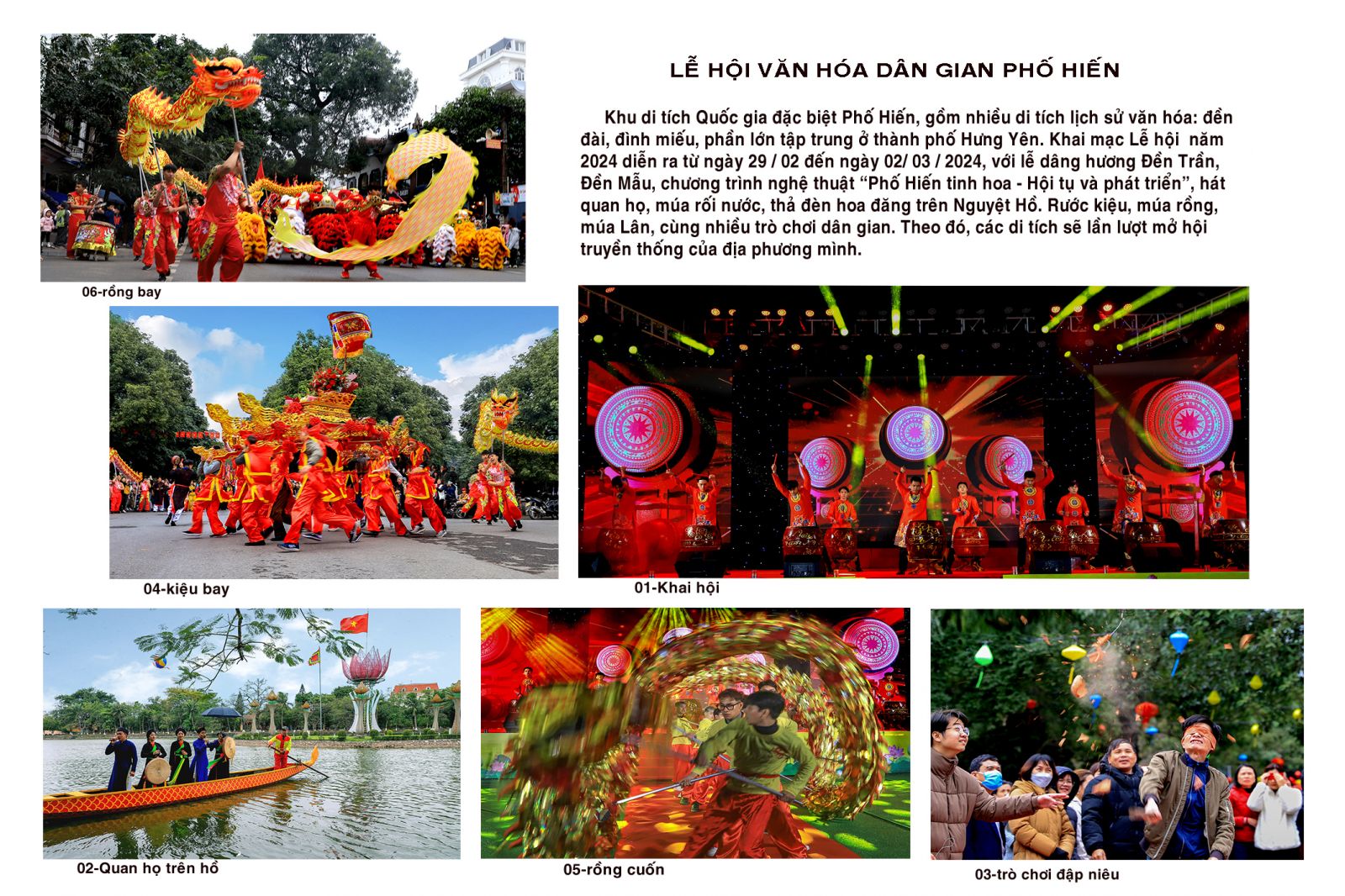
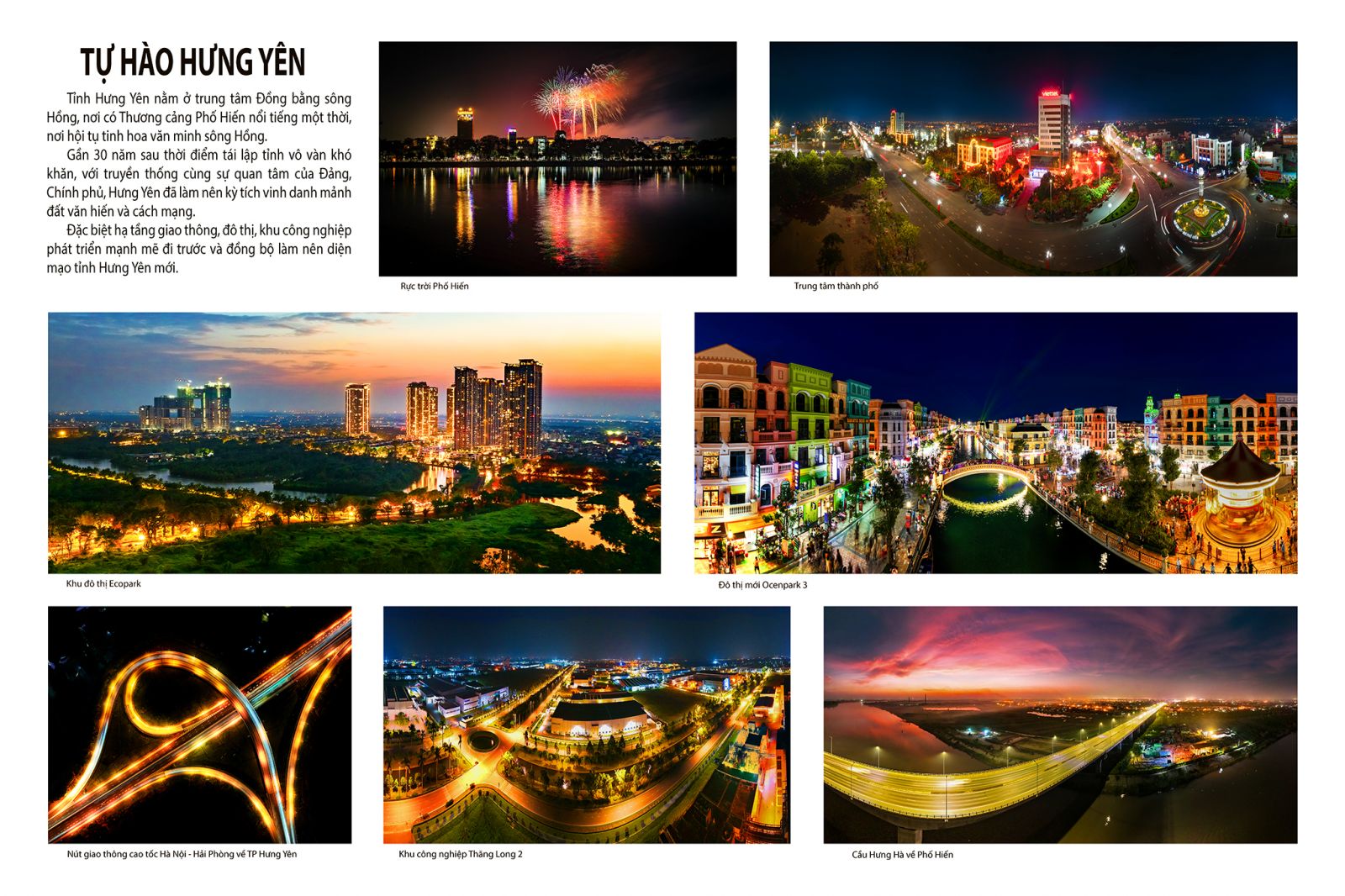
1. Visiting ancient Pho Hien (now part of Hung Yen city, Hung Yen province), observing and reflecting, visitors cannot help but feel the loss - survival, rise - death, the change in the sea. , about the existence of a once prosperous urban area whose traces have now faded, leaving an endless, silent regret for posterity. Observing and reflecting, nostalgic and nostalgic poems appear: "The old way of horse-drawn carriages, the soul of Thu Thao / The old castle's foundation has the shadow of the D...
1. Visiting ancient Pho Hien (now part of Hung Yen city, Hung Yen province), observing and reflecting, visitors cannot help but feel the loss - survival, rise - death, the change in the sea. , about the existence of a once prosperous urban area whose traces have now faded, leaving an endless, silent regret for posterity. Observing and reflecting, nostalgic and nostalgic poems appear: "The old way of horse-drawn carriages, the soul of Thu Thao / The old castle's foundation has the shadow of the D...
In a space of about five square kilometers, in ancient Dang Ngoai, in the 17th century, there once existed a once-famous urban area, called Pho Hien, with the status and position of "First Kinh Kinh, second Second Pho Hien".
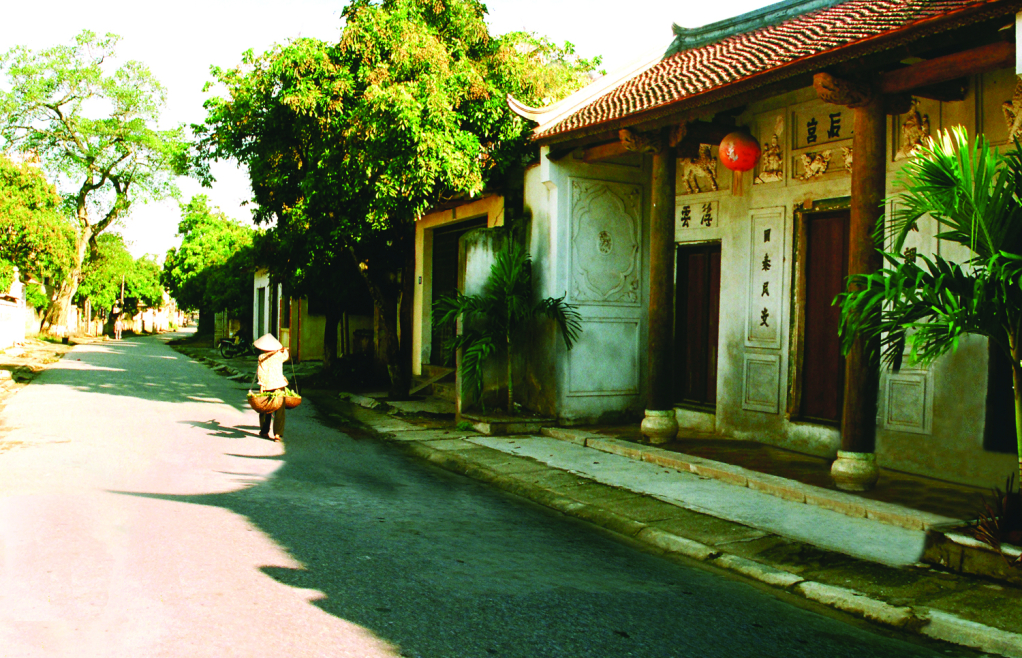
Dong Do Quang Hoi relic, Hong Chau ward (Hung Yen city)
Photo: Le Hao
I stood on the dyke, at the end of the current Crescent Lake, in the past it was Van Lai Trieu port - where merchant boats docked, the center of Pho Hien at one time... it was still like the voices of the ancients echoed somewhere... Tap crowded with boats and bustling with trading activities. Chattering, careless... the accent of Dutch and British merchants; great, xiao xiên tour with the voices of overseas Chinese traders; The voices of Japanese merchants were cooing... At that time, the Red River was close to the foot of the dike...
I came to Mau Duong street in Hong Chau ward now, silently admiring the house with yin and yang tile roofs that have weathered over time, formerly called Dong Do Quang Hoi - Thien Hau Cung located in the center of Pho Hien, a meeting place for the people. foreign traders to buy and sell, price goods, negotiate contracts, and manage transactions at that time. Later, this place was the meeting and meeting headquarters of Chinese people in Pho Hien... Still seeing bustling scenes of people coming in and out, noisy conversations, shaking hands to celebrate... This Asian architectural house is a rare image. The remaining few are vivid evidence of the most prosperous period of development of ancient Pho Hien...
My wandering footsteps took me to the markets of Pho Hien at that time, no trace of which now remains. The market is the face of the economy - culture - life of a region. Pho Hien market at that time was a vivid image of a prosperous "economic city". Van market at Xich Dang wharf, Hien market next to Son Nam headquarters, Bao Chau market... were always bustling with buying, selling and trading. vibrant... This afternoon, on the dike slope, quietly admiring the space of the markets as before, it was as if there were still buzzing here and there with sounds, colors, flavors... and a bustling, bustling atmosphere - a sign of prosperity. flourished for a time.
I stopped at the old neighborhood - a settlement of Vietnamese, Chinese and other foreigners. Lots of ancient houses with tiled roofs running along the winding dike. History books record that Pho Hien at that time had up to 20 wards, 13 streets and was filled with shops and a number of trading posts (trading headquarters) that were bustling on the streets. Among them, there are wards specializing in producing and selling a variety of colorful handicraft items. Interestingly, there are ward names that have the appearance of wards in the capital: Hang Su ward (selling wooden and iron goods), Nhuom Vai ward (dyeing fabrics and clothes), Hang Chen ward (selling furniture). Porcelain), Hang Be Ward (selling bamboo), Tan Da Ward (selling leather products)... When Pho Hien faded away, perhaps the residents of these wards migrated to Kinh Ky land, joined and became feudal lords. enrich and more vibrant the production and trading of traditional handicraft items in the corresponding streets and wards here.
"After a tumultuous…"(*). History books write that, by the end of the 18th century, this once bustling architectural complex was destroyed and turned into fields. There are also glimpses of the crowded and wealthy streets of Pho Hien in the past...
2. I idly pondered the short existence of Pho Hien, the formation and disappearance of this urban area.
First of all, the formation and birth of Pho Hien is also strange, stimulating curiosity to learn. A purely agricultural countryside far away along the river, with agricultural residents for generations, only accustomed to fields and fields..., does not contain the seeds of an economic city, more or less unfamiliar with social activities. commercial, unfamiliar to traders, especially foreign traders... Yet, as if by a "push" of nature, this place grew up a bustling urban area, a famous economic center of the time. At that time, there was also an element of international exchange...
It turns out that all existence is not accidental, there is a "reason". God gave this land a geographical location with many advantages. At that time, road transport was not developed. Water transport was the main method. weak, especially for long-distance trade. From the land later called Pho Hien, by river, you can go to many places in the North and beyond. This is a transit place, a gateway , is a trading hub with river and coastal trade routes in the country and connects with international trade routes in the East Sea, stretching thousands of miles to Asian and Western countries There were enough factors for the birth of an international trading port at that time. Accordingly, a small-scale economic city was also formed here in the middle of the 17th century of Pho Hien at that time.
Existence did not last long. Then comes the process of decline and destruction. Merchant ships rarely visit. Shops are closed. Street markets gradually became sparse in sales... God gave Pho Hien a "prime" geographical location, but later, God "took away" that advantage. Due to the sedimentation of the Red River, the river's flow is receding further and further. Pho Hien port gradually disappears. The capital of Vietnam moved to Hue. The economic role shifted to Hai Phong port and a number of other commercial ports. By the 19th century, the image of bustling Pho Hien gradually faded and eventually remained only in the mind.
And, originally this was a peaceful and remote rural area, now it is back to being a land with both rural roots and a glimpse of modernity, still retaining more or less ancient cultural values... And Originally, they were agricultural residents with their hands dirty in the mud, simple and sincere, not used to working in the market, but now they are still people attached to the fields, to the land that is both peaceful and increasingly hopeful. prosperous.
3. Pho Hien also evokes many thoughts about cultural - historical issues and related factors.
An urban area like Pho Hien carries with it cultural and historical values. When lost, over time, this heritage will gradually be forgotten, contributing to the loss of the cultural identity of a region and the entire community.
An urban area that once existed like Pho Hien has hidden tourism and economic potential if properly preserved, restored, and exploited.
Restoring a disappeared urban area like Pho Hien with the purpose of preserving cultural and historical values and developing tourism is a reasonable idea, but needs to be carefully considered. This restoration creates conditions for future generations to deeply understand the development process and cultural diversity of a locality. At the same time, creating a new "destination" that attracts tourists and contributes to local economic development. However, it requires careful consideration of the relationship between tourism and the environment, between short-term benefits and long-term, sustainable development.
Pho Hien - today I set foot on this land, silently looking at the remaining traces, feeling a sense of nostalgia, a feeling of nostalgia and regret about a place, a cultural address. once existed, now it has become a distant nostalgia for many generations.
Nguồn trích dẫn: baohungyen.vn

.jpg)

.jpg)
.jpg)