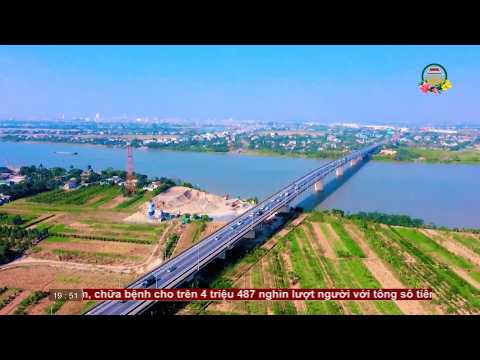
1. Location Kim Dong district is located in the southwest of Hung Yen province. It borders Khoai Chau district to the north, Hung Yen city to the south, An Thi and Tien Lu district to the East; the Red River to the West. It is also next toPhu Xuyen district (Hanoi) and Duy Tien (Ha Nam). National Highway 39A and Red River run through the district which is adjacent to the center of Hung Yen province, connecting with Highway 5 which is 20kms away. This is one of the favorable conditions for econ...
2. Natural condition
Kim Dong is a district located in the Red River Delta, with relatively flat terrain, slope is not large (about 1.6 - 3m). The area with high slope (3ms) accounts for only 12.7%
Kim Dong district is characterized by the climate of the Red River delta which is tropical monsoon. The winter is much colder than the condition of the latitude. The first period of winter is relatively dry, the second half is wet, the summer is hot with much heavy, the climate fluctuates.
The average annual temperature is 23.2 degree celcious. Summer temperature reaches 30 - 32 degree celcious on average; the highest temperature in June and July is up to 38 degree celcious. Winter temperature ranges from 17 to 22 degree celcious; the lowest temperature in January and February ranges from 8 to 10 degree celcious.
The annual average humidity is approximately 85%, the highest one is 90.6%, the lowest one is 60%. March is the wetest month and November is the driest month.
Total annual rainfall is 1700mm. The monthly average rainfall is 175mm. The rainy season mainly concentrates from May to September. The rainy season often coincides with the floods in the Red River, which causes floods and badly affects the production and daily life of the population. The Red River is the main source of water for irrigation which enriches alluvial soils for crops in the district.
The favorable conditions give facility for many types of plants and diversification of agriculture. However, there must be measures to prevent drought and at the same time to set the crop structure in order to improve productivity, quality and economic efficiency.
3. History and development
In the first centuries AD, Kim Dong under Giao Chi district, Dinh Dynasty was named Dang Chau. In Tran Dynasty, the district was named Kim Dong.
On February 24, 1979, according to Decision No. 70/ CP of the Government Council, Kim Dong district was merged with An Thi district to establish Kim Thi district of Hai Hung province. After 17 years of consolidation, according to the Decree No 05 / NĐ-CP dated 27/01/1996 by the Prime Minister, Kim Thi district was divided into Kim Dong and An Thi district as before.
Kim Dong is located in the center of the Red River Delta and raised by alluvial accretion of red river. Over tens of thousands of years, the land slides into the sea, the ancient Vietnamese people living along the river hunted seafood, and grew rice for food. Along with the development of agricultural economy, the first village were erected along the Red River.
Kim Dong residents carry the spirit of "Dragon's children, fairy grand's children", hard-work, solidarity, bravery in the fight against nature and against invaders. Many villages' names in the district still include the word "Xa", namely Dong Xa, Vinh Xa, Vu Xa, Mai Xa. So far, many villages in the district still have the ancient names in order to commemorate the first founders or to memorize the village's myths such as No village (Duyen Yen), Te village (Ta Xa), Phung village (Duong Phu). Today Kim Dong people are eagerly striving to build a rich and prosperous Kim Dong, and to become a typical district of the province in all aspects.
4. Administrative units
There are 17 administrative units, including 16 communes và 1 town với with the total area of 102,79 km2:
Luong Bang Town has the administrative area of 7.43 km2
Nghia Dan commune has the administrative area of 4.46 km2
Toan Thang commune has the administrative area of 7.26 km2
Vinh Xa commune has the administrative area of 5.84 km2
Ngu Lao commune has the administrative area of 6.74 km2
Tho Vinh commune has the administrative area of 3.50 km2
Dong Thanh commune has the administrative area of 5.64 km2
Song Mai commune has the administrative area of 7.37 km2
Chinh Nghia commune has the administrative area of 6.43 km2
Nhan La commune has the administrative area of 3.15 km2
Phu Thinh commune has the administrative area of 4.85 km2
Mai Dong commune has the administrative area of 6.31 km2
Duc Hop commune has the administrative area of 7.48 km2
Hung An commune has the administrative area of 7.38 km2
Ngoc Thanh commune has the administrative area of 6.52 km2
Vu Xa commune has the administrative area of 5.27 km2
Hiep Cuong commune has the administrative area of 7.16 km2
5. Society and economy
The average economic growth rate in 2005-2010 was 12%. Production value of agriculture increased by 5%; industry and construction increased by 19%, service sector was increased by 14.5%.
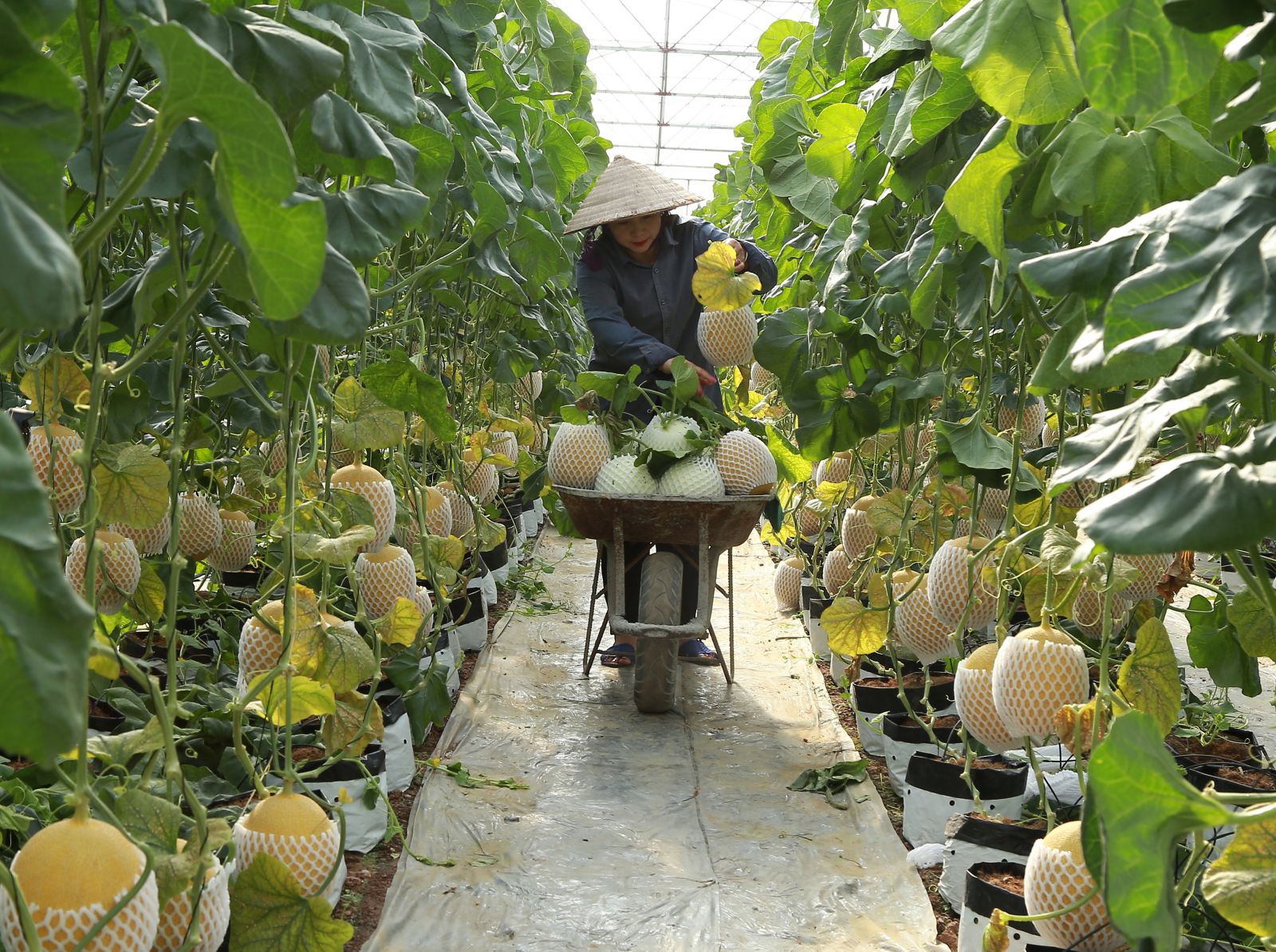
Agriculture: Implementing the policy of agricultural economic restructuring boost, in the past few years, the district has implemented many successful programs and models. In 2005, the localities in the district basically completed the plan of land regrouping, which will facilitate the general agricultural economy structure. The district has directed to cultivate trees with high productivity and quality.
In agricultural production, the district focuses on application of science and technology, bringing high yield and high quality varieties into cultivation. The purpose of this policy is to test and put hybrid rice varieties into production to replace low quality ones. As a result, agriculture continued to grow, high quality rice accounted for 53% of the area. Winter crops accounted for 37.7% area. 1091.5ha of poor rice was converted successfully. There were 113 farms meeting the criteria. The proportion of livestock and aquaculture accounted for 41% of the whole agricultural sector.
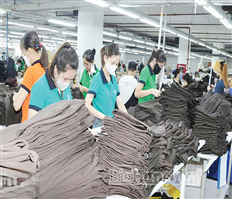
Handicraft, rural trades are diversified: There are 03 craft villages in the district. The total number of industrial projects in the province is 28. 100% of roads are concreted, including 19,2kms of road to the fields. Road 208B and routes to An Thi, Khoai Chau are also upgraded. 10 pumping stations are built and renovated. New working offices of 11 communes and towns are built. Total retail sales increases by an average of 20.5% per year, and transportation services grow 18% per year. 53 transformer stations are newly installed with additional 35kms of power transmission lines. Eight communes and towns have been handed over the low voltage power system to the electricity agency. The information system has been developed with 45 mobile stations, including 15 landlines per 100 people.
Industry and service: The Party, authorities and people of Kim Dong district have made efforts to overcome all difficulties, effectively implement the policy of accelerating economic restructuring throughout the district. Industries and handicraft has developed rapidly. The traditional professions such as food processing, construction material production, mechanical engineering, carpentry are maintained and expanded. The rattan, bamboo, embroidery, carpet knitting are being restored.
Strong growth in industries and handicraft has facilitated the development of the service and trade network, which basically meets the demand of production and people's life. Taking advantage of the district, Kim Dong has been planning and building wholesale markets, improving the rural market system and creating favorable conditions for the development of various types of services. At the end of 2004, the whole district had 2,823 business households trading, yielded VND 164 billion.
6. Historical relics and festivals
The district has huge potentials in ecotourism. Van Nghe village in Mai Dong commune is a floating area on the Red River fertile land which can be promoted ecotourism but not be employed yet.
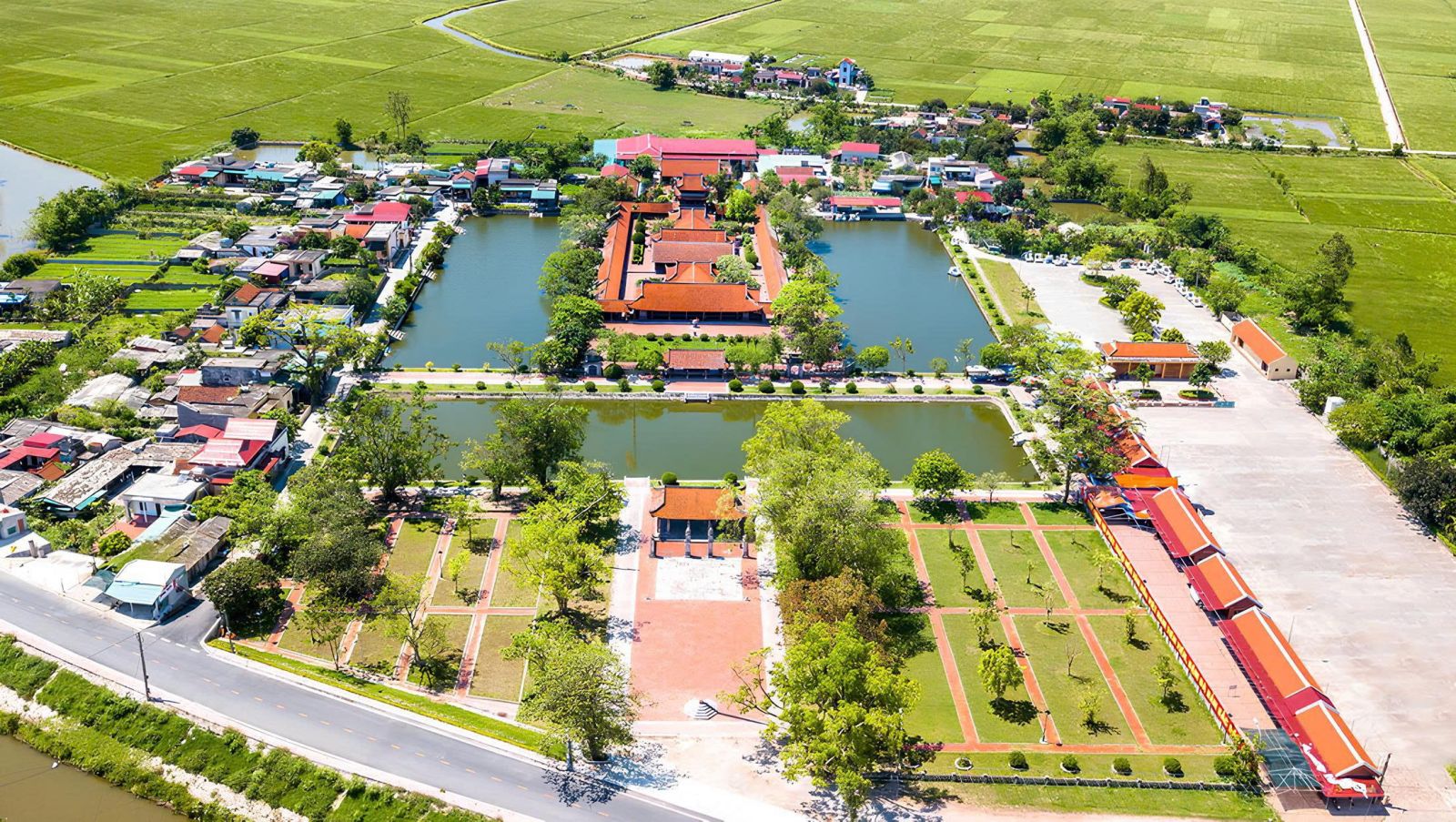
Historical relics: Dao Xa Temple (Vinh Xa Commune), Temple and Tomb of Vu Tien Cong (Tien Cau Hamlet, Hiep Cuong Commune), Phuong Tong Pagoda (Hung An Commune), Ba Chua Mua Temple (Vu Xa Commune).
.jpg)

.jpg)
.jpg)