1. Location Khoai Chau district is located in the center of Hung Yen province, with an area of 130.9 km2 and a population of 190,939 with a density of 1,453 people per km2. The district center is Khoai Chau district which is located 24 km north of Hung Yen city, 22 km south-east of Hanoi, bounded by Thang Loi, Me So, Tan Tien, Van Giang to the North. It borders on Hoan Long, Yen Phu, Yen Hoa, Minh Chau, Ly Thuong Kiet of Yen My districts and borders with Xuan Truc commune of An Thi district in...
2. Natural condition
Terrain and climate
Terrain: The area of the district is about 13,086 ha, accounting for 14.08% of the province’s area, of which agricultural land is 8.779 ha. Khoai Chau is located in the center of the Red River Delta, with relatively flat terrain with an average slope from + 3.5 m to 4.5 m; the highest place is 7 - 8 m while the lowest is 2m. Khoai Chau soil is suitable for rice cultivation, vegetable production, industrial crops and fruit trees.
Climate: Khoai Chau climate is hot and humid with abundant water source. The season is from May to October. The wind has two distinct seasons: the northeast monsoon from November to March of the year followed by the drizzly rain; From June to October, there are storms and heavy rain. The average annual temperature is 23 - 240C. The highest temperature in May is 37 - 380C. July to August, temperatures down to 27 - 280C. In the winter months of October to November, the temperature is down to 15 - 200C, in December and January next year to 9 - 100C. The average annual sunshine hours are 1,730 hours. Annual rainfall of 1800mm - 2500mm, distributed for a number of months as follows: May rainy from 90-150 mm, in June, rain of about 300mm, August from 280-330mm rain.
Hydrological
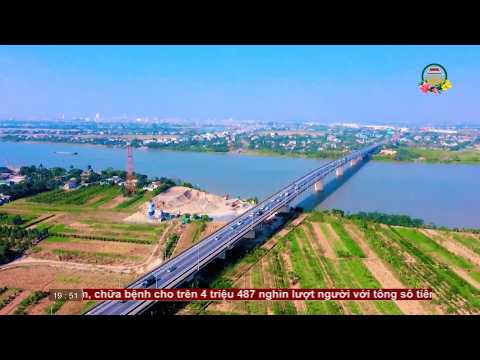
Khoai Chau district has 21.4 kms of Red river dyke (Provincial road 195) from Binh Minh commune to Da Trach, Ham Tu, Tu Dan, Dong Ket, Lien Khe, Dai Tap, Chi Tan, Thanh Cong and Nhue Duong. Along the banks of the Red River are the wharves of Binh Minh, Phuong Tru, Nam Mau (Tan Dan), Tan Chau, Dong Ninh, Dai Tap, Banana Garden (Nhue Duong). The 23.5 km Cuu An River was dug in 16th Minh Menh dynasty (1835) which origins from Nghi Xuyen (Chi Tan) flowing through Thuan Le, Sai Thi, Cho Gian (Thuan Hung), Dong Thanh commune, Luong Bang town, Vu Xa commune of Kim Dong district, Hong Quang, Ha Le, Tien Phong commune of An Thi district.
Tu Ho - Sai Thi River flows from Ban River, and from Bac Hung Hai River system originates from Dong Than Commune through Hoan Long, Yen Phu, Yen Hoa of Yen My District into the territory of Khoai Chau district in Tan Dan, An Vi Commune, Khoai Chau town, Phung Hung, Dai Hung, Thuan Hung, Thanh Cong, Nhue Duong into Kim Dong and connects with Cuu An River.
Kim Nguu River runs through Dan Tien, Dong Tien, Hong Tien, Viet Hoa, Tay Tan Hung river from Lien Khe, Binh Kieu, Phung Hung, Viet Hoa, Dan Tien connected with Kim Nguu, Dien Bien river through Dan Tien, Dong Tien, Hong Tien, Viet Hoa. Muoi river flows from West Channel in the area of Ham Tu through Doc Lap Hamlet, Man Xuyen (Tu Dan) through North Hamlet (Dong Ket) crossing 209 road.
The West and the East canal system are to serve irrigation for communes in Khoai Chau district. Tay canal takes water from Van Giang's pumping stations through Binh Minh, Da Trach, Ham Tu, Tu Dan, Dong Ket, Lien Khe, Chi Tan, Thanh Cong and Nhue Duong communes. The East Canal from Nhu Lan Pump Station, Long Hung, Van Giang supplying water to Tan Dan Commune, Ong Dinh An Vi Commune, Khoai Chau town, Phung Hung, Dai Hung, Thuan Hung. there are many ponds and lagoons in the district such as Da Trach, Ham Tu, Man Xuyen (Tu Dan), Phung Hung.
3. History and development
Since the establishment of Hung King, Khoai Chau area was exploited. Along with the development of national history, this area has undergone many changes in administrative boundaries with many different names. However, Khoai Chau people always promote their hard work, creativeness, nature conquer, land commitment in order to build a rich and beautiful homeland.
After many times of split, merger, implementing Decree No. 60 / ND-CP dated July 24, 1999 of the Government on the adjustment of administrative boundaries, on September 1, 1999, Hung Yen province separated the Chau Giang District into Khoai Chau and Van Giang. Khoai Chau district was officially re-established since then.
The tangible and intangible cultural heritages are also preserved on this land such as the system of relics, ancient architecture, legends and folk materials showing that this place was deeply influenced by ancient Kinh culture. This place is also associated with romantic poetry of Tien Dung - Chu Dong Tu, one of the prototypes that Vietnamese people consider as four immortals. At the same time, Khoai Chau people have traditions of learning and gratitude. From 1075 to 1919, Khoai Chau had 23 university students, such as: Nguyen Ky in Tan Dan commune, passed the first rank in Tan Suu term, in the year of first Quang Hoa (1541). At present, Khoai Chau's generations have become engineers, doctors, many scientists and senior military officers. They are contributing to building the country every minute.
Throughout long history, patriotism and anti-invaders of Khoai Chau people has been molded into a precious tradition. Each place on Khoai Chau land is associated with glorious victories. From Trieu Quang Phuc taking over Da Trach lagoon (in 545) as a solid base for the guerrilla war to defeat Luong invasion to bring independence to the country. Man Tru witnessed indomitable spirit of General Tran Binh Trong with the famous saying: "I would rather do South Devil, but never crave the North."
Ham Tu door, O Ma Nhi - the notorious general of the enemy was arrested, which changes the situation of the war, creating momentum for the victory of the military in the Tran Dynasty. When the French colonialists invaded our country, Khoai Chau people came up with Tan Thuat and Dinh Gia Que to raise up their resistance flag against the enemy. Khoai Chau was the site where the first Communist Party cell was founded
Since then, the light of Marxism-Leninism and Ho Chi Minh's ideal has horned the spirit of Hung Yen people in general and Khoai Chau in particular to battle for independence. After two wars of resistance against French colonialists and imperialists, 3,714 of Khoai Chau's talents were passed away on the battlefields. With such great contributions, the Party and people of Khoai Chau district were honored to be awarded the title Hero of the People's Armed Forces by the Party and the State.
Following this tradition, the Party committees, authorities and people of Khoai Chau district are fighting hard together, striving to bring into full potentials and strengths of a prosperous suburban area in order to gradually improve their lives, constantly create new cultural values and build a more properous country.
4. Adminstrative units
There are 25 administrative units, including 24 communes and 1 town with a total area of 130.86 km2, specifically:
The administrative area of Khoai Chau is 4.36 km2
The administrative area of Dong Tao is 5.35 km2
The administrative area of Binh Minh is 5.92km2
The administrative area of Da Trach is 3.72 km2
The administrative area of Ham Tu is 4.46 km2
The administrative area of Ong Dinh is 3.13 km2
The administrative area of Tan Dan is 10.63 km2
The administrative area of Tu Dan is 6.10 km2
The administrative area of An Vi is 5.03 km2
The administrative area of Dong Ket is 6.37 km2
The administrative area of Binh Kieu is 4.41 km2
The administrative area of Dan Tien is 4.47 km2
The administrative area of Dong Tien is 3.65 km2
The administrative area of Hong Tien is 5.61 km2
The administrative area of Tan Chau is 6.11 km2
The administrative area of Lien Khe is 5.03 km2
The administrative area of Phung Hung is 9.26 km2
The administrative area of Viet Hoa is 6.45 km2
The administrative area of Dong Ninh is 4.03 km2
The administrative area of Dai Tap is 5.96 km2
Chi Tan commune with an administrative area of 4.14 km2
The administrative area of Dai Hung is 3.70 km2
The administrative area of Thuan Hung is 5.00 km2
The administrative area of Nhue Duong is 3.73 km2
The administrative area of Thanh Cong is 4.33 km2
5. Society and economy
Located in the northern key economic region, not far away from Ha Noi and gifted by nature for fertile alluvial soils, Khoai Chau is emerging to be one of the leading districts in the province in terms of production value. Overcoming the initial difficulties of a new district, the Party committees, authorities and people of Khoai Chau have rapidly transformed the structure of agricultural and rural economy to create momentum for industrial development.
Industry and handicraft:
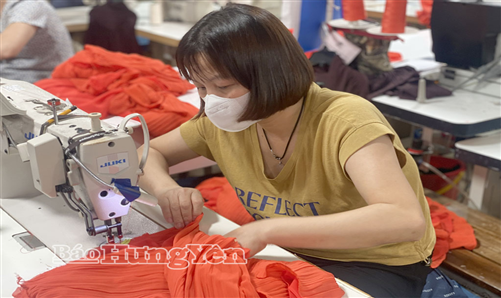
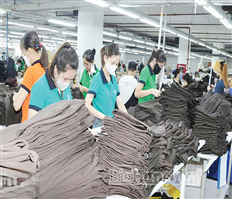
Since the re-establishment of the district (September 1999), the Party Committee of the District and the People's Committee of Khoai Chau district have followed the orientation of industrial development which is based on agriculture and small industries. This reality is resulted from the fact that Khoai Chau develops agriculture the most with over 90% of the population living in rural areas. At the time of re-establishment, Khoai Chau district did not have any enterprises operating large industrial production. At the same time, Khoai Chau's biggest advantages are fertile alluvial fields that allowed favorable conditions for cultivation. However, the district stated that if it only focuses on agriculture, the result could not meet the Party's strategies of industrialization and modernization orientation regardless of how effective it is. In addition, thanks to abundant young labor force that is capable of absorbing and promoting the application of modern science and technology into production, Khoai Chau has many advantages for industrial development. The district has conducted many programs to attract investments, and give facility for approved projects to be put into operation soon, especially encourage the expansion of production. In the end of 2004, the district had 15 investment projects in the area. The enterprise producing sport shoes (in the town) and oil processing plants (in Dong Ket commune) officially went into operation. At the same time, the district has made specific plan to prioritize the development of industries in the west and the middle of the district to promote exploitation and production on the Red River banks.
As of handicraft, the district determines that this sector attracts the majority of agricultural workers, which not only generates more income for people, but also gradually creates industrial working style. The district has built craft clusters in Lien Khe commune. The handicraft villages in the area have created jobs for thousands of local agricultural workers, focusing on some key occupations such as rattan, bamboo weaving, mushroom cultivation and feather processing.
Agriculture
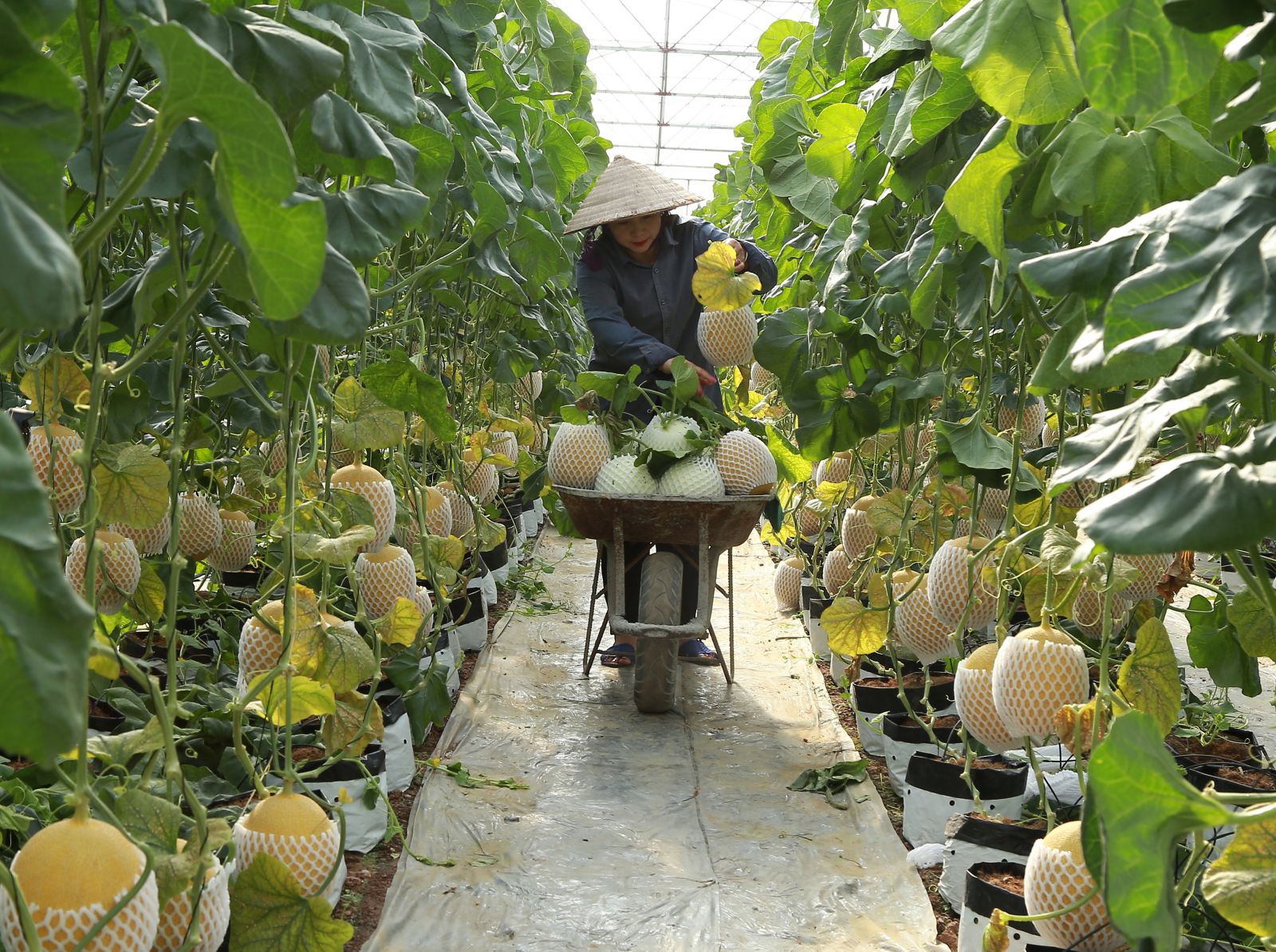
Khoai Chau district is located in the Red River delta, which is raised by alluvium of the Red River, forming the fertile land for this area. In addition, the district also reviews, supplements and adjusts appropriate programs, projects and master plans so as to convert ineffective rice land into the integrated model, encourage, facilitate land accumulation, implement the model of "cooperative fields", move large scale animal husbandry far from residential areas, ensure food safety, and create a link between processing and marketing. The district also always supports farmers in the application of scientific and technical advances. Khoai Chau longan is planned to be exported to foreign markets.
The advantage of Khoai Chau is the high degree of intensive farming, favorable climate and soil condition, which is suitable for growing food crops and fruit trees and vegetables. In addition, right strategies of Party committees and government policies timely support have created momentum for the development of local agriculture to new heights. Every year, the district supports hundreds of millions of VND for the purchase of new seeds and technical training for farmers. Right from the beginning of 2017, agricultural production of Khoai Chau district initially achieved good results, namely 2,500 ha of spring rice grown in the best time of cropping season. The main varieties are Hung Yen sticky rice, North aromatic rice number 7. In the movement of spring planting, the district planted 13 thousand trees of all kinds.
Livestock is also the strength of Khoai Chau agriculture and being developed in the direction of specialization. In 2016, the number of livestock and poultry in the district were 2400 cows, about 1 million chickens.
Currently, the district aims to accelerate the restructuring of agricultural economy, promote the advantages of the area adjacent to the capital in order to provide high quality agricultural products and goods for the whole Red River Delta region. The district is striving to shift production towards commodity production associated with processing and consumption services. The northern part of the district focuses on developing high value agricultural products such as bonsai, fruit trees, medicinal plants, essential oils and tourism services.
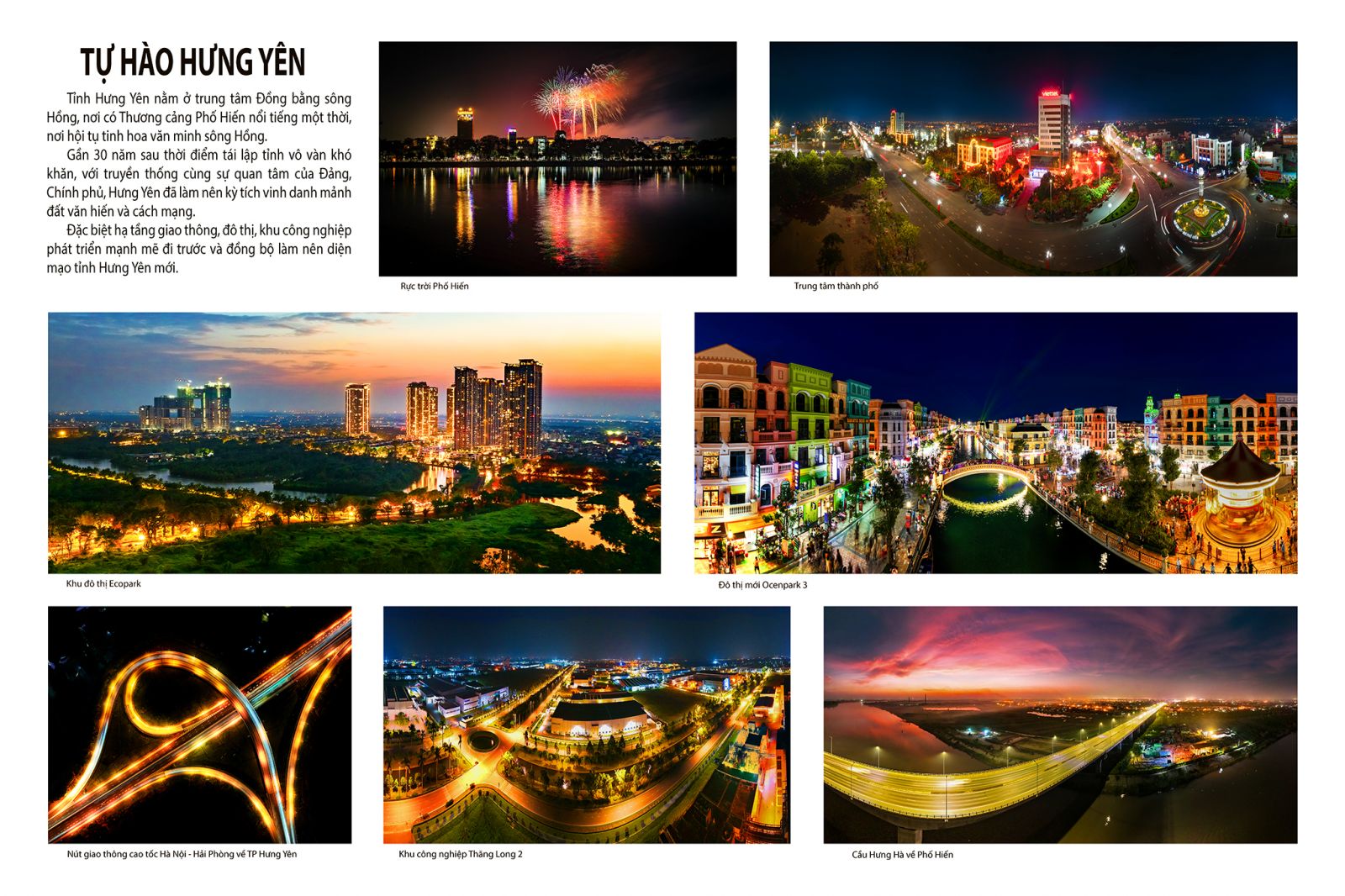
Regarding the construction of new countryside, the district pay attention to construction of rural roads, field roads, especially in communes which have completed regrouping agricultural land and creating specialized production areas
The achievements of Khoai Chau agriculture have been contributing to the formation of a new rural image, creating a solid foundation for the development of the industry in which the district is employing all its resources.
6. Typical historical relics and festivals
Khoai Chau is located in the center of the Red River civilization, so it is also known for its intangible and intangible cultural heritages such as the cluster of relics which are associated with ancient architecture and folk materials which show that this place has had a profound influence of the ancient Kinh Bac culture. This is also the place famous for the poetic love of Chu Dong Tu - Tien Dung, one of the prototypes that Vietnamese people honor as the four immortals.
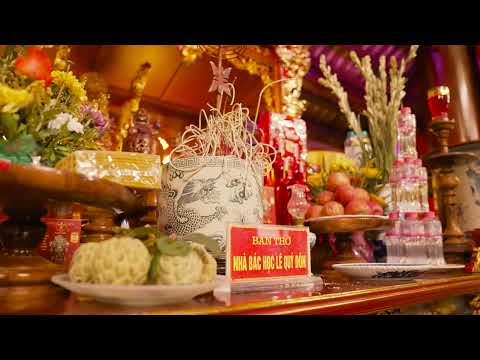
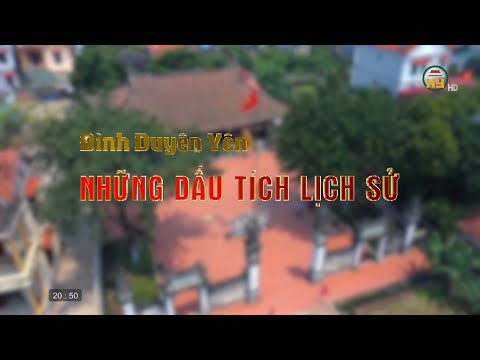
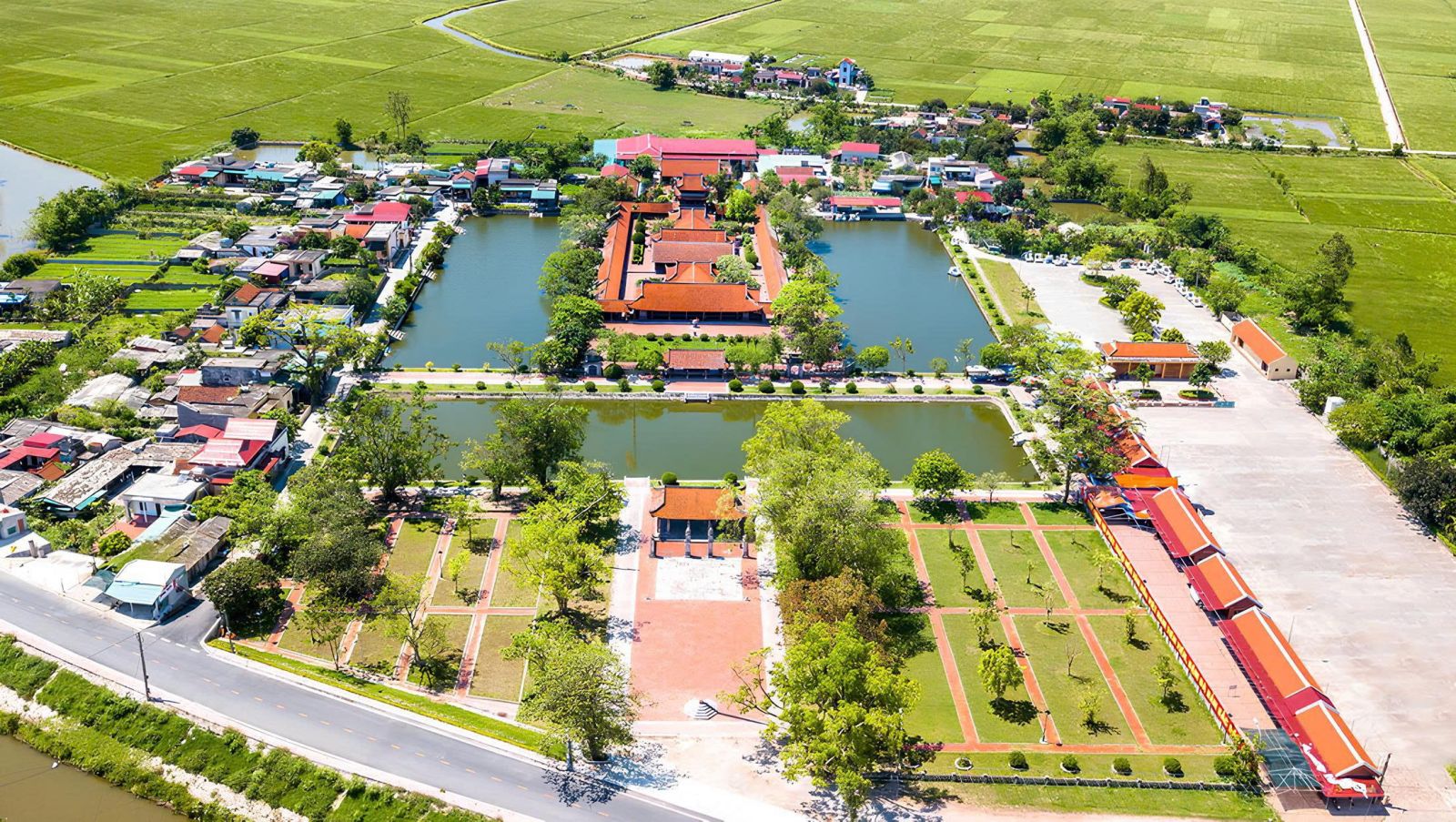
The tourism potential of Khoai Chau is abundant. In Khoai Chau district there are 264 relics, of which 26 are classified at national level, 19 are classified at provincial level. The most renowned relic is the temple cluster of Da Hoa, Binh Minh, Hoa temple - Da Trach which is associated with the legend of Chu Dong Tu - Tien Dung and located in the main tourist route on the Red River (Hanoi - Pho Hien). Da Trach temple associated with the historic landmarks of Trieu Quang Phuc in the war against the Luong enemies. Khoai Chau has many famous places such as: Ham Tu, Tay Ket where imprinted the victories in the resistance war against Nguyen enemies under Tran Dynasty. Bai Say is associated with the revolution Bai Say against French colonialists of Nguyen Thien Thuat. The relic cluster of Boi Khe pagoda has worshiping General Nguyen Muc. Sai Thi village of Thuan Hung commune is where the first Vietnamese Communist Party of Hung Yen was established.
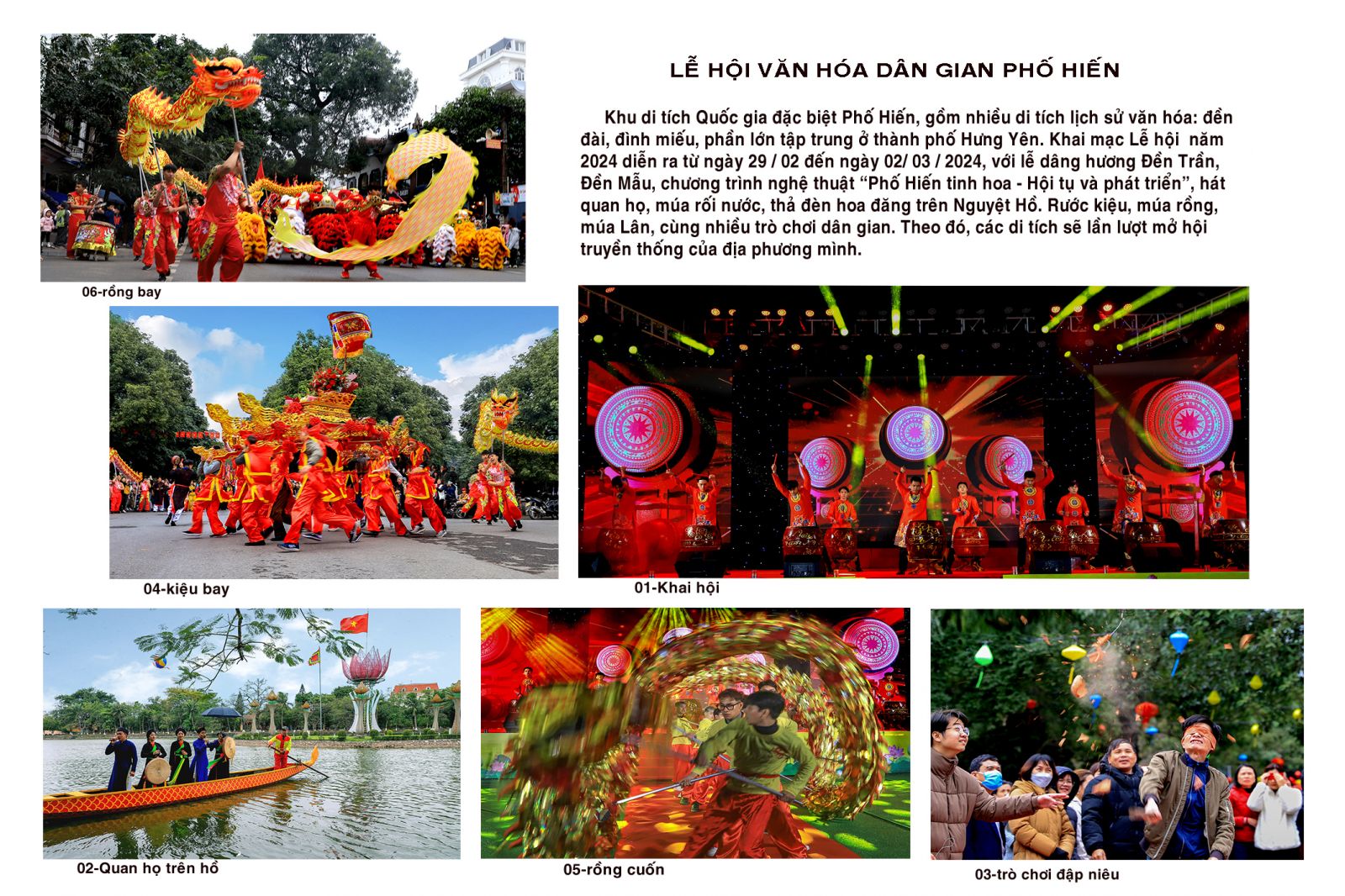
Every year, there are 38 traditional festivals in the district, of which 16 are managed by district and 22 are managed by the commune. The relics in the district have a long history with unique architectural art, antiques and precious objects.
.jpg)

.jpg)
.jpg)