Geographical location: Hung Yen city is 60 kms from Ha Noi, Hai Duong, Thai Binh, 90 kms from Hai Phong; Hung Yen city is the political, economic, cultural and social center of Hung Yen province. - The North borders Kim Dong district. - The east and south borders Tien Lu district; - The west borders Ha Nam province. ...
2. Natural conditions
Topography and climate: Hung Yen has a relatively flat terrain, is slightly tilted and lower from the Northwest to the Southeast, the average elevation is 3.6m; the climate is temperate monsoon tropical, the average temperature in 230C; Average annual rainfall: 1,923mm.
River: Located in the middle of the Northern Delta, Hung Yen is surrounded by a network of rivers including the Red River system, Luoc river and branches. Some big rivers are Cuu An, Hoan Ai, Kim Nguu, Nghia Tru, Ke Sat and Dien Bien rivers.
Ancient Pho Hien - Hung Yen city today is formed and developed under the influence of two large rivers, Red River and Luoc River. At present, there are Red River and Dien Bien River running through Hung Yen city
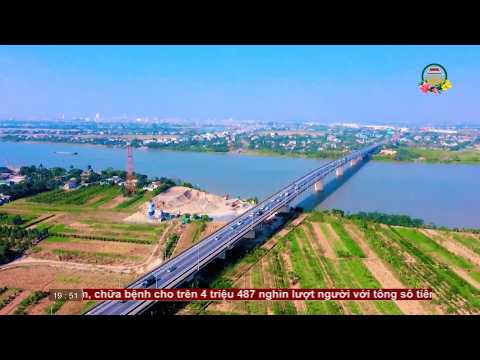
Red River is a river originating from China, with a total length of 1,183km. The territory of Vietnam is 493 km, the widest part is 1,300m, and the narrowest is 400m. About 67 kms of Red River runs through Hung Yen, forming the natural boundary to the west of the province. Red River flows to the north of the province called Thien Mac River, to Kim Dong and Hung Yen City called Dang Giang. Since the French invaded our country, it has been called Hong Ha River or Red River. Red River flows into the Mid-North region, characterized by winding parts and strong currents that have created landslides as well as deposition along the banks of river bends. Hung Yen city today also has the redundancy of the Red River which pushed the river to flow away from the embankment of the city about 2km to the west and south.
Dien Bien River is a dug river, flowing from Hoan Ai River (from Luc Dien to Yen My) along the province through Dong Tien, Hong Tien (Khoai Chau) to Kim Dong district, connecting to the Cuu An River. It flows down to Can Gate (Hung Yen city). The entire river is over 20 km long.
3. History of formation and development:
In Tan Hoi year, in the 12th year of the Minh Menh dynasty (1831), King Minh Menh of Nguyen Dynasty divided the area of Tran dynasty into 18 provinces, including Hung Yen province, consisting of two provinces and nine districts:
- Khoai Chau included Dong An, An Thi, Kim Dong, Phu Cu and Tien Lu districts.
- Tien Hung includes Hung Nhan, Duyen Ha, Thanh Khe and Thanh Lan districts.
The capital of the province is Hung Thanh (Hung Yen city today), now there are traces of Hao Thanh.
In the French colonial period, Hung Yen included 4 districts of Khoai Chau and 3 districts of Van Lam, My Hao and Yen My. The districts of Tien Hung were merged into Thai Binh province.
After August Revolution was successful, Democratic Republic of Vietnam was born. Until 1947, the administrative boundary of Hung Yen province consists of 9 districts and 1 town
On January 26, 1968, the Standing Committee of the National Assembly issued Resolution No. 504-NQ/ TVQH approving the merger of Hai Duong province and Hung Yen province into Hai Hung province.
On November 6, 1996, at the 10th session of the 9th National Assembly, the National Assembly approved the division of Hai Hung into two provinces Hung Yen and Hai Duong.
On January 01, 1997, Hung Yen Province was officially re-established and progressed in all fields.
On January 19, 2009, the Prime Minister issued the decision to establish Hung Yen town
Thus, from the year of establishment in 1831 to the present, Hung Yen city has always played the role of the provincial center of the province.
Back to before 1831 in Le Trung Hung dynasty, Hung Yen was once the famous port of Tonkin and was called "First Kinh Ky, Pho Hien second."
4. Natural area and administrative unit:
- Natural area: total area of 73.21 sq. Km
- Administrative divisions: There are 17 administrative units, specifically:
- Quang Trung Ward has the administrative area of 0.43 km2
- Le Loi ward has the administrative area of 0,47 km2
- Minh Khai ward has the administrative area of 0,57 km2
- Hien Nam ward has the administrative area of 3,89 km2
- Hong Chau ward has the administrative area of ,84 km2
- Lam Son ward has the administrative area of 7,72 km2
- An Tao ward has the administrative area of 3,23 km2
- Lien Phuong ward has the administrative area of 5,34 km2
- Hong Nam ward has the administrative area of 3,62 km2
- Quang Chau ward has the administrative area of 8,30 km2
- Trung Nghia ward has the administrative area of 5,41 km2
- Bao Khe ward has the administrative area of 3,98 km2
From January 01, 2014, Hung Cuong communes (administrative area: 5.35 km2, including 4 villages: Cao Xa, Phu Cuong under Kim Đong district; Hoang Hanh (including 4 villages, administrative area: 4,62 km2 with 3.575 households), Phuong Chieu commune (including 3 villages, administrative area: 2,48 km2 with 5.887 households), Tan Hung commune (including 3 villages, administrative area: 7,45 km2, with 5.587 households) under Tien Lu district, merged into Hung Yen province under the plan ref. 138/KH-UBND dated Sep. 12, 2013 of People’s Committee.
5. Socio-economic situation
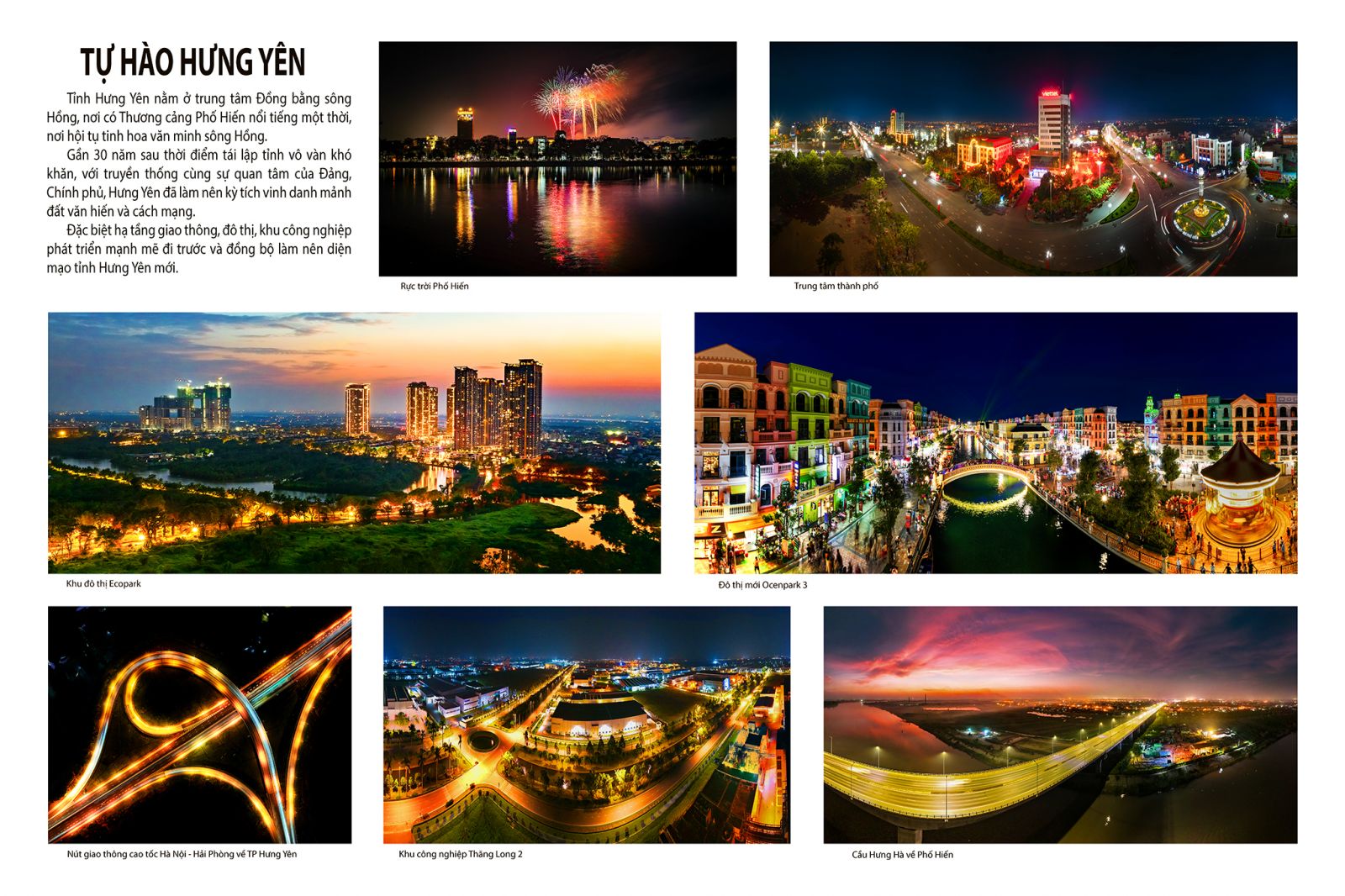
On January 1, 1997, Hung Yen province was re-established and Hung Yen town was the center of the province. With the advantage of the provincial political, administrative, economic, cultural and social center, Hung Yen town has concentrated on investing in socio-economic development. After nearly 20 years of reestablishment of the province, from a small town, Hung Yen has emerged into a young and dynamic Hung Yen city.
After the re-establishment of the province, as the capital of the province, the Party, authorities and people of Hung Yen town have made unceasing efforts, solidarity and determination to build Hung Yen town into a beautiful.
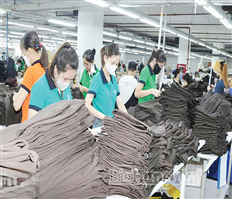
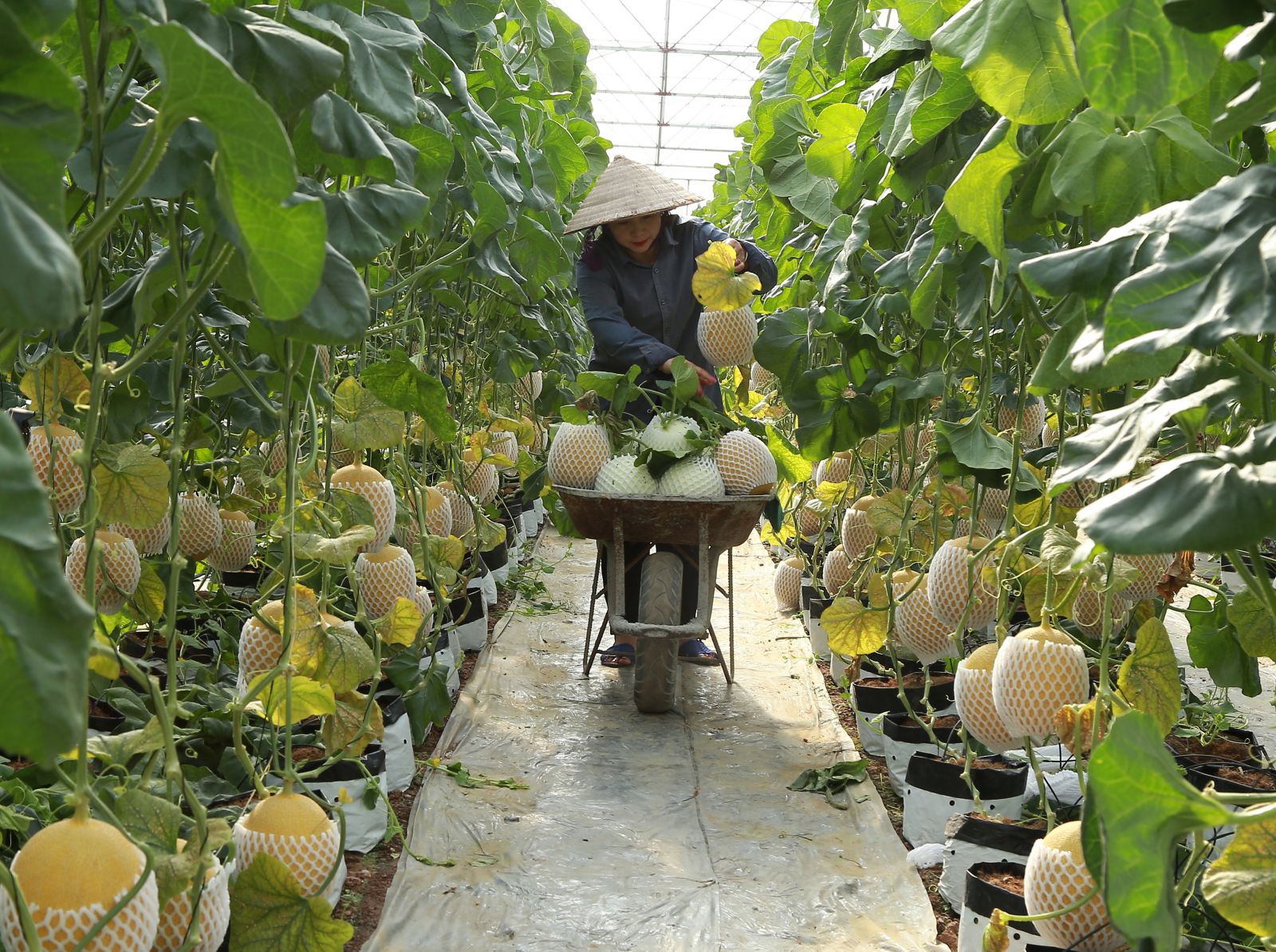
Agriculture: The area of agricultural land is less and tends to decrease due to the process of urbanization and industrialization. Soon after re-establishment, Hung Yen town has the policy of information, promotion and encouragement of people changing the crop structure in order to improve gardens, promote the development of trades in rural areas, and actively apply scientific and technical advances into production. With the policy of focusing on the development of commodity agricultural products, Hung Yen town focuses on developing high economic value crops and specialty products and gradually forming areas for production of longan.
Trade and services: Development of trade and services associated with the exploitation of tourism is the long-term direction, which promotes the socio-economic development of Hung Yen town. Thus, it is taking advantage of resources to invest in building the transport network. Gaining benefits from the transport projects of the province which formed the focal point to facilitate Hung Yen’s trade for socio-economic development. Urban transportation is constantly invested, upgraded and expanded, which formed a smooth transportation network, contributing to investment promotion in production and business. Thanks to the synchronous investment, in the first five years (1996 - 2000), the average economic growth rate of Hung Yen town reached 15% per year. In 2000, local budget revenue reached VND 15 billion, tripling the level of 1997; income per capita in 2000 reached $ 450, up USD 150 over the previous year.
After 10 years of reestablishment of the province, in 2007, Hung Yen town has reached class III and was recognized as a provincial city in 2009. This is the result of continuous strive and unity in construction of the Party, authorities and people of Hung Yen. After adjusting many administrative boundaries, by 2016, Hung Yen city has 17 administrative units including 7 wards, 10 communes with a natural area of 7,342.07 hectares and a population of over 147 thousand. Hung Yen has concentrated on investing in socio-economic development and urban infrastructure. In the five years from 2010 to 2015, the city has concentrated on mobilizing resources for investment in new construction and renovation and upgrading of 21 kms of urban roads, 66 kms of electricity lights, 17 kms of electricity lines; 117 new classrooms will be built
In addition, the city focuses on expanding key industries which are potential and suitable with the development orientation of Hung Yen city in the future. Thus, the average growth rate in the period of 2010 - 2015 is 10.6% per year. In 2015, the average income per capita reached 41 million and the total budget revenue in the province reached 850 billion. After 3 years of implementation (2013 - 2015), the city has 40 streets recognized as civilized urban streets. By 2016, the city has achieved over 74 out of 100 points on class II urban rating of the Ministry of Construction.
6. Historical relics and festivals
Many Vietnamese people know the phrase "First Kinh Ky, Pho Hien second". Kinh Ky is Hanoi today. Pho Hien is Hung Yen city of Hung Yen province.
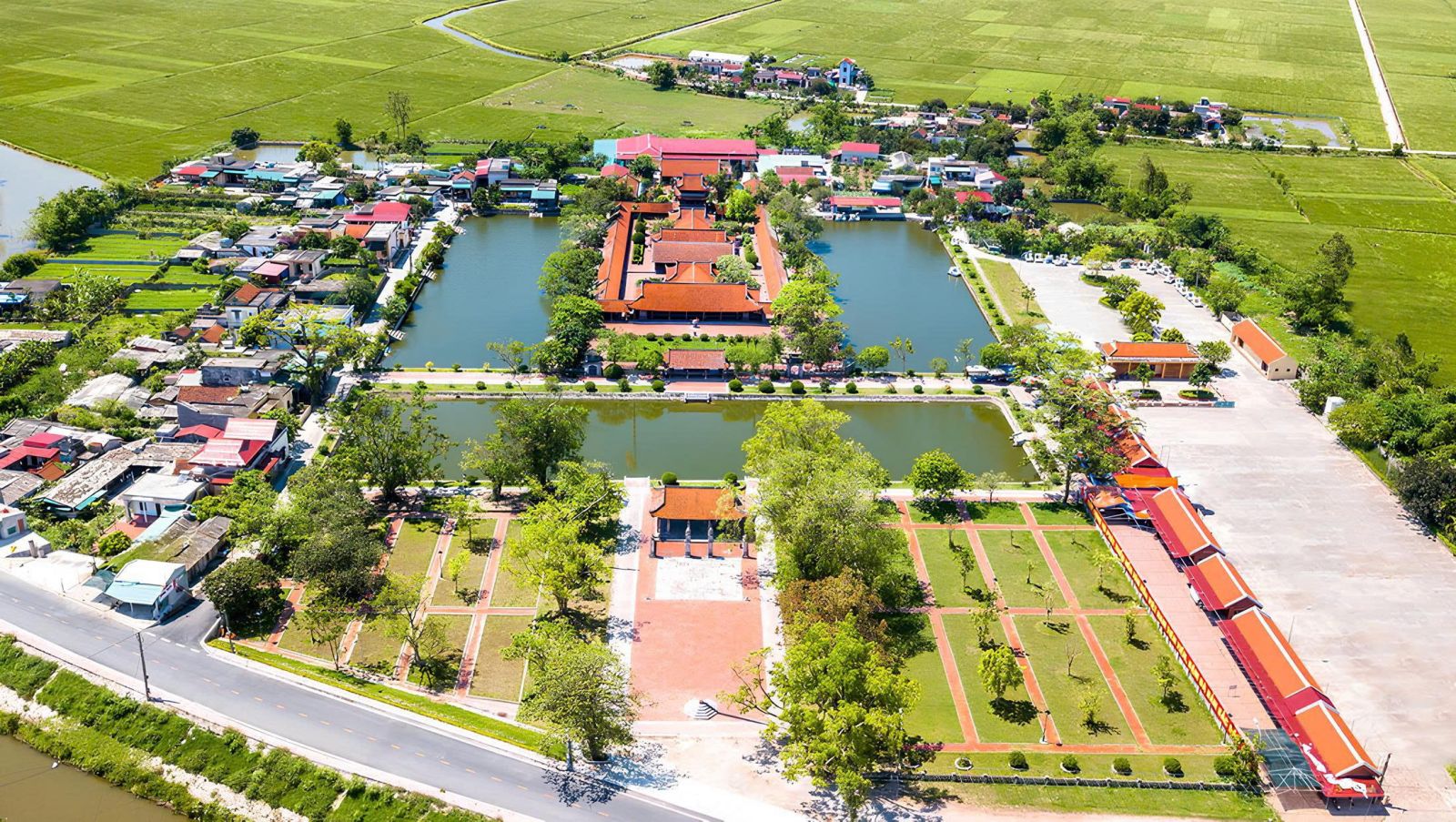
Hung Yen city is a land of long-standing cultural traditions, formed from the process of national construction and defense, bearing the imprint of the rice civilization. In the past, Pho Hien was a famous trading port since the 13th century. As of the 15th century, merchant vessels of China, Japan, Thailand, Malaysia, Indonesia, the UK and France approached Pho Hien. But because the Red River was far away, Pho Hien gradually left the commercial port title to Hai Phong, and retained its longstanding cultural values. Pho Hien today still preserves an ancient architectural complex of historical relics, 100 inscriptions and many temples (Pho Hien relic complex).
There is a famous specialty in the whole country is longan (called longan because people had to make cages to protect the fruit bunch from birds eating).
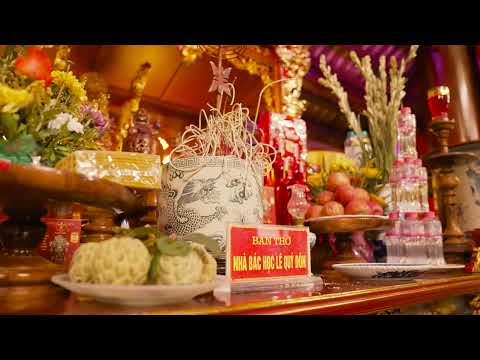
Pho Hien relic complex is recognized as a special national relic in 2014. The special national relic Pho Hien consists of 16 typical relics: Xich Dang temple of literature, Chuong Pagoda, Mau Temple, Vo Hieu Temple, Dong Do Temple, May Temple, Cuu Thien Huyen Nuoc Temple, Ba Chua Kho Temple, An Vu Temple, Kim Dang Temple, Nam Hoa Temple. In addition to works serving religious activities, Hung Yen city still preserves some relics relating to the lifestyle of Pho Hien people such as the market, wells, and cemeteries of foreigners.
The density of relic, most of which are cultural relics associated with spirituality, worship of spirits and angels have formed a series of traditional festivals having distinct identities. Here, every religious and ancient work involves a story full of thrills and philosophy. There is the story of respect and gratitude to those who have contributed to the country in order to help people live a peaceful life. There is the story expressing the sympathy. All of those stories create unique features for each festival, which diversifies cultural space of Hung Yen city.
Pho Hien traditional festival
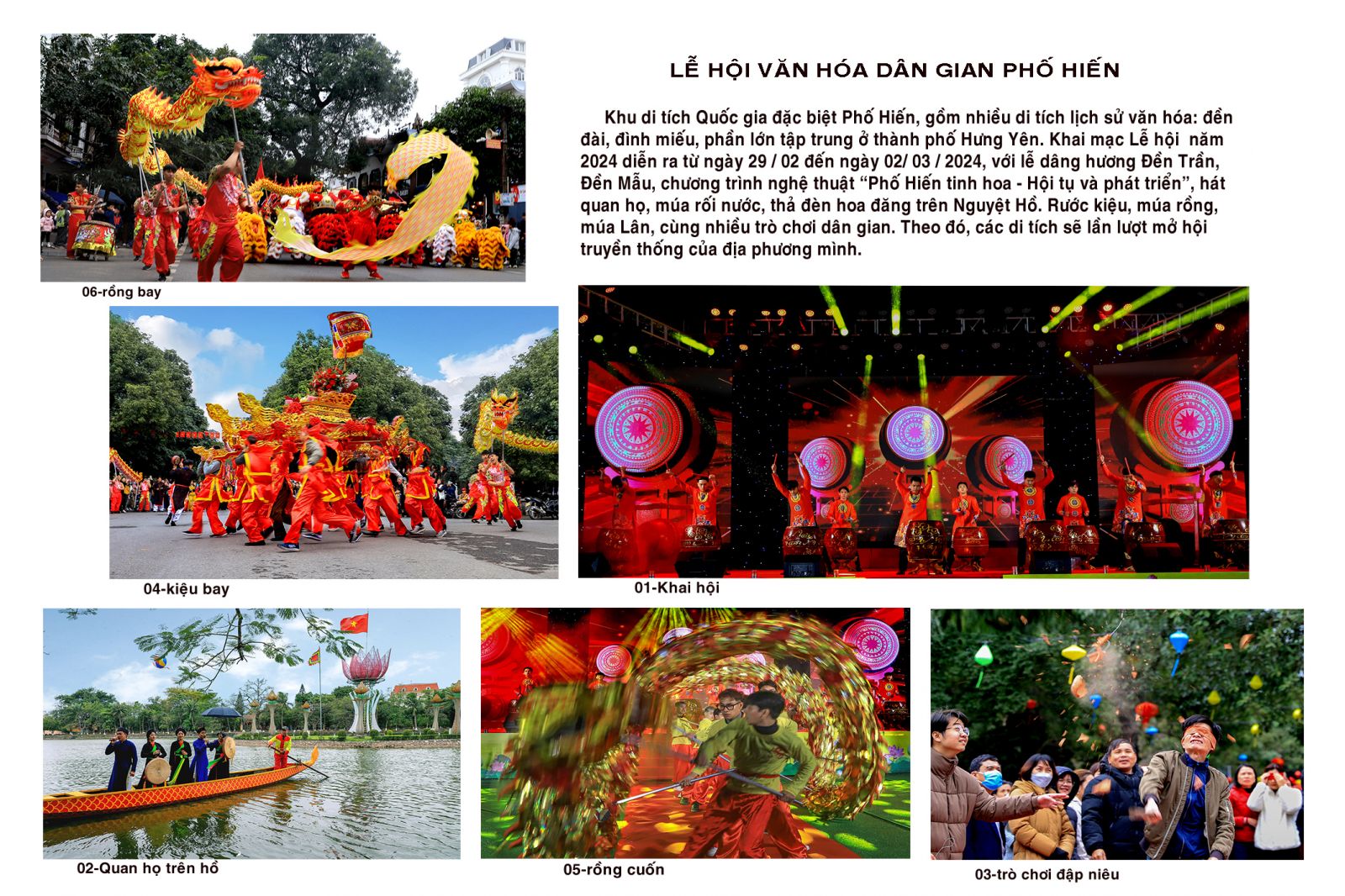
Since 2007, Hung Yen town, now called Hung Yen city, has restored and celebrated Pho Hien traditional cultural festival. Pho Hien traditional cultural festival is held from the 6th of the third lunar month.
At the festivals, activities of the worship part, traditional rituals and ceremonies are restored to create a unique cultural space. The festival is exciting with folk games such as Kieu Bridge, tug of war and kite flute flying.
At the Pho hien traditional festival, the cultural quintessences of the festival at the relics are distilled, reflecting the full expression of the essence, special characteristics of the land of Pho Hien. Coming to Pho Hien traditional cultural festival, visitors not only admire the beauty of the relics but also immerse themselves in traditional folk activities. Pho Hien traditional festival is the opening activity for a series of festivals in the relics that make festive space as a continuous flow of time. In the sacred space of the relics, the cultural activities of the community are reproduced vividly, helping visitors visualize the busy scene of an ancient Pho Hien’s commercial port. Geting immersed in the festive atmosphere, visitors learn more about cultural traditions, discover unique features of culinary, music and folk games. This is also a chance for Hung Yen city to promote its potential, foster development of tourism, services associated with historical relics and festivals, in order to continuously preserve and promote cultural values.
.jpg)

.jpg)
.jpg)